

Edit History
Letter from Sir John Kirk to Sir William Jackson Hooker; from H. M. S. Pioneer, Johanna, Comoro Island; 31 Aug 1862; Twelve page letter comprising six images; folio 165
Date Updated: 28 May 2013
Herbarium
Royal Botanic Gardens, Kew (K)
Collection
Royal Botanic Gardens, Kew: Archives: Directors' Correspondence
Resource Type
Letters (Correspondence)
Creator
Kirk, Sir John
Date
18620831
Source
Library and Archives at Royal Botanic Gardens, Kew
Relation
Directors' Correspondence 60/165
Attribution
Royal Botanic Gardens, Kew
Description
Kirk writes that Hooker should have received the boxes of natural history specimens sent via the ship Ariel under Captain Oldfield. He notes from the news that the ship Liden has returned and so presumes Hooker has previous cases he has sent. He writes about their voyage from the mouth of the Zambezi to Johanna. He writes that Dr. Livingstone decided to leave the Zambezi when it became clear the Pioneer would not be easily navigated up river, and mentions that they plan to explore the Rovuma in boats before returning to the Zambezi. He expects Dr. Mellor to be aboard the H. M. S. Gorgon, although he has had no news, he is travelling to Madagascar then on to Mauritius. Kirk describes the geology and flora of Johannas. He thinks a month would be well spent exploring the forests at 2000 feet, but writes that he has only examined the sugar plantations of Mr. Lundy, and found 32 types of fern on the mountains of Maramballa and Zomba. He mentions date palms, Broassus and Cycas, and writes about Johanna’s soil and its suitability for growing sugar cane. Kirk writes that English has become generally understood since war vessels have been stationed there. The adjacent islands of Mayotte and Mokilla[?] are French speaking. He remarks that the largest of the Comoro’s islands is independently run. He continues to write about the Comoros Islands, and his continued expeditions with Livingstone. Pages 5 and 8 of 12.
Identifier
KADC7181
Collection name
Royal Botanic Gardens, Kew: Archives: Directors' Correspondence
Format extent (length/size)
18620831
Pages
6
Date Updated: 29 October 2008
Herbarium
Royal Botanic Gardens, Kew (K)
Collection
Royal Botanic Gardens, Kew: Archives: Directors' Correspondence
Resource Type
Letters (Correspondence)
Creator
Kirk, Sir John
Date
31/08/1862
Source
Library and Archives at Royal Botanic Gardens, Kew
Relation
Directors' Correspondence 60/165
Attribution
Royal Botanic Gardens, Kew
Description
Kirk writes that Hooker should have received the boxes of natural history specimens sent via the ship Ariel under Captain Oldfield. He notes from the news that the ship Liden has returned and so presumes Hooker has previous cases he has sent. He writes about their voyage from the mouth of the Zambezi to Johanna. He writes that Dr. Livingstone decided to leave the Zambezi when it became clear the Pioneer would not be easily navigated up river, and mentions that they plan to explore the Rovuma in boats before returning to the Zambezi. He expects Dr. Mellor to be aboard the H. M. S. Gorgon, although he has had no news, he is travelling to Madagascar then on to Mauritius. Kirk describes the geology and flora of Johannas. He thinks a month would be well spent exploring the forests at 2000 feet, but writes that he has only examined the sugar plantations of Mr. Lundy, and found 32 types of fern on the mountains of Maramballa and Zomba. He mentions date palms, Broassus and Cycas, and writes about Johanna’s soil and its suitability for growing sugar cane. Kirk writes that English has become generally understood since war vessels have been stationed there. The adjacent islands of Mayotte and Mokilla[?] are French speaking. He remarks that the largest of the Comoro’s islands is independently run. He continues to write about the Comoros Islands, and his continued expeditions with Livingstone. Pages 5 and 8 of 12.
Identifier
KADC7181
Collection name
Royal Botanic Gardens, Kew: Archives: Directors' Correspondence
Format extent (length/size)
6 images
Pages
6
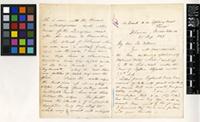
Image 1 of 6
╳
We're sorry. You don't appear to have permission to access the item.
Full access to these resources typically requires affiliation with a partnering organization. (For example, researchers are often granted access through their affiliation with a university library.)
If you have an institutional affiliation that provides you access, try logging in via your institution
Have access with an individual account? Login here
If you would like to learn more about access options or believe you received this message in error, please contact us.