

Edit History
Letter from Sir Henry Barkly to Sir Joseph Dalton Hooker; from Government House, Cape Town; 2 April 1874; eight page letter comprising four images; folios 208-209
Date Updated: 26 March 2013
Herbarium
Royal Botanic Gardens, Kew (K)
Collection
Royal Botanic Gardens, Kew: Archives: Directors' Correspondence
Resource Type
Letters (Correspondence)
Creator
Barkly, Sir Henry
Date
18740402
Source
Library and Archives at Royal Botanic Gardens, Kew
Relation
Directors' Correspondence 189/208
Attribution
Royal Botanic Gardens, Kew
Description
[The handwriting in this letter is very difficult to decipher but the description is as follows]. Sir Henry thanks Hooker for his long letter and writes that it was as much a surprise to him as to Hooker that the Aloe dichotoma had no roots. Mr. Hall, the Engineer for the Namaqualand Railway, was the person who collected it and though some of the larger roots broke off during his transporting of the plant, he was sure there were the main roots were still intact. Sir Henry hopes that the other Aloe he has sent will be alright. He has been promised other Aloe plants by Mr. D. Arnot from Griqualand West. Sir Henry will be travelling to Natal soon, returning through Kafirland and asks Hooker if there are any plants he desires from this area, such as Adenium namaquanum. Sir Henry asks if Hooker knows of a plant called ‘Duvavria’ [?] by Mr. Bowler. Mr. McGibbon thinks that the plant is actually called Duvauia [?] and grows in Kafirland. The plant is known as the pistol plant because its seed vessels explode. He has cuttings of it which he hopes will grow. Sir Henry hopes Mrs. Barber’s drawings of the Decabelone elegens reached Professor Dyer safely. Hooker’s friend, Revd. Mr. Eatum [?], has been collecting Hepatica, Lichens and Fungi. Sir Henry was glad to hear that the Pringlea antiscorbutica seeds have begun to germinate at Kew. He is also going to send a Wardian case to Eatum and have it filled with other cruciferous plants. Lady Barkly wishes to know when the Cinchona plants will be arriving. Pages 1 and 4 of 8.
Identifier
KADC3306
Collection name
Royal Botanic Gardens, Kew: Archives: Directors' Correspondence
Format extent (length/size)
4 images
Pages
4
Date Updated: 3 February 2012
Herbarium
Royal Botanic Gardens, Kew (K)
Collection
Royal Botanic Gardens, Kew: Archives: Directors' Correspondence
Resource Type
Letters (Correspondence)
Creator
Barkly, Sir Henry
Date
02/04/1874
Source
Library and Archives at Royal Botanic Gardens, Kew
Relation
Directors' Correspondence 189_208
Attribution
Royal Botanic Gardens, Kew
Description
[The handwriting in this letter is very difficult to decipher but the description is as follows]. Sir Henry thanks Hooker for his long letter and writes that it was as much a surprise to him as to Hooker that the Aloe dichotoma had no roots. Mr. Hall, the Engineer for the Namaqualand Railway, was the person who collected it and though some of the larger roots broke off during his transporting of the plant, he was sure there were the main roots were still intact. Sir Henry hopes that the other Aloe he has sent will be alright. He has been promised other Aloe plants by Mr. D. Arnot from Griqualand West. Sir Henry will be travelling to Natal soon, returning through Kafirland and asks Hooker if there are any plants he desires from this area, such as Adenium namaquanum. Sir Henry asks if Hooker knows of a plant called ‘Duvavria’ [?] by Mr. Bowler. Mr. McGibbon thinks that the plant is actually called Duvauia [?] and grows in Kafirland. The plant is known as the pistol plant because its seed vessels explode. He has cuttings of it which he hopes will grow. Sir Henry hopes Mrs. Barber’s drawings of the Decabelone elegens reached Professor Dyer safely. Hooker’s friend, Revd. Mr. Eatum [?], has been collecting Hepatica, Lichens and Fungi. Sir Henry was glad to hear that the Pringlea antiscorbutica seeds have begun to germinate at Kew. He is also going to send a Wardian case to Eatum and have it filled with other cruciferous plants. Lady Barkly wishes to know when the Cinchona plants will be arriving. Pages 1 and 4 of 8.
Identifier
KADC3306
Collection name
Royal Botanic Gardens, Kew: Archives: Directors' Correspondence
Format extent (length/size)
4 images
Pages
4
Date Updated: 24 July 2007
Herbarium
Royal Botanic Gardens, Kew (K)
Collection
Royal Botanic Gardens, Kew: Archives: Directors' Correspondence
Resource Type
Letters (Correspondence)
Creator
Barkly, Sir Henry
Date
n.d.
Source
Library and Archives at Royal Botanic Gardens, Kew
Relation
Director's Correspondence, Vol. 189/208
Attribution
Royal Botanic Gardens, Kew
Description
[The handwriting in this letter is very difficult to decipher but the description is as follows]. Sir Henry thanks Hooker for his long letter and writes that it was as much a surprise to him as to Hooker that the Aloe dichotoma had no roots. Mr. Hall, the
Identifier
KADC3306
Collection name
Royal Botanic Gardens, Kew: Archives: Directors' Correspondence
Format extent (length/size)
4 pages/12 images
Pages
4
Date Updated: 26 February 2007
Herbarium
Royal Botanic Gardens, Kew (K)
Collection
Royal Botanic Gardens, Kew: Archives: Directors' Correspondence
Resource Type
Personal Correspondence
Creator
Barkly, Sir Henry
Source
Library and Archives at Royal Botanic Gardens, Kew
Relation
Director's Correspondence, Vol. 189/208
Attribution
Royal Botanic Gardens, Kew
Description
[The handwriting in this letter is very difficult to decipher but the description is as follows]. Sir Henry thanks Hooker for his long letter and writes that it was as much a surprise to him as to Hooker that the Aloe dichotoma had no roots. Mr. Hall, the
Identifier
KADC3306
Collection name
Royal Botanic Gardens, Kew: Archives: Directors' Correspondence
Format extent (length/size)
4 pages/12 images
Pages
4
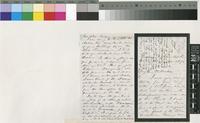
Image 1 of 4
╳
We're sorry. You don't appear to have permission to access the item.
Full access to these resources typically requires affiliation with a partnering organization. (For example, researchers are often granted access through their affiliation with a university library.)
If you have an institutional affiliation that provides you access, try logging in via your institution
Have access with an individual account? Login here
If you would like to learn more about access options or believe you received this message in error, please contact us.