

Edit History
Letter from John Henry Holland to Royal Botanic Gardens, Kew; from Old Calabar; 7 March 1900; six page letter comprising four images; folios 361-362
Date Updated: 11 October 2012
Herbarium
Royal Botanic Gardens, Kew (K)
Collection
Royal Botanic Gardens, Kew: Archives: Directors' Correspondence
Resource Type
Letters (Correspondence)
Creator
Holland, John Henry
Date
19000307
Source
Library and Archives at Royal Botanic Gardens, Kew
Relation
Directors' Correspondence 184/361
Attribution
Royal Botanic Gardens, Kew
Description
Holland writes that, at the Botanic Gardens, they have been using the Canavalia ensiformis as a vegetable for some time and also have numerous ‘Grape Fruit’ plants, which were sent from Kew, doing well. The High Commissioner informs Holland that his new assistant has been sent for and is expected to arrive in May or sooner. Holland is forwarding specimens of Kickxia elastica and K. Africana. He is satisfied that the former produces the true rubber and the latter is a spurious one. He has often had the natives point out the spurious rubber plant as the real thing, due to their similar appearance and encloses a map to show how they appear to grow side by side. On his Cross River expedition, Holland did not see many of the true rubber trees because he could not go into the district where they are plentiful. This was due to the ‘disturbed state’ of the country and the hostile natives in certain places. Holland will send other specimens when he has time but is sending these particular items now to fulfil a promise he made to Mr. Stapf (who wanted more material associated with the two types of rubber plants) before leaving England. Holland will send a copy of his Cross River report to his correspondent when he completes it. Pages 1 and 4 of 6.
Identifier
KADC1169
Collection name
Royal Botanic Gardens, Kew: Archives: Directors' Correspondence
Format extent (length/size)
4 images
Pages
4
Date Updated: 17 July 2007
Herbarium
Royal Botanic Gardens, Kew (K)
Collection
Royal Botanic Gardens, Kew: Archives: Directors' Correspondence
Resource Type
Letters (Correspondence)
Creator
Holland, John Henry
Date
n.d.
Source
Library and Archives at Royal Botanic Gardens, Kew
Relation
Director's Correspondence, Vol. 184/361
Attribution
Royal Botanic Gardens, Kew
Description
Holland writes that, at the Botanic Gardens, they have been using the Canavalia ensiformis as a vegetable for some time and also have numerous ‘Grape Fruit’ plants, which were sent from Kew, doing well. The High Commissioner informs Holland that his new assistant has been sent for and is expected to arrive in May or sooner. Holland is forwarding specimens of Kickxia elastica and K. Africana. He is satisfied that the former produces the true rubber and the latter is a spurious one. He has often had the natives point out the spurious rubber plant as the real thing, due to their similar appearance and encloses a map to show how they appear to grow side by side. On his Cross River expedition, Holland did not see many of the true rubber trees because he could not go into the district where they are plentiful. This was due to the ‘disturbed state’ of the country and the hostile natives in certain places. Holland will send other specimens when he has time but is sending these particular items now to fulfil a promise he made to Mr. Stapf (who wanted more material associated with the two types of rubber plants) before leaving England. Holland will send a copy of his Cross River report to his correspondent when he completes it. Pages 1 and 4 of 6.
Identifier
KADC1169
Collection name
Royal Botanic Gardens, Kew: Archives: Directors' Correspondence
Format extent (length/size)
4 pages/12 images
Pages
4
Date Updated: 25 May 2006
Herbarium
Royal Botanic Gardens, Kew (K)
Collection
Royal Botanic Gardens, Kew: Archives: Directors' Correspondence
Resource Type
Personal Correspondence
Creator
Holland, John Henry
Source
Library and Archives at Royal Botanic Gardens, Kew
Relation
Director's Correspondence, Vol. 184/361
Attribution
Royal Botanic Gardens, Kew
Description
Holland writes that, at the Botanic Gardens, they have been using the Canavalia ensiformis as a vegetable for some time and also have numerous ‘Grape Fruit’ plants, which were sent from Kew, doing well. The High Commissioner informs Holland that his new assistant has been sent for and is expected to arrive in May or sooner. Holland is forwarding specimens of Kickxia elastica and K. Africana. He is satisfied that the former produces the true rubber and the latter is a spurious one. He has often had the natives point out the spurious rubber plant as the real thing, due to their similar appearance and encloses a map to show how they appear to grow side by side. On his Cross River expedition, Holland did not see many of the true rubber trees because he could not go into the district where they are plentiful. This was due to the ‘disturbed state’ of the country and the hostile natives in certain places. Holland will send other specimens when he has time but is sending these particular items now to fulfil a promise he made to Mr. Stapf (who wanted more material associated with the two types of rubber plants) before leaving England. Holland will send a copy of his Cross River report to his correspondent when he completes it. Pages 1 and 4 of 6.
Identifier
KADC1169
Collection name
Royal Botanic Gardens, Kew: Archives: Directors' Correspondence
Format extent (length/size)
4 pages/12 images
Pages
4
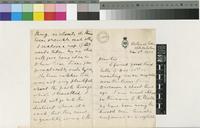
Image 1 of 4
╳
We're sorry. You don't appear to have permission to access the item.
Full access to these resources typically requires affiliation with a partnering organization. (For example, researchers are often granted access through their affiliation with a university library.)
If you have an institutional affiliation that provides you access, try logging in via your institution
Have access with an individual account? Login here
If you would like to learn more about access options or believe you received this message in error, please contact us.