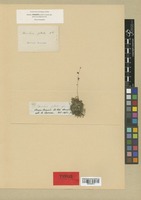
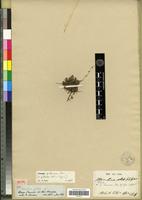
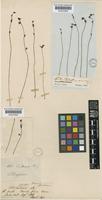
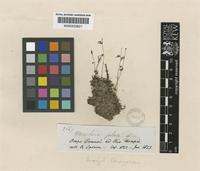
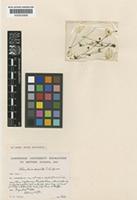
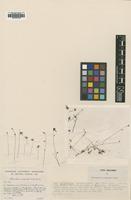
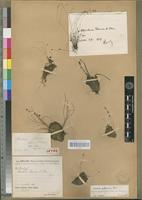
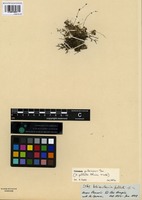
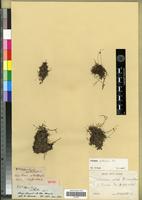
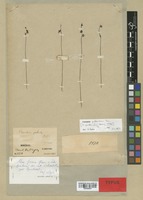
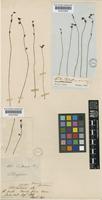
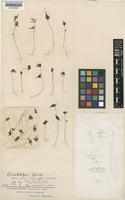
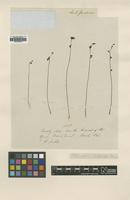
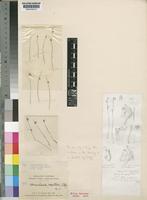
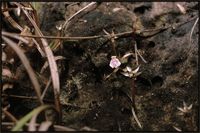
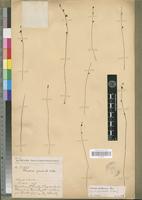
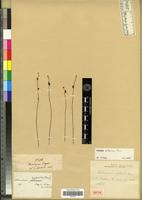
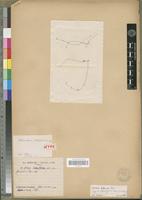
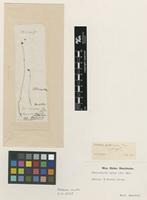
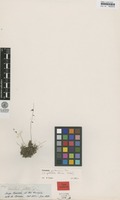
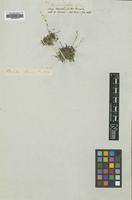
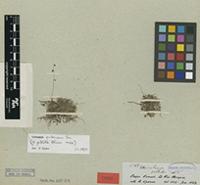
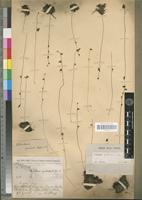
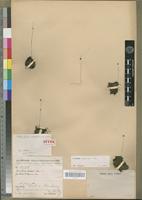
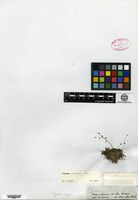
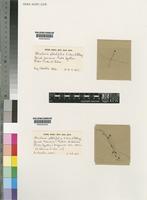
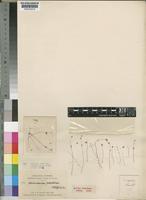
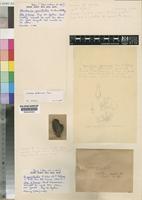
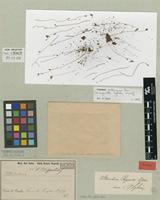
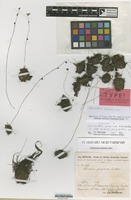
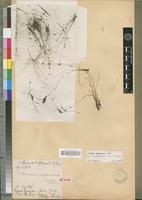
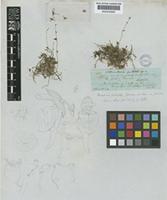
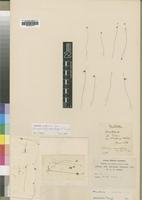
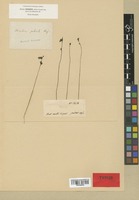
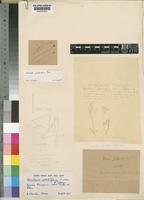
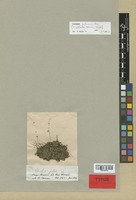
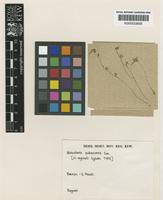
Terrestrial herb. Rhizoids and stolons capillary, numerous from the base of the scape. Leaves usually present at anthesis, scattered on the stolons, orbicular, peltate, long-petiolate; lamina fleshy, mucilaginous, 1–5 mm. in diameter; petiole 2–10 mm. long. Traps numerous, globose, stalked, 0.5–0.8 mm. long; mouth terminal; upper lip projecting; lower lip scarcely projecting, both provided with radiating rows of glandular hairs. Inflorescence erect, 2–35 cm. high; scape filiform, straight, ± setulose, papillose or rarely entirely glabrous; flowers 1–6(–10), distant; scales few, similar to the bracts; bracts basisolute, shortly produced below the point of insertion, ovate, apex acute, base truncate, ± 1 mm. long, setulose; bracteoles similar to the bracts but narrower; pedicels erect, 0.5–2 mm. long. Calyx-lobes subequal, broadly ovate, usually setulose; upper lobe ovate, 1.5–3 mm. long, apex acute; lower lobe ovate or orbicular, apex bidentate. Corolla white or pale lilac, 2–16 mm. long; upper lip 1.5–2 times as long as the upper calyx-lobe, narrowly oblong, apex rounded, truncate or ± emarginate; lower lip orbicular, entire; palate much raised, double-crested, the crests usually transversely tuberculate; spur usually conical-subulate, up to 4 times as long as the lower lip but very variable in length and sometimes much reduced. Filaments filiform; anther-thecae subdistinct. Ovary ovoid; style short but usually distinct; stigma lower lip semi-orbicular, upper much smaller, deltoid. Capsule globose dehiscing by a longitudinal abaxial slit with thickened margins. Seeds numerous, ovoid; testa-cells distinct, ± isodiametric.