JSTOR Global Plants Home
  • Home
  • Browse
  • About
  • Access
  • Account
    • Saved Items
    • Profile
  • Log in

Global Plants

Skip to Main Content
  • JSTOR Global Plants Home
  • Global Plants

    • Browse
    • About
    • Access
    • Account
      • Saved Items
      • Profile
Log in
  • Browse
  • About
  • Access
  • Account
    • Saved Items
    • Profile
Advanced Search

Compilation
Najas indica

13 Images see all

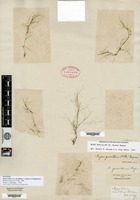
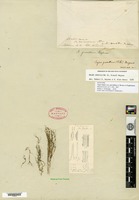
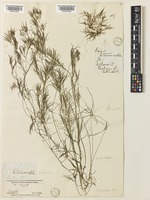
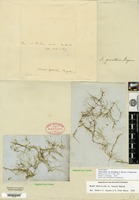
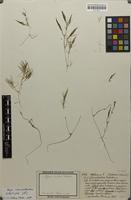
Syntype of Najas indica (Willdenow) Chamisso var. gracillima A. Braun ex Engelmann [family NAJADACEAE]
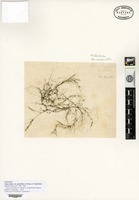
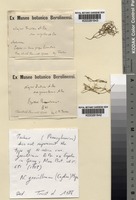
Holotype of Caulinia indica Willd. [family NAJADACEAE]
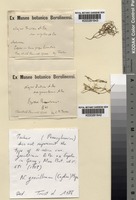
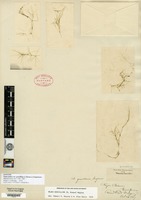
Syntype of Najas indica (Willdenow) Chamisso var. gracillima A. Braun ex Engelmann [family NAJADACEAE]
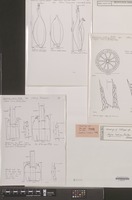
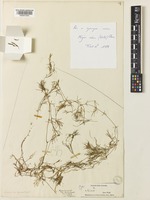
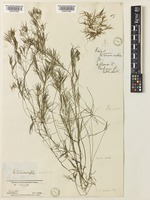
Najas indica (Willd.) Cham. [family HYDROCHARITACEAE]
Type of Najas indica A.Br. var. rigida A.Br. [family HYDROCHARITACEAE]
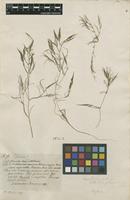
Najas indica (Willd.) Cham. [family HYDROCHARITACEAE]
Syntype of Najas indica (Willdenow) Chamisso var. gracillima A. Braun ex Engelmann [family NAJADACEAE]
Najas indica (Willd.) Cham. [family HYDROCHARITACEAE]
Filed as Najas indet. [family HYDROCHARITACEAE]
Isotype of Caulinia indica Willd. [family HYDROCHARITACEAE]
Previous
Next

Name

Identification
Najas indica (Willd.) Cham. [family HYDROCHARITACEAE ] (stored under name); Verified by Triest, L., Isotype of Caulinia indica Willd. [family HYDROCHARITACEAE ] Verified by Triest, L.,
Related name
  • Caulinia indica
  • Najas indica
  • Najas foveolata

Flora

Entry for Najas gracillima (A. Braun ex Engelmann) Magnus [family HYDROCHARITACEAE]
Herbarium
Flora of North America (FNA)
Collection
Flora of North America
Resource Type
Reference Sources
Entry From
Flora of North America, Vol 22,
Names
Najas gracillima (A. Braun ex Engelmann) Magnus [family HYDROCHARITACEAE], Beitrage zur Kenntniss der Gattung Najas, 23. 1870
Najas indica (Willdenow ) Chamisso var. gracillima A. Braun ex Engelmann [family HYDROCHARITACEAE], in A. Gray, Manual ed., 5, 681. 1867
Information
Stems slightly branched distally, 4.5--48 cm ´ 0.2--0.7 mm; internodes 0.1--3.2 cm, without prickles. Leaves spreading to ascending with age, 0.6--2.8 cm, lax in age; sheath 0.5--1.5 mm wide, apex truncate; blade 0.1--0.5 mm wide, margins minutely serrulate, teeth 13--17 per side, apex acute with 2--3 teeth, teeth unicellular; midvein without prickles abaxially. Flowers 1--3 per axil, staminate and pistillate on same plants. Staminate flowers in distal axils, 1.5--2 mm; involucral beaks 2-lobed, 0.8 mm; anthers 1-loculed, 1.3 mm. Pistillate flowers distal to proximal on plant, 0.5--2.7 mm; styles 0.3--1.5 mm; stigmas 2-lobed. Seeds not recurved, light brown, fusiform, 2--3.2 ´ 0.4--0.7 mm, apex with style situated offat center; testa dull, 3 cell layers thick, pitted; aeroleareoles regularly arranged in 40 longitudinal rows, not ladderlike, 4-angled, longer than broad, end walls raised. 2n = 24, 36.
Phenology
Flowering summer--fall
Altitude range
0--200 m
Distribution
Eurasia.USA Ala.USA Calif.USA Conn.USA Del.USA D.C.USA Ill.USA Ind.USA Ky.USA MaineUSA Md.USA Mass.USA Mich.USA Minn.USA Mo.USA N.H.USA N.J.USA N.Y.USA N.C.USA OhioUSA Pa.USA R.I.USA Tenn.USA Vt.USA Va.USA Wis.Canada Man.Canada Ont.Canada Nfld. and Labr. (Nfld.)Canada N.S.
Discussion
No specimens were seen from in Alberta, Manitoba, or Quebec, but the species is to be expected there.
Najas gracillima is most similar to N. minor, especially in vegetative condition. Najas gracillima, however, can be separated from the latter species by its style arising off-center at the apex of the ovary wall and by its aeroleareoles being longer than broad. Late in the growing season, the leaves of N. minor become recurved; those of N. gracillima do not.

Related Materials

  • Terms and Conditions
  • Privacy Policy
  • Cookie Policy
  • Cookie Settings
  • Accessibility
  • Help
  • Contact Us
  • Facebook
  • Twitter
ITHAKA

JSTOR is part of ITHAKA, a not-for-profit organization helping the academic community use digital technologies to preserve the scholarly record and to advance research and teaching in sustainable ways.

©2000-2026 ITHAKA. All Rights Reserved. JSTOR®, the JSTOR logo, JPASS®, Aluka®, and ITHAKA® are registered trademarks of ITHAKA.

╳