JSTOR Global Plants Home
  • Home
  • Browse
  • About
  • Access
  • Account
    • Saved Items
    • Profile
  • Log in

Global Plants

Skip to Main Content
  • JSTOR Global Plants Home
  • Global Plants

    • Browse
    • About
    • Access
    • Account
      • Saved Items
      • Profile
Log in
  • Browse
  • About
  • Access
  • Account
    • Saved Items
    • Profile
Advanced Search

Compilation
Jatropha dichtar

4 Images see all

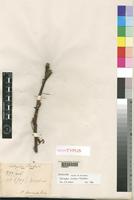
Isosyntype of Jatropha ferox [family EUPHORBIACEAE]
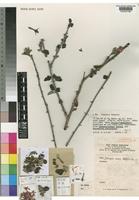
Holotype of Jatropha rosea Radcl.-Sm. [family EUPHORBIACEAE]
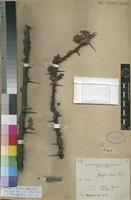
Syntype of Jatropha ferox [family EUPHORBIACEAE]
Previous
Next

Name

Identification
Jatropha dichtar J.F.Macbr. [family EUPHORBIACEAE ] (stored under name); Verified by Data not digitized, Jatropha ferox [family EUPHORBIACEAE ] Verified by Data not digitized,
Related name
  • Jatropha rosea
  • Jatropha dichtar
  • Jatropha ferox

Flora

Entry for JATROPHA dichtar Macbride [family EUPHORBIACEAE]
Herbarium
Royal Botanic Gardens, Kew (K)
Collection
Flora Somalia
Resource Type
Reference Sources
Entry From
Flora Somalia, Vol 1, (1993) Author: by S. Carter (Euphorbia, Monadenium), M. G. Gilbert (Acalypha, Andrachne, Antidesma, Bridelia, Caperonia, Cephalocroton, Chrozophora, Clutia, Dalechampia, Flueggea, Givotia, Manihot, Meineckia, Micrococca, Oldfieldia, Phyllanthus, Ricinus, Suregada, Tragia), and M. Thulin (Croton, Drypetes, Erythrococca, Excoecaria, Jatropha, Spirostachys and Thecacoris) [updated by M. Thulin 2008]
Names
JATROPHA dichtar Macbride [family EUPHORBIACEAE], (1934);. types: “Merehan”, Robecchi-Bricchetti 59 & without locality, Ruspoli & Riva 506 (both FT syn.).
JATROPHA ferox Pax [family EUPHORBIACEAE], (1897), nom. illeg.;. types: “Merehan”, Robecchi-Bricchetti 59 & without locality, Ruspoli & Riva 506 (both FT syn.).
JATROPHA dichtar A. R.-Sm. var. gracilior [family EUPHORBIACEAE], in Kew Bull. 42: 116 (1987);. type: C1, 13 km S of “Galkayu”, Hemming 1408 (K holo., EA K iso.).
JATROPHA rosea A. R.-Sm. [family EUPHORBIACEAE], (1987);. type: C2, 11 km N of “El Dhere”, 3°35’N, 46°06’E, Gillett & Hemming 24617 (K holo., EA iso.).
Information
Shrub up to 3 m tall; twigs pubescent to tomentose when young, soon becoming glabrous and ± purplish brown. Leaves mostly clustered on short-shoots; blade ovate to suborbicular, often shallowly 3–5-lobed, 1.5–5.5 x 1.5–6 cm, truncate to cordate at the base, subentire to toothed at the margin, puberulous to tomentose above, ± tomentose beneath; petiole 3–20 mm long. Stipular spines 2–50 mm long, straight or somewhat recurved, ± purplish brown. Inflorescences dense, flat-topped, up to 6.5 cm long, tomentose. Male flowers: calyx 5–18 mm long, with acute lobes; petals 14–19 mm long, ± united at base, white or cream, sometimes reddish outside. Female flowers with free petals; ovary subglobose, densely pubescent; styles united at base, 5–10 mm long, stigmas capitate, bifid. Fruit 3-lobed-subglobose, 1.5–2.5 x 2–3 cm, each lobe with an apical ridge, tomentose. Seeds ovoid, 14–17 x 10–12 mm, mottled dark brown, with a fimbriate caruncle covering the apex.
Range
C1, 2; S1, 3
Altitude range
50–490 m.
Distribution
SOMALIA Thulin & Warfa 4585; Hemming SRS 277/2; Elmi & Hansen 4030.
Distribution (external)
E Ethiopia
Kenya
Notes
Dhiigtaar (Som.). J. rosea was said to differ from J. dichtar by its shorter, more recurved stipular spines, smaller, ovate, acutely serrate, discolourous leaves, puberulous above and tomentellous above, reddish male flowers, and smaller fruits. The type was said to be from Mudug, but actually it is from Hiiraan, where forms ± agreeing with the type are fairly frequent on sandy soils. As already stated by Radcliffe-Smith (1987) J. rosea is linked with typical J. dichtar by intermediate forms, placed by him in J. dichtar var. gracilior. In my opinion the variation of J. dichtar is wider than previously believed, and also includes the type of J. rosea.

Related Materials

  • Terms and Conditions
  • Privacy Policy
  • Cookie Policy
  • Cookie Settings
  • Accessibility
  • Help
  • Contact Us
  • Facebook
  • Twitter
ITHAKA

JSTOR is part of ITHAKA, a not-for-profit organization helping the academic community use digital technologies to preserve the scholarly record and to advance research and teaching in sustainable ways.

©2000-2026 ITHAKA. All Rights Reserved. JSTOR®, the JSTOR logo, JPASS®, Aluka®, and ITHAKA® are registered trademarks of ITHAKA.

╳