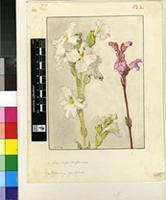
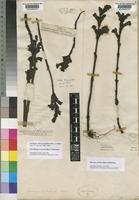
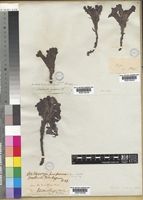
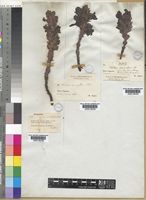
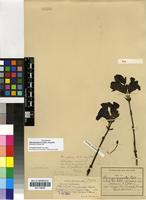
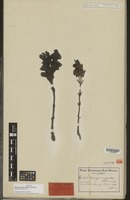
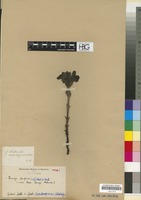
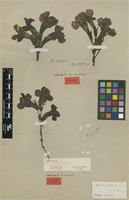
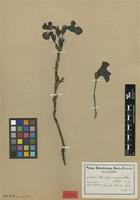
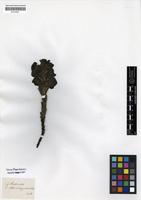
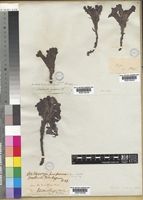
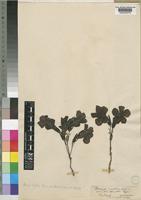
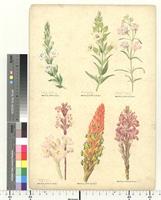
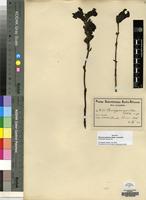
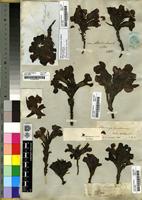
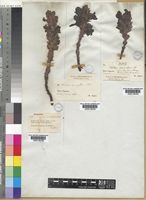
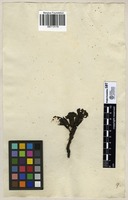
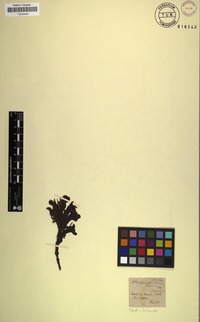
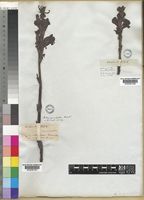
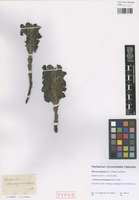
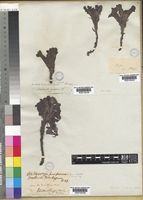
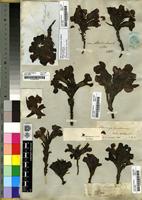
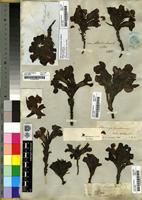
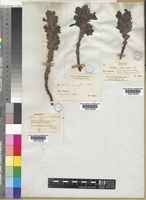
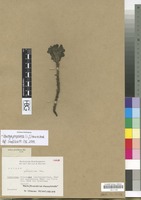
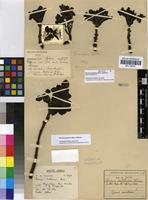
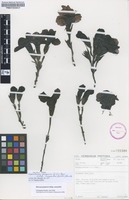
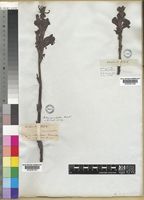
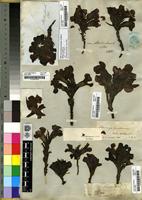
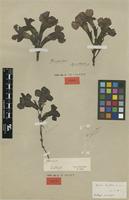
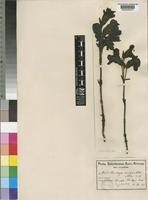
an annual herb, pale yellowish, parasitical on the roots of other plants, simple or branched at the base; stem angular, furrowed, dusky, pubescent, flexuous-erect, 2–14 in. high; branches erect-patent, subterete, striate, dusky, pubescent; leaves scale-like, scattered or subopposite, ovate or lanceolate, obtuse or the upper acute, not much narrowed at the sessile base, entire, viscid-pubescent, very pale yellow when alive, dusky when dried, 1/5– 2/3 in. long, 1/20– 1/5 in. broad; racemes dense above, elongating; pedicels opposite or alternate, short or erect, ranging below to 1 or 2 in. long, viscid-pubescent; bracteoles linear; flowers 1 1/4–1 1/2 in. long or slightly more, rather numerous; calyx glandular-pubescent, very pale yellow, about 2/3–1 1/6 in. long, deeply 5-lobed; segments linear-lanceolate, erect, the upper connate more than the others; corolla membranous, pale rosy or flesh-coloured or delicately purplish-white or whitish; tube inflated-ventricose, funnel-shaped below, somewhat or scarcely contracted at the mouth, puberulous outside, 2/5– 2/3 in. broad; limb nearly flat, spreading, mostly 1 1/4–1 1/2 in. in diam.; lobes nearly equal, about 1/2 in. long, lowest one marked with a yellow-ochre spot, rounded, wavy or toothed; throat nearly round, about 1/2 in. in diam., yellowish-white; stamens pubescent or shortly puberulous, glandular; 2 filaments inserted on the lower side of the corolla-tube longer than the others; anthers all perfect. null