JSTOR Global Plants Home
  • Home
  • Browse
  • About
  • Access
  • Account
    • Saved Items
    • Profile
  • Log in

Global Plants

Skip to Main Content
  • JSTOR Global Plants Home
  • Global Plants

    • Browse
    • About
    • Access
    • Account
      • Saved Items
      • Profile
Log in
  • Browse
  • About
  • Access
  • Account
    • Saved Items
    • Profile
Advanced Search

Compilation
Grevea madagascariensis

12 Images see all

[family ]
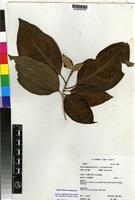
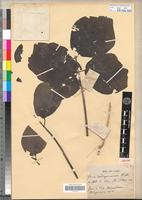
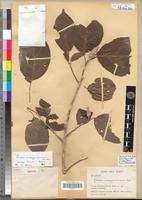
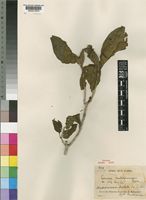
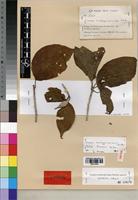
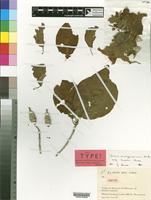
Isotype of Grevea madagascariensis Baill. subsp. sublevis Verdc. [family MONTINIACEAE]
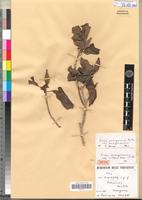
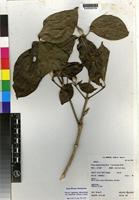
Isotype of Grevea madagascariensis subsp leandrii Bosser [family MONTINIACEAE]
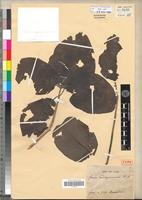
Type of Grevea madagascariensis Baill. subsp. leandrii Bosser [family MONTINIACEAE]
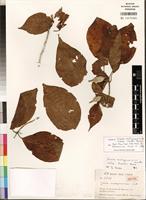
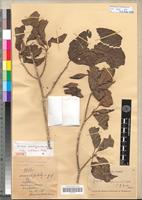
Type of Grevea madagascariensis Baill. [family MONTINIACEAE]
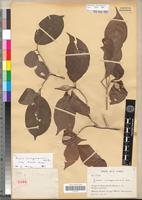
Type of Grevea madagascariensis Baill. subsp. leandrii Bosser [family MONTINIACEAE]
Isotype of Grevea madagascariensis unrecorded subsp. sublevis Verdcourt [family MONTINIACEAE]
Isotype of Grevea madagascariensis subsp. leandrii Bosser [family SAXIFRAGACEAE]
Isotype of Grevea madagascariensis Baill. subsp. leandrii Bosser [family SAXIFRAGACEAE]
[family ]
Isotype of Grevea madagascariensis Baill. subsp. sublevis Verdc. [family MONTINIACEAE]
Type of Grevea madagascariensis Baill. [family MONTINIACEAE]
Previous
Next

Name

Identification
Grevea madagascariensis Baill. [family MONTINIACEAE ] (stored under name); null
Related name
  • Grevea madagascariensis
  • `

Flora

Entry for GREVEA madagascariensis Baill. [family MONTINIACEAE]
Herbarium
Royal Botanic Gardens, Kew (K)
Collection
Flora of Tropical East Africa
Resource Type
Reference Sources
Entry From
Flora of Tropical East Africa, page 1, (1973) Author: B. VERDCOURT
Names
GREVEA madagascariensis Baill. [family MONTINIACEAE], in Bull. Soc. Linn. Paris 1: 420, 477 (1884); Erdtman, Pollen Morph.: 400 (1952); Milne-Redh. in Hook., Ic. Pl. 36, sub t. 3541–4: 7 (1955); Capuron in Adansonia, sér. 2, 9: 512 (1969). Type: Madagascar, Morondava, Grevé 249 (P, holo., K, photo. ! &; iso. !)
Information
Shrub to medium-sized tree usually 2–3 m. tall; older stems very pale brownish or greyish white, minutely longitudinally sulcate, densely covered with lenticels, the lower nodes bearing prominent leaf-scars; young stems green with white lenticels; young buds with short obscure to quite distinct woolly hairs. Leaves opposite; blades elliptic to ovate-elliptic or almost round, 4–19(–25) cm. long, l.6–8.5(–20) cm. wide, narrowly acuminate or rarely rounded at the apex, cuneate to rounded or in large leaves rarely even distinctly cordate at the base, glabrous; lateral nerves 4–5 pairs; petiole 0.7–4 cm. long. Male inflorescences cymose, 6–12-flowered; peduncle 1.2– 3.8 cm. long; pedicels 3–9 mm. long. Male flowers: calyx 1–2 mm. long; petals oblong to oblong-spathulate, 3–4.2 mm. long, 2–3 mm. wide, rounded, slightly narrowed to the base, often slightly erose; stamens with filaments 1.2–3 mm. long, anthers 2–2.2 mm. long; rudimentary ovary obsolete or 0.5 mm. long. Female flowers: calyx-tube 1.2 cm. long, slightly expanded below, cylindrical above, either smooth or with obscure nodules in longitudinal stripes; pedicel-like stipe 3–7(–9) mm. long; lobes broadly triangular, 0.5–1 mm. long; petals oblong-spathulate, 4.8 mm. long, 2.2 mm. wide, rounded at the apex, slightly narrowed to the base, reflexed, slightly erose; staminodes with filament part 2 mm. long and triangular anther part 1.2 mm. long; style 4–5 mm. long; stigma 1.5–1.8 mm. long. Fruit flask-shaped, 3.2–4 cm. long, 1–1.2 cm. wide, either brownish, obscurely ribbed and faintly rugulose or greyish and with distinct nodulated ribs, crowned with the persistent style. Seeds reddish brown, 4–16(–18), or fide Capuron even –24, ellipsoid-subglobose, 5.5 mm. long, 4.5 mm. thick, slightly compressed, finely shallowly reticulate.
Range
DISTR. (of species as a whole). Subspecies madagascariensis and sublevis Verdc. occur in Madagascar.

Related Materials

  • Terms and Conditions
  • Privacy Policy
  • Cookie Policy
  • Cookie Settings
  • Accessibility
  • Help
  • Contact Us
  • Facebook
  • Twitter
ITHAKA

JSTOR is part of ITHAKA, a not-for-profit organization helping the academic community use digital technologies to preserve the scholarly record and to advance research and teaching in sustainable ways.

©2000-2026 ITHAKA. All Rights Reserved. JSTOR®, the JSTOR logo, JPASS®, Aluka®, and ITHAKA® are registered trademarks of ITHAKA.

╳