JSTOR Global Plants Home
  • Home
  • Browse
  • About
  • Access
  • Account
    • Saved Items
    • Profile
  • Log in

Global Plants

Skip to Main Content
  • JSTOR Global Plants Home
  • Global Plants

    • Browse
    • About
    • Access
    • Account
      • Saved Items
      • Profile
Log in
  • Browse
  • About
  • Access
  • Account
    • Saved Items
    • Profile
Advanced Search

Compilation
Girardinia bullosa

8 Images see all

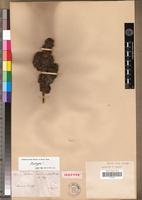
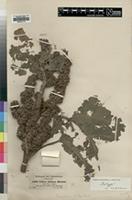
Isotype of Urtica bullosa Steud. [family URTICACEAE]
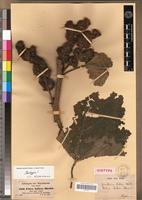
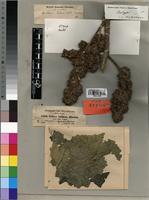
Holotype of Urtica bullosa Steud. [family URTICACEAE]
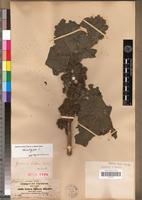
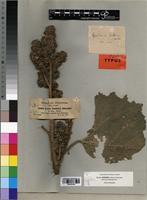
Isotype of Urtica bullosa Hochst. ex Steud. [family URTICACEAE]
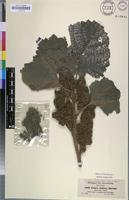
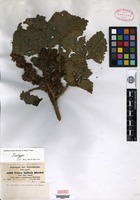
Isotype of Urtica bullosa Steud. [family URTICACEAE]
Isotype of Urtica bullosa Hochstetter [family URTICACEAE]
Previous
Next

Name

Identification
Isotype of Urtica bullosa Hochst. ex Steud. [family URTICACEAE ] Girardinia bullosa (Hochst. ex Steud.) Wedd. [family URTICACEAE ] (stored under name); Verified by Friis,
Related name
  • Urtica bullosa
  • Girardinia bullosa

Flora

Entry for GIRARDINIA bullosa Wedd. [family URTICACEAE]
Herbarium
Royal Botanic Gardens, Kew (K)
Collection
Flora of Tropical Africa
Resource Type
Reference Sources
Entry From
Flora of Tropical Africa, Vol 6, Part 2, page 240, (1917)
Names
GIRARDINIA bullosa Wedd. [family URTICACEAE], in Ann. Sci. Nat. 4me sér. i. 181. —Wedd. Monogr. Urtic. 168, and t. 2, B, figs. 5–7, and in DC. Prodr. xvi. i. 102; Engl. Hochgebirgsfl. Trop. Afr. 193 and in Mildbraed, Wiss. Ergebn. Deutsch. Zentr.-Afr. Exped. 1907–8, ii. 190.
Urtica bullosa Hochst. ex Steud. [family URTICACEAE], in Flora, 1850, 259; A. Rich. Tent. Fl. Abyss. ii. 262.
Information
A large herb, monœcious or diœcious; branches stout, hollow, hispidulous and densely beset with strong whitish spreading or recurved stinging hairs. Leaves large, rotund-ovate, apex shortly acuminate, base cordate or truncate, margin cut into numerous short triangular grossly serrate lobes, 3-nerved at the base, with 4–5 somewhat ascending conspicuous nerves above on each side, spaces between the nerves occupied by an elaborate conspicuous network of veins, 1/2–1 1/2 ft. long and about as wide; upper face dark green when dry, bullate, with scattered large stinging hairs and smaller appressed whitish stiff hairs; under face with strong stinging hairs on the nerves, and tomentose from the soft hairs on the veins; petiole 2–8 in. long, stout, hairy like the leaf-nerves. United stipules broadly elliptic, entire or 2-fid, 3/4 in. long, strongly 2-nerved, puberulous. Male inflorescence laxly paniculate, about as long as the petiole, 8 in.; flowers densely clustered on the axis and spreading branches which are similar in their hairs to the petioles; pedicels up to 1 1/2 lin. long, softly hairy; perianth 4–5-partite, 1 1/2 lin. long, the concave segments bearing a triangular horn-like projection below the incurved membranous blunt apex: in one specimen a small inflorescence containing both male and female branches occurs. Female inflorescence consisting of an axis and a few short branches densely covered with lobe-like cymes, shorter or longer than the leaf-stalk, densely beset with stinging hairs; flowers densely crowded, subsessile; perianth 2-lobed, upper lobe larger, about 3/5 lin. long, enveloping the ovary, with a dorsal keel and gibbous below the minutely 3-toothed apex, lower lobe small, narrow, subulate. The inflorescence in fruit forms very dense cylindrical lobulate structures up to 6 in. long (including a stalk of 1 in.) and 1 in. thick. Achene rounded, 2 lin. in diam., blackish-brown, surface granulate.
Distribution
German East Africa Mozamb. Dist. Ruanda; south of Karisimbi, Mildbraed, 1503.Abyssinia Nile Land near Jenausa, Schimper, 1409! Gafat, 8200 ft., Schimper, 1261! Samen; Ghaba, Steudner, 1337; and without precise locality, Schimper, 622!

Related Materials

  • Terms and Conditions
  • Privacy Policy
  • Cookie Policy
  • Cookie Settings
  • Accessibility
  • Help
  • Contact Us
  • Facebook
  • Twitter
ITHAKA

JSTOR is part of ITHAKA, a not-for-profit organization helping the academic community use digital technologies to preserve the scholarly record and to advance research and teaching in sustainable ways.

©2000-2026 ITHAKA. All Rights Reserved. JSTOR®, the JSTOR logo, JPASS®, Aluka®, and ITHAKA® are registered trademarks of ITHAKA.

╳