JSTOR Global Plants Home
  • Home
  • Browse
  • About
  • Access
  • Account
    • Saved Items
    • Profile
  • Log in

Global Plants

Skip to Main Content
  • JSTOR Global Plants Home
  • Global Plants

    • Browse
    • About
    • Access
    • Account
      • Saved Items
      • Profile
Log in
  • Browse
  • About
  • Access
  • Account
    • Saved Items
    • Profile
Advanced Search

Compilation
Euphorbia decidua

3 Images see all

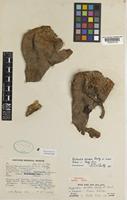
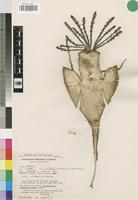
Holotype of Euphorbia decidua P.R.O.Bally & L.C.Leach [family EUPHORBIACEAE]
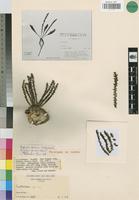
Paratype of Euphorbia decidua Bally & Leach [family EUPHORBIACEAE]
Previous
Next

Name

Identification
Euphorbia decidua P.R.O.Bally & L.C.Leach [family EUPHORBIACEAE ] (stored under name);
Related name
  • Euphorbia decidua

Flora

Entry for Euphorbia decidua P.R.O. Bally & L.C. Leach [family EUPHORBIACEAE]
Herbarium
Royal Botanic Gardens, Kew (K)
Collection
Flora Zambesiaca
Resource Type
Reference Sources
Entry From
FZ, Vol 9, Part 5, (2001) Author: S. Carter & L.C. Leach
Names
Euphorbia decidua P.R.O. Bally & L.C. Leach [family EUPHORBIACEAE], in Kirkia 10: 293 (1975); in Candollea 18: 347 (1963) (description without type). —Leach in Bull. Jard. Bot. Belg. 46: 251 (1976). —Court, Succ. Fl. South. Africa: 27 & 29 (1981). —Hargreaves, Succ. Spurges Malawi: 46 (1987). —S. Carter in F.T.E.A., Euphorbiaceae, part 2: 495 (1988). Type: Zambia, Mweru Wantipa, fl. 10.i.1944, Bredo in Bally E271 (K, holotype).
Information
Spiny succulent dwarf perennial, with a much-reduced underground stem merging into an obovoid tuberous root to c. 15–25 × 8 cm, tapering into a long tap-root below.Branches numerous from the stem apex, erect to 15 cm or trailing to 25 cm, simple or sometimes branched at the base, c. 6 mm in diameter, 3–4(6)-angled, withering and finally deciduous in the dry season; angles with prominent tubercles c. 2.5 mm high and 2–10 mm apart along the margins.Spine shields to 3 mm in diameter, rounded, at tips of tubercles, not decurrent; spines 1.5–4.5 mm long, expanded at the base; prickles rudimentary.Leaves 3 × 1 mm, lanceolate, fleshy, deciduous; young plants sometimes producing several leaves from stem apex or branch bases, to c. 5 × 1 cm, lanceolate, tapering into a petiole to 2 cm long.Cymes produced from stem apex after branches have withered, numerous, erect to 3–6 cm long, 1–2-forked, with peduncles 2–4 cm long and cyme branches to 1.5 cm long, cymes sometimes in 2–6-rayed pseudo-umbels on lush specimens with peduncles to 3 cm long; flowering eyes c. 2 mm above the spine shields, rarely producing simple subsessile cymes before the branches wither; bracts c. 2.75 × 2 mm, ovate, denticulate.Cyathia 3 × 3.5 mm, with cup-shaped involucres; glands transversely oblong to 2 mm, touching; lobes 1 × 1 mm, rounded fimbriate.Male flowers: bracteoles 3 mm long, laciniate; stamens 4 mm long.Female flower: styles 1.5 mm long, free to the base with spreading bifid apices.Capsule deeply obtusely lobed, 3.25 × 5 mm, exserted on a recurved pedicel 6 mm long.Seeds c. 2 mm in diameter, subglobose, smooth.
Habitat
Brachystegia woodland
Altitude range
900–1550 m.
1550
900
Distribution
Malawi C Nkhotakota Distr., near Chipata (Chipala) Hill, st. 16.i.1959, Robson & Jackson 1225 (BM; K; SRGH).Zambia C Kabwe, fr. 7.x.1963, Fanshawe 8035 (K; NDO).Zambia W Luanshya, fr. 17.ix.1963, Fanshawe 7994 (NDO).Malawi N Mzimba Distr., 9.5 km northeast of Mzambazi, st. 22.i.1978, Pawek 13673 (K; MAL; MO).Zimbabwe N Guruve Distr., 19 km north of Guruve (Sipolilo), st. 16.iv.1960, Leach & Brunton 9873 (BR; K; SRGH).Zambia N Isoka Distr., Mwinimpangala (Mpangara), 9.5 km from Malawi border, northwest of Mafinga Hills, st. 27.xii.1972, Pawek 6142 (K; MAL; MO; SRGH).
Distribution (external)
south-eastern Dem. Rep. Congo
southern Tanzania

Related Materials

  • Terms and Conditions
  • Privacy Policy
  • Cookie Policy
  • Cookie Settings
  • Accessibility
  • Help
  • Contact Us
  • Facebook
  • Twitter
ITHAKA

JSTOR is part of ITHAKA, a not-for-profit organization helping the academic community use digital technologies to preserve the scholarly record and to advance research and teaching in sustainable ways.

©2000-2026 ITHAKA. All Rights Reserved. JSTOR®, the JSTOR logo, JPASS®, Aluka®, and ITHAKA® are registered trademarks of ITHAKA.

╳