JSTOR Global Plants Home
  • Home
  • Browse
  • About
  • Access
  • Account
    • Saved Items
    • Profile
  • Log in

Global Plants

Skip to Main Content
  • JSTOR Global Plants Home
  • Global Plants

    • Browse
    • About
    • Access
    • Account
      • Saved Items
      • Profile
Log in
  • Browse
  • About
  • Access
  • Account
    • Saved Items
    • Profile
Advanced Search

Compilation
Encephalartos cycadifolius

5 Images see all

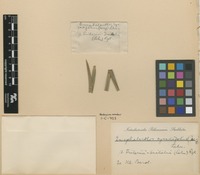
Filed as Encephalartos friderici-guilielmi Lehm. [family ZAMIACEAE]
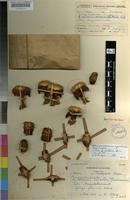
Paratype of Encephalartos cycadifolius (Jacq.) Lehm. [family ZAMIACEAE]
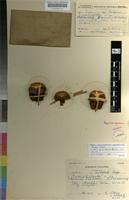
Encephalartos lanatus Stapf & Burtt Davy [family ZAMIACEAE]
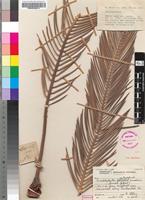
Holotype of Encephalartos cycadifolius (Jacq.) Lehm. [family ZAMIACEAE]
Previous
Next

Name

Identification
Encephalartos friderici-guilielmi Lehm. [family ZAMIACEAE ] Encephalartos cycadifolius Lehm. [family ZAMIACEAE ] Encephalartos lanatus Stapf & Burtt Davy [family ZAMIACEAE ] (stored under name); Verified by Burtt-Davy, J.,
Related name
  • Encephalartos friderici-guilielmi
  • Encephalartos lanatus
  • Encephalartos cycadifolius

Flora

Entry for ENCEPHALARTOS cycadifolius Lehm. [family ZAMIACEAE]
Herbarium
Royal Botanic Gardens, Kew (K)
Collection
Flora Capensis
Resource Type
Reference Sources
Entry From
Flora Capensis, Vol 5, Part 2 (Supplement), page 24, (1933) Author: (By J. HUTCHINSON & G. RATTRAY.)
Names
ENCEPHALARTOS cycadifolius Lehm. [family ZAMIACEAE], Pugill. vi. 13 (1834);—Miq. Monogr. Cycad. 43, t. 1, fig. y-z (1842); DC. Prodr. xvi. ii. 531, partly; Schuster in Engl. Pflanzenr. Cycadac. 108 (excl. syn. E. Ghellinkii Lem.).
Zamia cycadifolia Jacq. [family ZAMIACEAE], Fragm. 27, partly (as to t. 26 only*) (1800); Pers. Synop. ii. 631; Spreng. Syst. iii. 908.
Encephalartos Friderici-Guilielmi Lehm. [family ZAMIACEAE], Pugill. vi. 8 (1834); Miq. Monogr. Cycad. 44 (1842).
Encephalartos acanthus Masters [family ZAMIACEAE], in Gard. Chron. 1878, ii. 810.
Information
stem stout, up to 10 ft. high, densely woolly; leaves numerous, up to 5 ft. long, straight or nearly so; rhachis densely woolly when young, subterete; leaflets very numerous and crowded, usually overlapping, straight or nearly so, linear, very shortly pointed, the middle ones the longest, about 5–6 in. long, about 1/6 in. broad, rigid, with very thick margins and 8–9 contiguous thick very conspicuous nerves; male cones shortly pedunculate, curved, cylindric, 8–10 in. long, about 3 in. in diam., very thickly and completely covered with brownish wool like cotton wool; scales rather thin and flat, with a narrow woolly top and thin margins, except for the margins completely covered with sporangia; female cones several, oblong-ellipsoid, about 10 in. long and 5–6 in. broad, very densely woolly like the male; scales peltate with recurved glabrescent extremities, the top elliptic and densely woolly; seeds yellow, about 1 1/2–2 in. long and 1 1/4–1 1/2 in. in diam. null
Distribution
SOUTH AFRICA GEOGRAPHICAL RANGE: From Kliplaat in the Jansenville Div. (fide Marloth), Cathcart, Queenstown and Tsolo districts; an inland species growing at 3000–5300 ft. alt., at least 60 miles distant from the coast. Jansenville Div. (fide Marloth): Uitenhage, Zeyher (Herb. Mus. Brit.)! Cathcart Div.: near Cathcart, Sim, 2999! without locality, 5300 ft., Kuntze!  Queenstown Div.: amongst rocks on mountain tops around Queenstown, 4000–4500 ft., Galpin, 1525! Summit of Mbumbula Range, Queenstown, 4700 ft., Pearson (photo.)! Oxton Manor, Queenstown, 4000 ft., Hay in Herb. Galpin, 8411! King Williamstown Div.: near King Williamstown, Sim in S. Afr. Mus. Herb., 1347! Tsolo district (fide Rattray).
Notes
Our knowledge of this species dates from Jacquin (Fragmenta Botanica, p. 27) in 1800. Unfortunately he confused two species. He described and figured at t. 26 a leaf of the plant which has always been known either as E. cycadifolius or E. Friderici-Guilielmi. But the female cone shown by him in t. 25 is probably that of E. villosus Lem., a species not recognised and described until 1867; this female cone is quite glabrous and the seeds are red, whereas in E. cycadifolius the female cone is very densely and permanently woolly, and the seeds are yellow.

Related Materials

  • Terms and Conditions
  • Privacy Policy
  • Cookie Policy
  • Cookie Settings
  • Accessibility
  • Help
  • Contact Us
  • Facebook
  • Twitter
ITHAKA

JSTOR is part of ITHAKA, a not-for-profit organization helping the academic community use digital technologies to preserve the scholarly record and to advance research and teaching in sustainable ways.

©2000-2026 ITHAKA. All Rights Reserved. JSTOR®, the JSTOR logo, JPASS®, Aluka®, and ITHAKA® are registered trademarks of ITHAKA.

╳