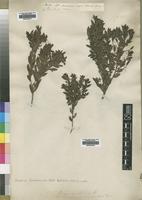
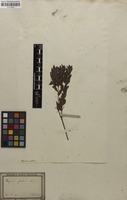
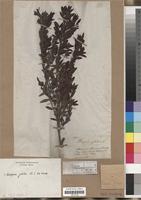
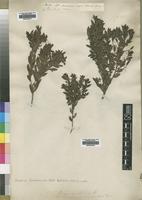
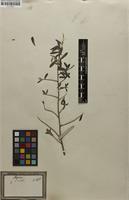
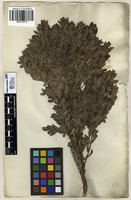
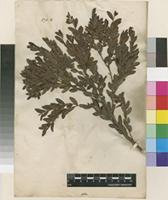
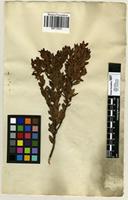
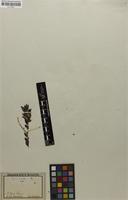
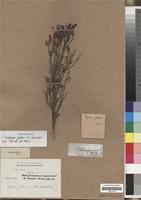
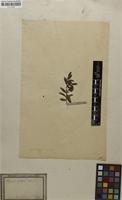
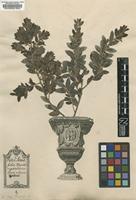
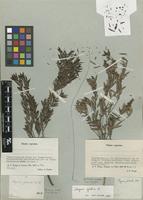
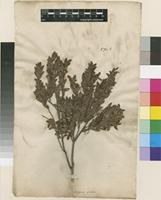
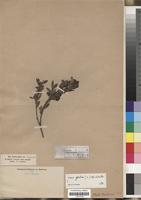
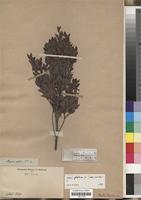
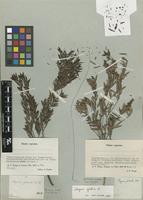
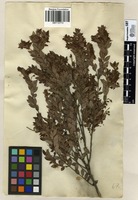
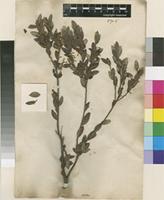
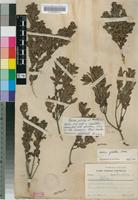
An erect dense much-branched evergreen shrub 0• 6-1 • 8 m high; stems up to 15 cm in thickness; branches erect or occasionally somewhat spreading, tawny pilose when young; bark blackish-grey. Leaves alternate, sessile; leaf blade narrowly to broadly elliptic or occasionally rotund, 1-3 cm long and 0-4-1 cm wide, coriaceous, smooth and greenish above, finely wrinkled and brownish below, appressed pubescent when young, soon becoming glabrous and glossy; nervation except for the midnerve indistinct; margin entire, smooth. Flowers borne in small often pendulous 2-5 flowered racemes, or solitary and axillary, pentamerous, dioecious (female and functionally male), up to 0-7 cm long; peduncles 0-5-1 • 5 cm long, slender, with minute stalked or sessile glands; bracts early deciduous, minute to well developed, distant, lanceolate to subulate. Calyx only slightly accrescent, divided nearly to the base, segments 5, narrowly lanceolate-acuminate, 1/2-3/4 as long as the corolla, minutely glandular and pubescent outside, often pilose as well. Corolla campanulate, creamy white, mostly glabrous; tube about as long as the lobes or slightly shorter; lobes oblong, rounded. Stamens usually 10 (reduced to staminodes in the female flowers), anthers lanceolate, hairy. Ovary more or less conical, 4-6 celled with one ovule in each cell, minutely glandular and sparsely to densely pubescent; style short, appressed bristly, branches 2-3, glabrous. Fruit oblong to subglobose, up to 1 cm long and 0 • 7 cm broad, usually not dehiscing, minutely glandular, at length glabrous, purple or reddish when ripe; fruiting calyx mostly reflexed, gla-brescent, segments linear lanceolate. Seeds usually solitary, broadly oblong, obliquely divided by a thin line.