JSTOR Global Plants Home
  • Home
  • Browse
  • About
  • Access
  • Account
    • Saved Items
    • Profile
  • Log in

Global Plants

Skip to Main Content
  • JSTOR Global Plants Home
  • Global Plants

    • Browse
    • About
    • Access
    • Account
      • Saved Items
      • Profile
Log in
  • Browse
  • About
  • Access
  • Account
    • Saved Items
    • Profile
Advanced Search

Compilation
Didymoglossum petersii

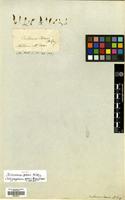
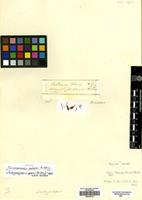
2 Images see all

Isotype of Trichomanes petersii A. Gray [family HYMENOPHYLLACEAE]
Previous
Next

Name

Identification
Trichomanes petersii A. Gray [family HYMENOPHYLLACEAE ] Verified by Not on sheet, Didymoglossum petersii (A. Gray) Copel [family HYMENOPHYLLACEAE ] (stored under name); Verified by Not on sheet, Isotype of Trichomanes petersii A. Gray [family HYMENOPHYLLACEAE ] Verified by Not on sheet,
Related name
  • Didymoglossum petersii
  • Trichomanes petersii
Common name
  • Dwarf bristle fern, Flora of North America Vol. 2
  • Peters's bristle fern, Flora of North America Vol. 2

Flora

Entry for Trichomanes petersii A. Gray [family ]
Herbarium
Flora of North America (FNA)
Collection
Flora of North America
Resource Type
Reference Sources
Entry From
Flora of North America, Vol 2,
Names
Trichomanes petersii A. Gray [family ], Amer. J. Sci. Arts, ser. 2, 15: 326. 1853
Didymoglossum petersii (A. Gray) Copeland [family HYMENOPHYLLACEAE]
Treatment Author(s)
Donald R. Farrar
Information
Plants on rock or epiphytic. Stems long-creeping, threadlike, and intertwining, bearing scattered leaves, covered with dark hairs of 2 types, 2-celled glandular hairs and elongate rhizoidlike hairs; roots absent. Leaves elliptic to oblanceolate, simple, 0.5--2 cm × 2--5 mm, ± entire, bearing simple or 2-cleft dark hairs on margin and 2-celled glandular hairs on petioles and veins; petioles nearly as long as blades. Venation weakly pinnate with numerous unconnected false veins. Soral involucres usually 1 per leaf, terminal on blades, short-conic, flaring widely at mouth; involucre lips not dark edged. Gametophytes composed entirely of branched filaments. Gemmae composed of short filaments of undifferentiated cells. 2 n = ca. 102.
Altitude range
0--500 m
Distribution
MexicoCentral America in Guatemala.USA Ala.USA Ark.USA Fla.USA Ga.USA La.USA Miss.USA N.C.USA S.C.USA Tenn.
Discussion
Trichomanes petersii has irregular meiosis and generally misshapen spores, but it produces some large and viable spores, presumably unreduced in chromosome number. Gametophytes, identified as this taxon by enzyme electrophoresis, have been observed to produce apogamous sporophytes. Therefore, the species seems capable of some reproduction by an apogamous life cycle. Sporophytes also reproduce vegetatively by dispersible buds formed on the leaves. Although some gametophytes in the vicinity of sporophytes have been shown to be Trichomanes petersii , most of the independent Trichomanes gametophyte populations of the eastern United States are T . intricatum .
Sporophytes of Trichomanes petersii and other species of subg. Didymoglossum form dense mats of imbricated leaves, often excluding all other vegetation. In this habit, as well as in their reduced size and absence of roots, they have adopted a growth form mimicking and successfully competing with bryophytes. In Louisiana and Mississippi, T . petersii occurs on trunks of Fagus and Magnolia . Elsewhere it is on noncalcareous rocks, but in Florida, T . petersii also occurs on chert boulders in limestone sinks and cliffs.

Related Materials

  • Terms and Conditions
  • Privacy Policy
  • Cookie Policy
  • Cookie Settings
  • Accessibility
  • Help
  • Contact Us
  • Facebook
  • Twitter
ITHAKA

JSTOR is part of ITHAKA, a not-for-profit organization helping the academic community use digital technologies to preserve the scholarly record and to advance research and teaching in sustainable ways.

©2000-2026 ITHAKA. All Rights Reserved. JSTOR®, the JSTOR logo, JPASS®, Aluka®, and ITHAKA® are registered trademarks of ITHAKA.

╳