JSTOR Global Plants Home
  • Home
  • Browse
  • About
  • Access
  • Account
    • Saved Items
    • Profile
  • Log in

Global Plants

Skip to Main Content
  • JSTOR Global Plants Home
  • Global Plants

    • Browse
    • About
    • Access
    • Account
      • Saved Items
      • Profile
Log in
  • Browse
  • About
  • Access
  • Account
    • Saved Items
    • Profile
Advanced Search

Compilation
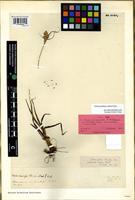
Carex ecklonii

13 Images see all

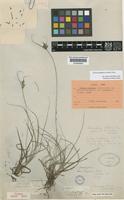
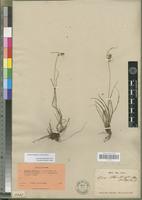
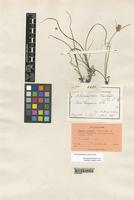
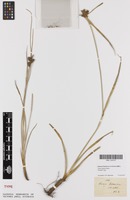
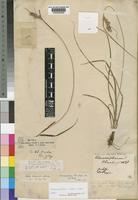
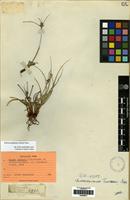
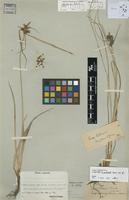
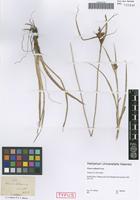
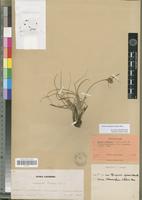
Syntype of Carex zeyheri C.B. Clarke [family CYPERACEAE]
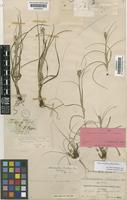
Isolectotype of Carex zeyheri C.B.Clarke [family CYPERACEAE]
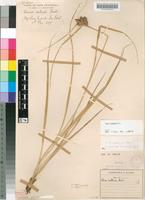
Isolectotype of Schoenoxiphium ecklonii Nees [family CYPERACEAE]
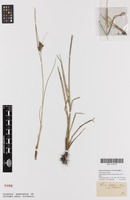
Type of Carex ecklonii Nees [family CYPERACEAE]
Type of Schoenoxiphium thunbergii Nees [family CYPERACEAE]
Isolectotype of Carex zeyheri C.B.Clarke [family CYPERACEAE]
Isotype of Carex ecklonii Nees var. angustifolia [family CYPERACEAE]
Syntype of Carex ecklonii Nees [family CYPERACEAE]
Isolectotype of Carex zeyheri C.B.Clarke [family CYPERACEAE]
Schoenoxiphium ecklonii Nees [family CYPERACEAE]
Filed as Carex ecklonii Nees [family CYPERACEAE]
Isolectotype of Carex ecklonii Nees var. ß [family CYPERACEAE]
Syntype of Carex bisexualis C.B. Clarke [family CYPERACEAE]
Previous
Next

Name

Identification
Carex ecklonii Nees [family CYPERACEAE ] (stored under name); Verified by C.G.D. Nees,
Related name
  • Carex zeyheri
  • Carex ecklonii

Flora

Entry for CAREX extensa Gooden. [family CYPERACEAE]
Herbarium
Royal Botanic Gardens, Kew (K)
Collection
Flora Capensis
Resource Type
Reference Sources
Entry From
Flora Capensis, Vol 7, page 149, (1900) Author: (By C. B. CLARKE.)
Names
CAREX extensa Gooden. [family CYPERACEAE], in Trans. Linn. Soc. ii. 175, t. 21, fig. 7;—Schkuhr, Riedgr. i. 74; ii. 56, t. Xx. 72, and t. V. 72; Kunth, Enum. ii. 447; Boeck. in Linnæa, xli. 288.
CAREX Ecklonii Nees [family CYPERACEAE], in Linnæa, x. 203; Kunze, Suppl. Riedgr. 25, t. 5; Kunth, Enum. ii. 517.
Information
glabrous; stems 6–18 in. long, nearly smooth; leaves usually as long as the stem, 1/10– 1/5 in. broad, thinly scabrous; spikes 3–4 within an inch of the top of the stem, 1/2– 3/4 in. long, terminal male, the others female; bracts long, often overtopping the inflorescence by 4–7 in.; female spikes 1/2 by 1/4 in. (but, in Buchanan 167, 1 1/3 by 1/4 in., not crowded, lowest 1 3/4 in. distant); glumes oblong, often truncate, brown, with the 3-nerved brown keel often excurrent as a tough point hardly reaching the top of the utricle; male glumes nearly the same as the female; style 3-fid; utricle 1/6 in. long, ellipsoid trigonous, 10–13-nerved, glabrous, narrowed into a short conic beak about 1/4 the length of the utricle. null
Range
Widely distributed in Europe, North Africa, the Orient, and North and South America.
Distribution
COAST REGION Port Elizabeth Div.; common along the coast, E.S.C.A. Herb., 177!EASTERN REGION Natal; near Greytown, Buchanan, 167!SOUTH AFRICA without locality, Bergius! Verreaux! Harvey, 349! Pappe! Auerswald!
Notes
The South African material agrees with the largest European examples; having the keel of the glumes strongly excurrent, the beak rather long, and has both narrow and broader leaves. Boott agrees with Boeckeler that C. Ecklonii cannot be kept distinct from C. extensa.

Related Materials

  • Terms and Conditions
  • Privacy Policy
  • Cookie Policy
  • Cookie Settings
  • Accessibility
  • Help
  • Contact Us
  • Facebook
  • Twitter
ITHAKA

JSTOR is part of ITHAKA, a not-for-profit organization helping the academic community use digital technologies to preserve the scholarly record and to advance research and teaching in sustainable ways.

©2000-2026 ITHAKA. All Rights Reserved. JSTOR®, the JSTOR logo, JPASS®, Aluka®, and ITHAKA® are registered trademarks of ITHAKA.

╳