JSTOR Global Plants Home
  • Home
  • Browse
  • About
  • Access
  • Account
    • Saved Items
    • Profile
  • Log in

Global Plants

Skip to Main Content
  • JSTOR Global Plants Home
  • Global Plants

    • Browse
    • About
    • Access
    • Account
      • Saved Items
      • Profile
Log in
  • Browse
  • About
  • Access
  • Account
    • Saved Items
    • Profile
Advanced Search

Compilation
Bombax mossambicense

4 Images see all

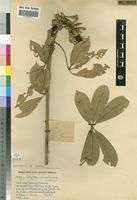
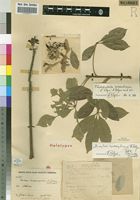
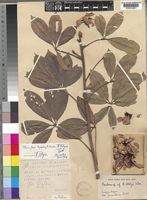
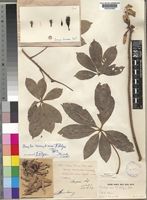
Isotype of Bombax mossambicense A.Robyns [family BOMBACACEAE]
Holotype of Bombax mossambicense A.Robyns [family BOMBACACEAE]
Rhodognaphalon mossambicense (A.Robyns)A.Robyns [family BOMBACACEAE]
Previous
Next

Name

Identification
Bombax rhodognaphalon K.Schum. ex Engl. [family BOMBACACEAE ] Verified by Not on sheet, Rhodognaphalon mossambicense (A.Robyns) A.Robyns [family BOMBACACEAE ] (stored under name); Verified by Robyns, A., 1961 Bombax mossambicense A.Robyns [family BOMBACACEAE ] Verified by Robyns, A., 1957
Related name
  • Bombax stolzii
  • Rhodognaphalon mossambicense
  • Bombax rhodognaphalon
  • Bombax mossambicense

Flora

Entry for Bombax mossambicense A. Robyns [family BOMBACACEAE]
Herbarium
Royal Botanic Gardens, Kew (K)
Collection
Flora Zambesiaca
Resource Type
Reference Sources
Entry From
FZ, Vol 1, Part 2, page 511, (1961) Author: H. Wild
Names
Bombax mossambicense A. Robyns [family BOMBACACEAE], in Bull. Jard. Bot. Brux. 27: 664 (1957). Type: Mozambique, Malema, Gomes e Sousa 868 (COI, holotype; K).
Bombax buonopozense [family BOMBACACEAE], sensu Sim, For. Fl. Port. E. Afr.: 16, t. 12 (1909). — Bakh. in Bull. Jard. Bot. Buitenz., Sér. 3, 6: 184 (1924) pro parte quoad specim. Sim.
Information
Tree up to 15 m. tall; branchlets densely pubescent. Leaves 5–7-foliolate; petiole up to 10 cm. long, densely pubescent; leaflet-lamina 5–9·5 × 2–3·5 cm., obovate-elliptic to obovate-oblong, apex bluntly acuminate, sometimes mucronate, base cuneate, sparsely stellate-pubescent above, rather more densely so below, with 12–14 pairs of nerves slightly raised above and below and looping within the margin; petiolules up to 1 cm. long. Flowers usually in 2-flowered cymes with a tendency to form terminal fascicles; peduncle c. 0·3 cm. long, stellate-puberulous; pedicels similar, c. 0·8 cm. long. Calyx 6–8 × 7–8 mm., campanulate, very shortly lobed, stellate-tomentellous outside but later tomentum becoming sparser, silvery tomentose with simple hairs within. Petals whitish, 4·8–5·2 × 0·8 cm., oblong-lanceolate, apex blunt, straight in full flower, tomentellous outside, tomentellous inside except towards the base. Staminal tube c. 1·2 cm. long; filaments c. 3 cm. long; attached just above the anther-base, anthers c. 1·2 mm. long, oblong. Ovary pyriform, glabrous when young but soon becoming tomentose; style c. 5 cm. long, densely hirsute in the upper third; stigma ellipsoid, entire. Mature fruit not known.
Habitat
According to Sim this species is cultivated around Quelimane and the trunks are used for dugout canoes.
Range
Not yet known outside Mozambique.
Distribution
Mozambique Z Quelimane, fide Sim.Mozambique N Malema R., fl. 22.viii.1931, Gomes e Sousa 868 (COI; K).
Notes
This species is very near B. stolzii from Tanganyika but differs principally from this latter species by its hairy style. A much wider range of material is needed before the real importance of this apparently rather minor difference can be properly assessed.

Related Materials

  • Terms and Conditions
  • Privacy Policy
  • Cookie Policy
  • Cookie Settings
  • Accessibility
  • Help
  • Contact Us
  • Facebook
  • Twitter
ITHAKA

JSTOR is part of ITHAKA, a not-for-profit organization helping the academic community use digital technologies to preserve the scholarly record and to advance research and teaching in sustainable ways.

©2000-2026 ITHAKA. All Rights Reserved. JSTOR®, the JSTOR logo, JPASS®, Aluka®, and ITHAKA® are registered trademarks of ITHAKA.

╳