JSTOR Global Plants Home
  • Home
  • Browse
  • About
  • Access
  • Account
    • Saved Items
    • Profile
  • Log in

Global Plants

Skip to Main Content
  • JSTOR Global Plants Home
  • Global Plants

    • Browse
    • About
    • Access
    • Account
      • Saved Items
      • Profile
Log in
  • Browse
  • About
  • Access
  • Account
    • Saved Items
    • Profile
Advanced Search

Compilation
Berlandiera texana

15 Images see all

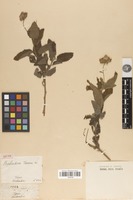
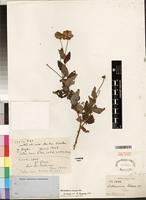
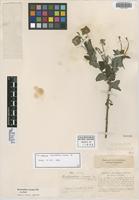
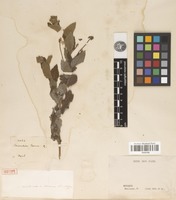
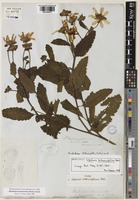
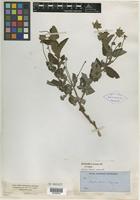
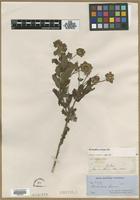
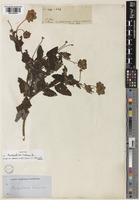
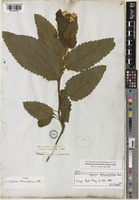
Isotype of berlandiera texana DC. [family ASTERACEAE]
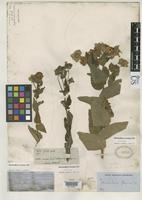
Isotype of Berlandiera texana DC. [family ASTERACEAE]
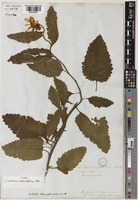
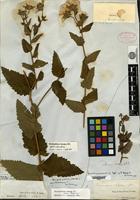
Type of Silphium betonicifolium Hook. [family ASTERACEAE]
Isotype of Berlandiera texana DC. [family ASTERACEAE]
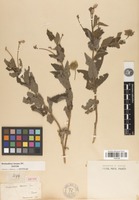
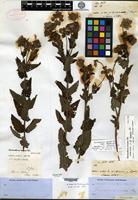
Isotype of berlandiera texana DC. [family ASTERACEAE]
Isotype of Berlandiera texana de Candolle [family ASTERACEAE]
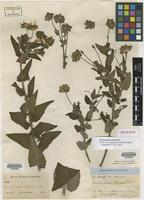
Isotype of berlandiera texana DC. [family ASTERACEAE]
Type? of Berlandiera texana DC. [family ASTERACEAE]
Lectotype of Silphium betonicifolium Hook. [family ASTERACEAE]
Isotype of Berlandiera texana DC. [family ASTERACEAE]
Type? of Berlandiera texana DC. [family ASTERACEAE]
Isotype of Berlandiera texana DC. [family ASTERACEAE]
Isolectotype of Silphium betonicifolium Hook. [family ASTERACEAE]
Isotype of Berlandiera texana Candolle, A.P. de 1836 [family ASTERACEAE]
Isotype of Berlandiera texana de Candolle [family ASTERACEAE]
Previous
Next

Name

Identification
Isotype of Berlandiera texana DC. [family ASTERACEAE ] (stored under name); Verified by Not on sheet,
Related name
  • Berlandiera texana

Flora

Entry for Berlandiera ×betonicifolia (Hooker) Small [family COMPOSITAE]
Herbarium
Flora of North America (FNA)
Collection
Flora of North America
Resource Type
Reference Sources
Entry From
Flora of North America, Vol 21,
Names
Berlandiera ×betonicifolia (Hooker) Small [family COMPOSITAE], Fl. S.E. U.S., 1246, 1340. 1903
Silphium betonicifolium Hooker [family COMPOSITAE], Compan. Bot. Mag., 1: 99. 1835
Berlandiera pumila (Michaux) Nuttall var. scabrella G. L. Nesom & B. L. Turner [family COMPOSITAE]
Berlandiera texana de Candolle var. betonicifolia (Hooker) Torrey & A. Gray [family COMPOSITAE]
Treatment Author(s)
Donald J. Pinkava
Information
Plants to 110 cm. Stems (erect, flexible, sometimes suffrutescent) usually branched. Leaves evenly distributed along stems; petiolate; blades (at least at mid stem) narrowly to broadly ovate (widths 1/2–11/4 lengths), membranous, margins serrate to crenate or doubly crenate, faces finely hirsute to hispid (at least adaxial). Heads in paniculiform to corymbiform arrays. Peduncles hairy (hairs spreading to erect, relatively fine, curled). Involucres 12–18 mm diam. Ray corollas deep yellow to orange-yellow, abaxial veins green, laminae 9–18 × 5.4–9 mm. Disc corollas red to maroon. Cypselae (obovate) 2.5–4 × 4–5.5 mm. 2n = 30.
Phenology
apr-may (spring), jun-aug (summer), sep (fall)
Altitude range
50–200 m;
Distribution
USA La.USA Tex.
Discussion
In most characters, Berlandiera ×betonicifolia is intermediate between its parents (B. pumila and B. texana) in varying degrees and combinations. Drummond’s type (K) of Silphium betonicifolium resembles B. texana, to which it was assigned as a variety by J. Torrey and A. Gray (1838–1843), who commented that other specimens fitted neither varietal description completely. Artificially produced F1 offspring between extreme forms of the parents resemble closely Drummond’s type collection. Character states of S. betonicifolium that Hooker described in contradistinction to those of B. texana include longer petioles, less woody stems, and more ovate, hirsute leaves of membranous texture; and from B. pumila by the coarser and more deeply crenate margins, and peduncles with “beautiful jointed purplish hairs.” Artificially produced crosses between F1 hybrids and B. pumila resemble most of the field-collected B. ×betonicifolia specimens [called B. pumila (green form) by G. L. Nesom and B. L. Turner (1998)] because gene flow of B. ×betonicifolia is over a much greater geographic region of overlap with B. pumila than with B. texana.
Notes
as species

Related Materials

  • Terms and Conditions
  • Privacy Policy
  • Cookie Policy
  • Cookie Settings
  • Accessibility
  • Help
  • Contact Us
  • Facebook
  • Twitter
ITHAKA

JSTOR is part of ITHAKA, a not-for-profit organization helping the academic community use digital technologies to preserve the scholarly record and to advance research and teaching in sustainable ways.

©2000-2026 ITHAKA. All Rights Reserved. JSTOR®, the JSTOR logo, JPASS®, Aluka®, and ITHAKA® are registered trademarks of ITHAKA.

╳