JSTOR Global Plants Home
  • Home
  • Browse
  • About
  • Access
  • Account
    • Saved Items
    • Profile
  • Log in

Global Plants

Skip to Main Content
  • JSTOR Global Plants Home
  • Global Plants

    • Browse
    • About
    • Access
    • Account
      • Saved Items
      • Profile
Log in
  • Browse
  • About
  • Access
  • Account
    • Saved Items
    • Profile
Advanced Search

Compilation
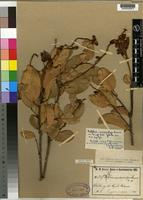
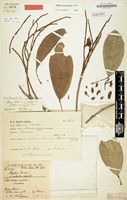
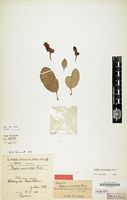
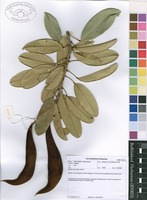
Baphia macrocalyx

10 Images see all

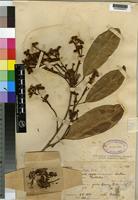
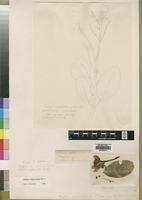
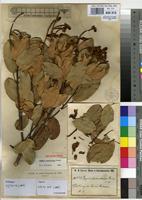
Isolectotype of Baphia macrocalyx Harms [family LEGUMINOSAE]
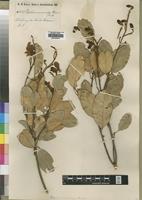
Syntype of Baphia macrocalyx Harms [family LEGUMINOSAE]
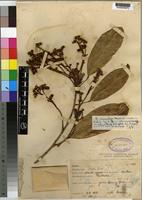
Type of Baphia macrocalyx Harms [family LEGUMINOSAE]
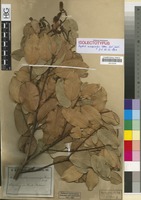
Filed as Baphia macrocalyx Harms [family FABACEAE]
Type of Baphia macrocalyx Harms [family LEGUMINOSAE]
Isolectotype of Baphia macrocalyx Harms [family LEGUMINOSAE]
Type of Baphia macrocalyx Harms [family LEGUMINOSAE]
Isolectotype of Baphia macrocalyx Harms [family LEGUMINOSAE/FABACEAE]
Type of Baphia mocimboensis P.Lima [family LEGUMINOSAE]
Isolectotype of Baphia macrocalyx Harms [family FABACEAE]
Previous
Next

Name

Identification
Baphia macrocalyx Harms [family LEGUMINOSAE ] (stored under name); Verified by Not on sheet.,
Related name
  • Baphia macrocalyx
  • Baphia mocimboensis

Flora

Entry for BAPHIA macrocalyx Harms [family LEGUMINOSAE-PAPILIONOIDEAE]
Herbarium
Royal Botanic Gardens, Kew (K)
Collection
Flora of Tropical East Africa
Resource Type
Reference Sources
Entry From
Flora of Tropical East Africa, page 1, (1971) Author: J. B. GILLETT, R. M. POLHILL & B. VERDCOURT
Names
BAPHIA macrocalyx Harms [family LEGUMINOSAE-PAPILIONOIDEAE], in E.J. 40: 33, fig. 3 (1907) & in V.E. 3 (1): 536, fig. 282 (1915); Lester-Garland in J.L.S. 45: 237 (1921); De Wild., Pl. Bequaert. 3: 291 (1925); L.T.A.: 589 (1929); T.T.C.L.: 409 (1949); Brummitt in K.B. 22: 515 (1968). Type: Tanganyika, Lindi District, Rondo Plateau, Busse 2557 (B, in Peter 48028, lecto.!, BM, EA, isolecto.!)
BAPHIA mocimboënsis P. Lima [family LEGUMINOSAE-PAPILIONOIDEAE], in Brotéria, Bot. 19: 120 (1921). Type: Mozambique, Mocimboa da Praia, Pires de Lima 265 (PO, holo, K, photo. !)
Information
Small tree up to 10 m. high. Young stems and inflorescences covered with a chocolate-brown tomentum of short ± spreading hairs. Leaves: petiole 0.8–5.5 cm.; lamina elliptic to obovate or oblanceolate, 1.7–3 times as long as broad, 4–16 cm. long, 2–7 cm. wide, rounded to cuneate at the base, obtuse to emarginate at the apex, coriaceous, with a reticulate venation prominent on both surfaces; both surfaces glabrous, at least at maturity. Flowers in fairly lax terminal or axillary racemes often branching to form panicles up to 22 cm. long, the axes conspicuously brown tomentose; bracts ± ovate, up to 6 × 4 mm., concave, usually 3-partite and apparently derived from a median reduced leaf and a pair of stipules on either side, caducous leaving a white scar; pedicels 4–9 mm.; bracteoles broadly elliptic to suborbicular, 3–6 × 2.5–5 mm., both inserted immediately beneath the calyx on the upper side of the pedicel and often ± fused at their base. Calyx 13–17 mm. long, brown tomentose, at anthesis splitting to the base on one side and almost to half way on the other side, with all 5 teeth usually becoming free at the apex, the whole eventually breaking off in one piece by a transverse break just above the base leaving a small ring surrounding the receptacle. Petals white to pinkish or violet-tinged with a yellow blotch; standard (16–) 18–26 mm. long; wings 16–21 mm. long; keel-petals 16–18 mm. long. Stamen-filaments densely hairy; anthers 2.5 mm. long. Ovary 5–8 mm. long, brown villous. Pods ± 17 × 2.5 cm., strongly curved upwards above the middle, brown tomentose when immature but perhaps glabrescent at maturity.
Range
DISTR. T8 northern Mozambique
Altitude range
300–900 m.
Distribution
TANGANYIKA Lindi District Nondora, 9 June 1906, Braun in Herb. Amani 1203 in Peter 48073 ! & Nyangamara, 12 Dec. 1942, Gillman 1069 ! & Kengedi valley, 7 June 1951, Wigg 952 !

Related Materials

  • Terms and Conditions
  • Privacy Policy
  • Cookie Policy
  • Cookie Settings
  • Accessibility
  • Help
  • Contact Us
  • Facebook
  • Twitter
ITHAKA

JSTOR is part of ITHAKA, a not-for-profit organization helping the academic community use digital technologies to preserve the scholarly record and to advance research and teaching in sustainable ways.

©2000-2026 ITHAKA. All Rights Reserved. JSTOR®, the JSTOR logo, JPASS®, Aluka®, and ITHAKA® are registered trademarks of ITHAKA.

╳