JSTOR Global Plants Home
  • Home
  • Browse
  • About
  • Access
  • Account
    • Saved Items
    • Profile
  • Log in

Global Plants

Skip to Main Content
  • JSTOR Global Plants Home
  • Global Plants

    • Browse
    • About
    • Access
    • Account
      • Saved Items
      • Profile
Log in
  • Browse
  • About
  • Access
  • Account
    • Saved Items
    • Profile
Advanced Search

Compilation
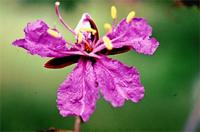
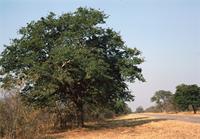
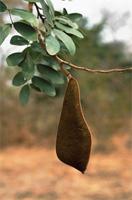
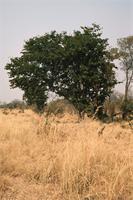
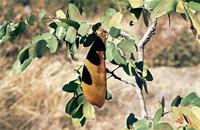
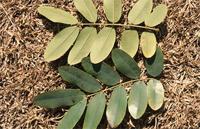
Baikiaea plurijuga

27 Images see all

Baikiaea plurijuga Harms
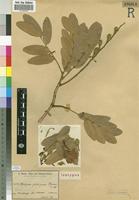
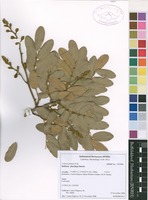
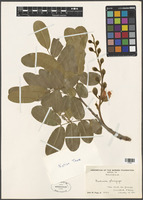
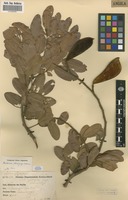
Type of Baikiaea plurijuga Harms [family LEGUMINOSAE-CAESALPINIOIDEAE]
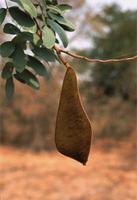
Baikiaea plurijuga Harms
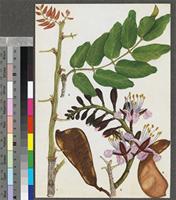
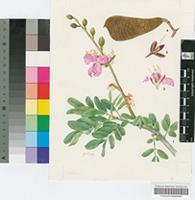
Baikiaea plurijuga Harms original illustration form the 'Trees of Central Africa'
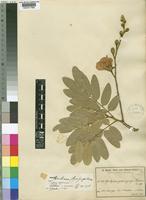
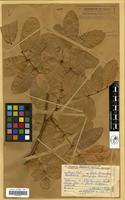
Isotype of Baikiaea plurijuga Harms [family CAESALPINIACEAE]
Isotype of Baikiaea plurijuga Harms [family LEGUMINOSAE-CAESALPINIOIDEAE]
Baikiaea plurijuga Harms
Isotype of Baikiaea plurijuga [family FABACEAE]
Baikiaea plurijuga Harms
Filed as Baikiaea plurijuga Harms [family CAESALPINIACEAE]
Filed as Baikiaea plurijuga Harms [family LEGUMINOSAE-CAESALPINIOIDEAE]
Baikiaea plurijuga Harms
Baikiaea plurijuga Harms [family FABACEAE]
Baikiaea plurijuga Harms
Filed as Baikiaea plurijuga Harms [family FABACEAE]
Baikiaea plurijuga Harms
Previous
Next

Name

Identification
Baikiaea plurijuga Harms [family LEGUMINOSAE ]
Related name
  • Baikiaea plurijuga

Flora

Entry for Baikiaea plurijuga [family FABACEAE]
Herbarium
South African National Biodiversity Institute, Compton Herbarium, Cape Town (SAM)
Collection
Flora of Southern Africa
Resource Type
Reference Sources
Entry From
Flora of South Africa, (2003) Author: Dr J.P. Roux
Names
Baikiaea plurijuga [family FABACEAE]
Information
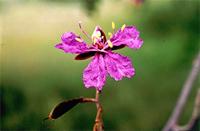
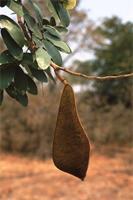
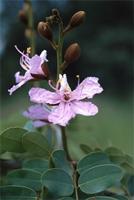
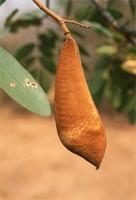
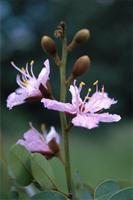
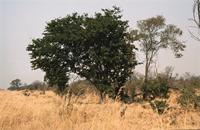
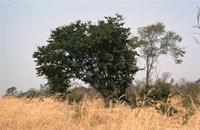
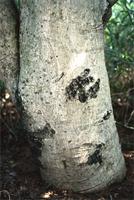
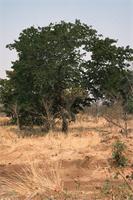
Tree up to 20 m high with a spreading crown; bark grey or brown, rough and reticu­late or sometimes ± smooth; young branch-lets fulvous-tomentose or -pubescent. Leaves paripinnate, fulvous-tomentose or -pubescent at least when young: petiole 1-2,5 cm long; rhachis 4,5-10(11) cm long; leaflets 4-5 (very rarely 6) opposite pairs, (2,2)3-6,5 (7,5) cm long, 1,2-3,2(3,5) cm wide, narrowly elliptic or oblong-elliptic, slightly oblique basally, obtuse or rounded and usually slightly emarginate apically, mostly sparingly to densely fulvous-pubescent on both surfaces, especially beneath and on the midrib, some­times ± glabrous above, closely but not very prominently reticulate on both surfaces; petiolules 1-4 mm long, fulvous-villous or -tomentose. Stipules 5-9 mm long, fulvous-villous. Racemes up to 35 cm long; axes fulvous-pubescent or -tomentose. Flowers pedicellate; bracts 3-5,5 mm long, 3-4 mm wide, ovate; bracteoles 3-4 mm long, 2-2,5 mm wide. Sepals 15-20 mm long, 5-12 mm wide, the posticous one larger than the rest, leathery, margins thinner and almost mem­branous, densely fulvous-tomentose outside, fuscous-tomentose insid
Habitat
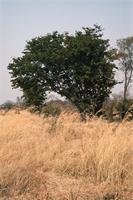
B. plurijuga, often known as "Rhodesian Teak", is an important timber tree. The wood is attractive, works well, and is used in furniture, building and in industry. Dug-out canoes are made from large logs.
Use
Baikiaea plurijuga Harms in Warb., Kunene-Samb. Exped. 248 (1903); Dinter in Feddes Repert. 15 : 346 (1918); Bak.f., Leg. Trop. Afr. 3 : 705 (1930); Pardy in Rhod. Agric. J. 48: 402 (1951); O.B. Miller in J. S. Afr. Bot. 18 : 28 (1952); Torre & Hillc. in C.F.A. 2 : 220, t.45 (1956); J. Leon, in M6m. Acad. Roy. Belg. Classe Sci. 30, 2 : 74 (1957); Palgrave, Trees Cent. Afr. 66-69 (1957); F. White, For. Fl. N. Rhod. 98 (1962); Von Breitenbach, Indig. Trees S. Afr. 3 : 336 (1965); Schreiber in F.S.W.A. 59 : 5 (1967); Palmer & Pitman, Trees S. Afr. 2 : 861 (1973). Type: Angola, rio Cubango, Calolo, Baum 428 (B, holo. f , BM!, COI, K!).
Range
Confined to Kalahari sands in Angola, South West Africa, Botswana, Zambia and Rhodesia. Occurs in woodland, often locally dominant.

Related Materials

  • Terms and Conditions
  • Privacy Policy
  • Cookie Policy
  • Cookie Settings
  • Accessibility
  • Help
  • Contact Us
  • Facebook
  • Twitter
ITHAKA

JSTOR is part of ITHAKA, a not-for-profit organization helping the academic community use digital technologies to preserve the scholarly record and to advance research and teaching in sustainable ways.

©2000-2026 ITHAKA. All Rights Reserved. JSTOR®, the JSTOR logo, JPASS®, Aluka®, and ITHAKA® are registered trademarks of ITHAKA.

╳