JSTOR Global Plants Home
  • Home
  • Browse
  • About
  • Access
  • Account
    • Saved Items
    • Profile
  • Log in

Global Plants

Skip to Main Content
  • JSTOR Global Plants Home
  • Global Plants

    • Browse
    • About
    • Access
    • Account
      • Saved Items
      • Profile
Log in
  • Browse
  • About
  • Access
  • Account
    • Saved Items
    • Profile
Advanced Search

Compilation
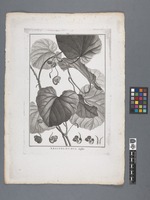
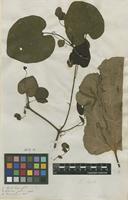
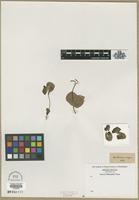
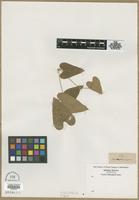
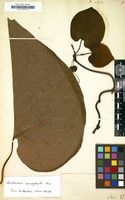
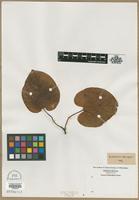
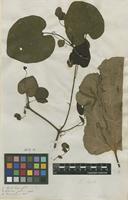
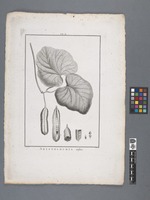
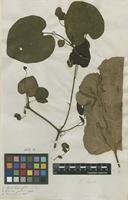
Aristolochia sipho

9 Images see all

Aristolochia sipho
Filed as Aristolochia sipho L'Hér. [family ARISTOLOCHIACEAE]
Filed as Aristolochia sp. [family ARISTOLOCHIACEAE]
Filed as Aristolochia sipho [family ARISTOLOCHIACEAE]
Filed as Aristolochia sp. [family ARISTOLOCHIACEAE]
Filed as Aristolochia sipho L'Hér. [family ARISTOLOCHIACEAE]
Aristolochia sipho
Filed as Aristolochia sipho L'Hér. [family ARISTOLOCHIACEAE]
Previous
Next

Name

Identification
Aristolochia sipho L'Hér. [family ARISTOLOCHIACEAE ] (stored under name); Verified by Not on sheet,
Related name
  • Aristolochia sp.
  • Aristolochia sipho
Common name
  • Dutchman's-pipe, Flora of North America Vol. 3

Flora

Entry for Aristolochia macrophylla Lamarck [family ARISTOLOCHIACEAE]
Herbarium
Flora of North America (FNA)
Collection
Flora of North America
Resource Type
Reference Sources
Entry From
Flora of North America, Vol 3,
Names
Aristolochia macrophylla Lamarck [family ARISTOLOCHIACEAE], Encycl., 1: 255. 1783
Aristolochia sipho L'Héritier [family ARISTOLOCHIACEAE]
Information
Lianas, twining, to 20 m, woody. Young stem ribbed, glabrous. Leaves: petiole 4-6 cm. Leaf blade reniform, 7-34 × 10-35 cm, base cordate, sinus depth 1-4.5 cm, apex obtuse to acute or acuminate; surfaces abaxially glabrous to slightly puberulent; venation palmate-pinnate. Inflorescences on new growth, axillary, solitary flowers; peduncle bracteolate, 3-7 cm; bracteoles reniform, to 15 mm. Flowers: calyx yellow-brown marked with red-brown, strongly curved; utricle pendent, globose to cylindric, 0.5-1.5 × 0.8-1 cm; syrinx absent; tube curved or bent and angled upward, cylindric, 1-3 × 0.3-0.5 cm; annulus smooth; limb yellow to brown, 3-lobed, lobes 1.5-2 × 1.5-2 cm, glabrous; gynostemium 3-lobed, globose to crown-shaped, 4 mm; anthers 6; ovary 3-locular, 3-7 cm. Capsule ovoid to cylindric, 6-8 × 4-10 cm, dehiscence basipetal; valves 6; septa entire, not attached to valves. Seeds* flat, triangular, 1 × 1 cm. 2n = 28.
Phenology
Flowering late spring-summer
Altitude range
50-1300 m
Distribution
Cumberland and Blue Ridge mountainsUSA Ga.USA Ky.USA Md.USA N.C.USA Pa.USA S.C.USA Tenn.USA Va.USA W.Va.Canada Ont.
Discussion
Aristolochia macrophylla has possibly escaped from cultivation in Connecticut, Maryland, Massachusetts, New Jersey, New York, and Vermont; these are not documented.
The name Aristolochia durior Hill has been misapplied to this species.
The Cherokee applied decoctions made from the roots of Aristolochia macrophylla directly to feet and legs to alleviate swelling; they ingested a compound infusion of "stalk chips" for yellowish urine (D. E. Moerman 1986).
The leaves of Aristolochia macrophylla are eaten by larvae of the eastern pipe-vine swallowtail butterfly, Battus philenor philenor (Linnaeus) (W. H. Howe 1975).

Related Materials

  • Terms and Conditions
  • Privacy Policy
  • Cookie Policy
  • Cookie Settings
  • Accessibility
  • Help
  • Contact Us
  • Facebook
  • Twitter
ITHAKA

JSTOR is part of ITHAKA, a not-for-profit organization helping the academic community use digital technologies to preserve the scholarly record and to advance research and teaching in sustainable ways.

©2000-2026 ITHAKA. All Rights Reserved. JSTOR®, the JSTOR logo, JPASS®, Aluka®, and ITHAKA® are registered trademarks of ITHAKA.

╳