JSTOR Global Plants Home
  • Home
  • Browse
  • About
  • Access
  • Account
    • Saved Items
    • Profile
  • Log in

Global Plants

Skip to Main Content
  • JSTOR Global Plants Home
  • Global Plants

    • Browse
    • About
    • Access
    • Account
      • Saved Items
      • Profile
Log in
  • Browse
  • About
  • Access
  • Account
    • Saved Items
    • Profile
Advanced Search

Compilation
Anadelphia afzeliana

11 Images see all

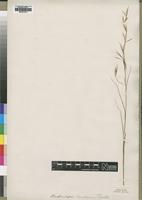
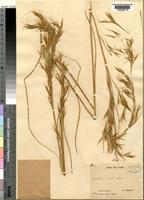
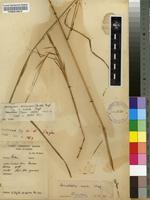
Type of Andropogon afzelianus Rendle [family POACEAE]
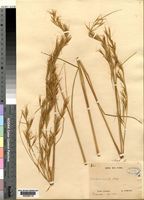
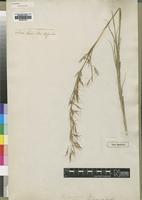
Isosyntype of Andropogon arrectus Stapf. [family POACEAE]
Filed as Anadelphia afzeliana (Rendle) Stapf [family GRAMINEAE]
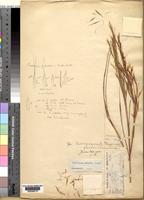
Isosyntype of Andropogon arrectus Stapf. [family POACEAE]
Type of Andropogon afzelianus Rendle [family POACEAE]
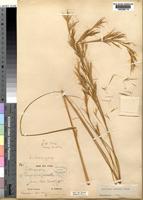
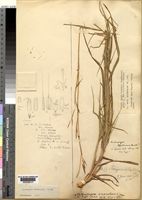
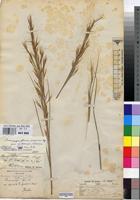
Paratype of Andropogon afzelianus Rendle [family POACEAE]
Type of Andropogon afzelianus Rendle [family POACEAE]
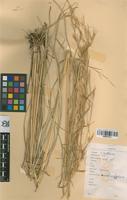
Filed as Anadelphia afzeliana Stapf [family POACEAE]
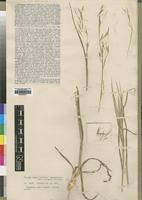
Isotype of Andropogon glauco-purpureus Stapf. [family POACEAE]
Type of Andropogon glauco-purpureus Stapf [family POACEAE]
Previous
Next

Name

Identification
Andropogon afzelianus Rendle [family POACEAE ] Anadelphia afzeliana (Rendle) Stapf [family POACEAE ] (stored under name);
Related name
  • Andropogon glauco-purpureus
  • Anadelphia afzeliana
  • Andropogon afzelianus
  • Andropogon arrectus
  • Diectomis arrecta
Common name
  • mu git (JB) (SENEGAL, DIOLA), Burkill, H.M. 1985. The useful plants of west tropical Africa, Vol. 2
  • bẹrẹ applied also to other spp. (JMD) (NIGERIA, YORUBA), Burkill, H.M. 1985. The useful plants of west tropical Africa, Vol. 2
  • bati (JB) fati (JB) (SENEGAL, SERER), Burkill, H.M. 1985. The useful plants of west tropical Africa, Vol. 2
  • a-nεpẻl (pl. ε-nεpẻl) (auctt.) ε-nεpẻl-ε-bana (JMD) ε-nεpẻl-ε-bira (NWT; JMD) ε-nεpẻl-ε-rẻk-rẻk (FCD) (SIERRA LEONE, TEMNE), Burkill, H.M. 1985. The useful plants of west tropical Africa, Vol. 2
  • tikolo-mεsε (FCD) (SIERRA LEONE, MANDING-MANDINKA), Burkill, H.M. 1985. The useful plants of west tropical Africa, Vol. 2
  • foni a general term (auctt.) foni mayambe (JMD) fovo (FCD) (SIERRA LEONE, MENDE), Burkill, H.M. 1985. The useful plants of west tropical Africa, Vol. 2
  • bayan maraya = back of the cob antelope (Thatcher) (NIGERIA, HAUSA), Burkill, H.M. 1985. The useful plants of west tropical Africa, Vol. 2
  • ñañtãg (JB) (SENEGAL, WOLOF), Burkill, H.M. 1985. The useful plants of west tropical Africa, Vol. 2
  • kulusa-binyi (NWT) (SIERRA LEONE, KORANKO), Burkill, H.M. 1985. The useful plants of west tropical Africa, Vol. 2
  • thatchgrass (Sierra Leone, Cole)., Burkill, H.M. 1985. The useful plants of west tropical Africa, Vol. 2
  • pui-lε (FCD) (SIERRA LEONE, BULOM (Sherbro)), Burkill, H.M. 1985. The useful plants of west tropical Africa, Vol. 2
  • gbolesεhrε-na (FCD) (SIERRA LEONE, YALUNKA), Burkill, H.M. 1985. The useful plants of west tropical Africa, Vol. 2
  • gboŋgbonelσ (FCD) (SIERRA LEONE, KISSI), Burkill, H.M. 1985. The useful plants of west tropical Africa, Vol. 2

Flora

Entry for ANADELPHIA afzeliana Stapf [family POACEAE]
Herbarium
Royal Botanic Gardens, Kew (K)
Collection
Flora of Tropical Africa
Resource Type
Reference Sources
Entry From
Flora of Tropical Africa, Vol 9, page 1, (1917) Author: (By O. STAPF.)
Names
ANADELPHIA afzeliana Stapf [family POACEAE]
Andropogon afzelianus Rendle [family POACEAE], in Journ. Bot. 1893, 357.
Andropogon eriocoleus K. Schum. [family POACEAE], in Engl. Jahrb. xxiv. 329.
Information
Perennial. Culms between 2 and 3 ft. high, rather stout below, terete, glabrous, 5–6-noded, with some barren branches from the lower nodes. Leaf-sheaths terete, softly hairy to villous with the exception of the glabrous base above the bearded internodes; ligules very short, truncate, glabrous; blades linear from an equally wide base, long-tapering to a fine point, up to 7 or 8 in. long and over 2 lin. wide (flattened out), softly hirsute to villous on both sides, midrib white, slender below, wider above, lateral nerves numerous and close. Spatheate panicle very scanty, narrow, up to almost 1 ft. long; primary internodes about 4, the lowest up to 4 in. long, the following very gradually decreasing; primary tiers (the lowest branch sometimes undivided at the base) 2–3-rayed, compound rays, if any, up to 3-noded, very slender, flexuous and suberect; simple rays up to 2 or even 2 1/2 in. long, very fine; subtending leaves like the preceding ones with upwards rapidly reduced blades. Spatheoles narrowly lanceolate, acute, 9–10 lin. long, subherbaceous, sparingly hairy, suffused with purple; peduncles 3–5 lin. long, enclosed in the spatheole, pubescent. Racemes laterally exserted from the middle of the spatheole, consisting of 2 sessile and 3 pedicelled spikelets; joint and pedicels filiform, about 2 lin. long, densely silky. Sessile spikelets linear-oblong, up to 2 1/2 lin. long, including the callus, which is up to 1/2 lin. long and silky-bearded. Glumes equal; lower truncate, coriaceous, brown, convex and smooth on the back, pale and scaberulous or puberulous at the tips, indistinctly 7-nerved, sides rounded far beyond the middle, then keeled, keels scabrid; upper glume oblong, truncate to subemarginate, slightly keeled upwards, 3- to sub-5-nerved, ciliate, with a terminal bristle 4–5 lin. long. Lower floret reduced to an oblong obtuse hyaline sub-2-nerved upwards ciliate valve, 2 lin. long. Upper floret hermaphrodite: valve linear-cuneate, 2-fid to the middle, with acute narrow lobes; awn 1–1 3/4 in. long, kneed and twisted below the middle, column brown, scaberulous, bristle somewhat paler. Anthers 1 lin. long. Pedicelled spikelet ♂, very narrowly linear-lanceolate, long and finely acuminate, 3 1/2–4 lin. long; glumes subequal, lower 7–10-nerved, upper slightly shorter, 3–5-nerved, delicately ciliate; lower valve 2 1/2 lin. long, like that of the lower floret in the sessile spikelet; anthers 2 lin. long.
Distribution
Sierra Leone Upper Guinea Regent, Scott Elliot, 4108! and without precise locality, Afzelius !

Related Materials

  • Terms and Conditions
  • Privacy Policy
  • Cookie Policy
  • Cookie Settings
  • Accessibility
  • Help
  • Contact Us
  • Facebook
  • Twitter
ITHAKA

JSTOR is part of ITHAKA, a not-for-profit organization helping the academic community use digital technologies to preserve the scholarly record and to advance research and teaching in sustainable ways.

©2000-2026 ITHAKA. All Rights Reserved. JSTOR®, the JSTOR logo, JPASS®, Aluka®, and ITHAKA® are registered trademarks of ITHAKA.

╳