JSTOR Global Plants Home
  • Home
  • Browse
  • About
  • Access
  • Account
    • Saved Items
    • Profile
  • Log in

Global Plants

Skip to Main Content
  • JSTOR Global Plants Home
  • Global Plants

    • Browse
    • About
    • Access
    • Account
      • Saved Items
      • Profile
Log in
  • Browse
  • About
  • Access
  • Account
    • Saved Items
    • Profile
Advanced Search

Compilation
Aloe carnea

4 Images see all

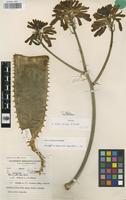
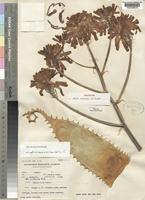
Isotype of Aloe carnea S.Carter [family ALOACEAE]
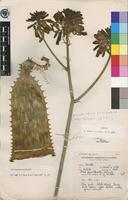
Isotype of Aloe carnea S.Carter [family ASPHODELACEAE]
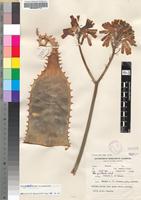
Holotype of Aloe carnea S.Carter [family ALOACEAE]
Previous
Next

Name

Identification
Aloe carnea S.Carter [family ALOACEAE ] (stored under name); Verified by Unknown, Aloe greatheadii Schönland [family ALOACEAE ] Verified by Unknown, Aloe swynnertonii Rendle [family ALOACEAE ] Verified by Hardy & Glen,
Related name
  • Aloe swynnertonii
  • Aloe greatheadii
  • Aloe carnea

Flora

Entry for Aloe carnea S. Carter [family ALOACEAE]
Herbarium
Royal Botanic Gardens, Kew (K)
Collection
Flora Zambesiaca
Resource Type
Reference Sources
Entry From
FZ, Vol 12, Part 3, page 48, (2001) Author: S. Kativu
Names
Aloe carnea S. Carter [family ALOACEAE], in Kew Bull. 51: 784 (1996). TAB. 12.3.16, fig. B. Type: Zimbabwe, 16 km west of Mutare, fl. 23.vi.1961, Leach & Wild 11135 (K, holotype; LISC; PRE; SRGH).
Information
Perennial herb, solitary or suckering to form small groups of plants, acaulescent or with a stout stem to 20 cm tall clothed in dead leaf remains. Leaves in a dense rosette, spreading; lamina to c. 30 × 6–10 cm, ovate-lanceolate, usually withered and twisted in the apical c. 10 cm, dark greyish-green on the upper surface which is conspicuously marked with large elongated whitish spots often in transverse bands toward the base, pale milky-green on the lower surface and without spots but ± lineate and distinctly so near the margin; margin horny, reddish-brown, with pungent deltoid red-brown teeth c. 6 mm long, 8–15 mm apart. Inflorescences 1–3, erect, 0.75–2 m high; peduncle 6–12(15)-branched, the lower branches sometimes rebranched; branches curving widely upwards, subtended by scarious, many-nerved bracts to c. 2.5 cm long. Racemes 3–5 × 7 cm, capitate, flat-topped in bud, densely flowered, with a few flowers more widely spaced at the base; bracts 8–15 mm long, linear-lanceolate, scarious; pedicels 18–28 mm long. Perianth pale pink, with paler margins to the segments running to the base of the perianth, 25–30 mm long, 6–7 mm in diameter across the ovary, constricted just above, then widening and becoming slightly decurved toward the mouth, cylindric-trigonous; outer segments free for up to one-third, with scarcely spreading tips. Stamens and stigma scarcely exserted. Capsule and seeds not seen.
Habitat
Stony grassland in open patches of light Brachystegia woodland
Range
Foothills and outliers of the Eastern Highlands
Altitude range
900–1375 m.
1375
900
Distribution
Zimbabwe C Makoni Distr., 16 km east of Headlands, fl. 5.vi.1959, Leach 9075 (K; SRGH).Mozambique MS Manica Distr., Machipanda, fl. 18.vi.1959, Leach 9160 (K; SRGH).Zimbabwe E Chipinge Distr., Buffels Drift at 34 km peg on Tanganda Halt to Chipinge road, fl. 1.vii.1994, Carter & Coates-Palgrave 2721 (K; SRGH).
Notes
The widely spreading inflorescence branches, decidedly capitate racemes, and longer pedicels readily distinguish this eastern Zimbabwe species from the more widely spread western species of A. greatheadii.

Related Materials

  • Terms and Conditions
  • Privacy Policy
  • Cookie Policy
  • Cookie Settings
  • Accessibility
  • Help
  • Contact Us
  • Facebook
  • Twitter
ITHAKA

JSTOR is part of ITHAKA, a not-for-profit organization helping the academic community use digital technologies to preserve the scholarly record and to advance research and teaching in sustainable ways.

©2000-2026 ITHAKA. All Rights Reserved. JSTOR®, the JSTOR logo, JPASS®, Aluka®, and ITHAKA® are registered trademarks of ITHAKA.

╳