JSTOR Global Plants Home
  • Home
  • Browse
  • About
  • Access
  • Account
    • Saved Items
    • Profile
  • Log in

Global Plants

Skip to Main Content
  • JSTOR Global Plants Home
  • Global Plants

    • Browse
    • About
    • Access
    • Account
      • Saved Items
      • Profile
Log in
  • Browse
  • About
  • Access
  • Account
    • Saved Items
    • Profile
Advanced Search

Compilation
Aloe argenticauda

5 Images see all

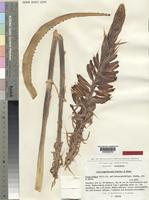
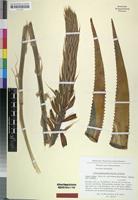
Isotype of Aloe argenticauda Merxmuller & Giess [family ALOACEAE]
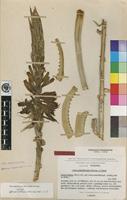
Isotype of Aloe argenticauda Merxm. & Giess [family ASPHODELACEAE]
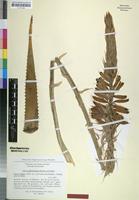
Holotype of Aloe argenticauda Merxm. & Giess [family ALOACEAE]
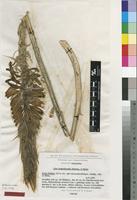
Isotype of Aloe argenticauda Merxm. & Giess [family ASPHODELACEAE]
Holotype of Aloe argenticauda Merxm. & Giess [family ALOACEAE]
Previous
Next

Name

Identification
Isotype of Aloe argenticauda Merxmuller & Giess [family ALOACEAE ] (stored under name); Verified by Unknown,
Related name
  • Aloe argenticauda

Flora

Entry for Aloe argenticauda [family ALOACEAE]
Herbarium
South African National Biodiversity Institute, Compton Herbarium, Cape Town (SAM)
Collection
Flora of Southern Africa
Resource Type
Reference Sources
Entry From
Flora of South Africa, (2003) Author: Dr J.P. Roux
Names
Aloe argenticauda [family ALOACEAE]
Information
Plants stemless or short-stemmed, 300-500 mm tall excluding inflorescence, in solid clumps. Leaves ± 50 per rosette, erect, 250-350 x 30-35 mm, brownish grey-green, sometimes with short median row of prickles at apex of lower surface. Inflorescence a simple, erect, cylindric-conical, very dense raceme, 0.9-1.2 (-1.5) m tall; bracts narrowly deltoid-acumi­nate, 50-70 x 7-12 mm, 7-many-nerved. Flowers deep strawberry-pink, 32-37 mm long, cylindric-ventricose; all segments shortly con­nate at base; pedicels 5-12 mm long. Anthers exserted up to 2 mm. Ovary ±6x2 mm; style exserted 3-6 mm. Fruit not seen. Flowering time August to October.
Habitat
The leaves of this species are much longer than those of A. pachygaster (no. 68), with which this species was confused for many years. The inflorescence of A. argenticauda is erect, not oblique, and well over twice as long as that of A. pachygaster, the bracts are twice as long and the flower is significantly longer. The anthers and style are exserted much less in this species than in A. pachygaster. The blue-green leaves of this species indicate a similarity to A. claviflora (no. 70), but the erect inflorescence indicates one to A. argenti­cauda (no. 71). The inflorescence in this species is much longer than that of A. claviflora and nearly as long as that of A. argenticauda, but it is branched, and the bracts are much shorter and less conspicuous than in that species. In A. clavi­flora the inflorescence may be simple or branched, and the bracts are smaller than in A. namibensis.
Use
71. Aloe argenticauda Merxm. & Giess in Mitteilungen der Botanischen Staatssammlung Miinchen 11: 441 (1974); Jankowitz: 14 (1975). Type: Namibia, farm Urikos, Merxmiiller & Giess 28216 (M, hole; PRE!, SRGH!, WIND).
Range
Aloe argenticauda occurs on very thin soil on dolomite among desert grasses on the eastern edge of the Namib Desert. Rainfall is scanty, with no seasonal maximum, and much of the moisture available to these plants is precipitated from nocturnal fog. Map 50.

Related Materials

  • Terms and Conditions
  • Privacy Policy
  • Cookie Policy
  • Cookie Settings
  • Accessibility
  • Help
  • Contact Us
  • Facebook
  • Twitter
ITHAKA

JSTOR is part of ITHAKA, a not-for-profit organization helping the academic community use digital technologies to preserve the scholarly record and to advance research and teaching in sustainable ways.

©2000-2026 ITHAKA. All Rights Reserved. JSTOR®, the JSTOR logo, JPASS®, Aluka®, and ITHAKA® are registered trademarks of ITHAKA.

╳