JSTOR Global Plants Home
  • Home
  • Browse
  • About
  • Access
  • Account
    • Saved Items
    • Profile
  • Log in

Global Plants

Skip to Main Content
  • JSTOR Global Plants Home
  • Global Plants

    • Browse
    • About
    • Access
    • Account
      • Saved Items
      • Profile
Log in
  • Browse
  • About
  • Access
  • Account
    • Saved Items
    • Profile
Advanced Search

Compilation
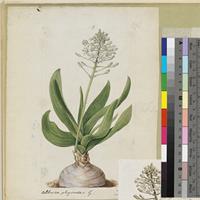
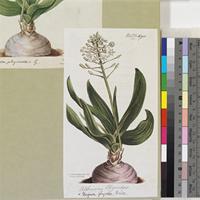
Albuca physodes

2 Images see all

Albuca physodes Ker Gawl. original illustration from Curtis's Botanical Magazine
Albuca physodes Ker Gawl. published illustration from Curtis's Botanical Magazine
Previous
Next

Name

Identification
Albuca physodes Ker Gawl. [family HYACINTHACEAE ]
Related name
  • Albuca physodes

Flora

Entry for URGINEA physodes Baker [family HYACINTHACEAE]
Herbarium
Royal Botanic Gardens, Kew (K)
Collection
Flora Capensis
Resource Type
Reference Sources
Entry From
Flora Capensis, page 253, (1897) Author: (By J. G. BAKER).
Names
URGINEA physodes Baker [family HYACINTHACEAE], in Journ. Linn. Soc. xiii. 217
Anthericum physodes Jacq. [family ANTHERICACEAE], Collect. Suppl. 94; Ic. ii. 18, t. 418; Willd. Sp. Plant. ii. 147; Roem. et Schultes, Syst. Veg. vii. 473.
Albuca physodes Gawl. [family HYACINTHACEAE], in Bot. Mag. t. 1046.
Cæsia physodes Spreng. [family ], Syst. ii. 88.
Information
bulb large, globose, solid, purplish on the outside; leaves 6–9, produced long after the flowers, lanceolate, glabrous, 6–9 in. long, 1–1 1/2 in. broad; peduncle terete, purplish, 1/2 ft. long; raceme moderately dense, many-flowered, 3–5 in. long, 2 in. diam.; pedicels subpatent, 1/2– 3/4 in. long; bracts small, ovate, concave, not distinctly spurred; perianth whitish, 1/4 in. long; segments oblong, keeled with purple; filaments papillose, shorter than the perianth; capsule ovoid, 1/3– 1/2 in. long; seeds about 2 in a cell. null
Distribution
SOUTH AFRICA without locality.
Notes
Known to me only from the figures cited.

Related Materials

  • Terms and Conditions
  • Privacy Policy
  • Cookie Policy
  • Cookie Settings
  • Accessibility
  • Help
  • Contact Us
  • Facebook
  • Twitter
ITHAKA

JSTOR is part of ITHAKA, a not-for-profit organization helping the academic community use digital technologies to preserve the scholarly record and to advance research and teaching in sustainable ways.

©2000-2026 ITHAKA. All Rights Reserved. JSTOR®, the JSTOR logo, JPASS®, Aluka®, and ITHAKA® are registered trademarks of ITHAKA.

╳