JSTOR Global Plants Home
  • Home
  • Browse
  • About
  • Access
  • Account
    • Saved Items
    • Profile
  • Log in

Global Plants

Skip to Main Content
  • JSTOR Global Plants Home
  • Global Plants

    • Browse
    • About
    • Access
    • Account
      • Saved Items
      • Profile
Log in
  • Browse
  • About
  • Access
  • Account
    • Saved Items
    • Profile
Advanced Search

Compilation
Acacia davyi

8 Images see all

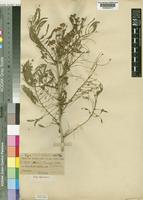
Acacia davyi N.E.Br.
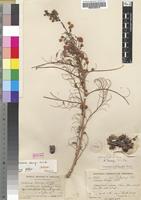
Syntype of Acacia davyi N.E.Br. [family FABACEAE]
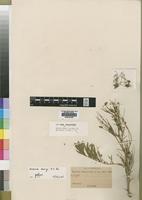
Acacia davyi N.E.Br.
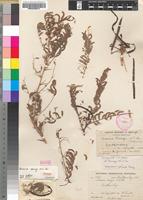
Syntype of Acacia davyi N.E.Br. [family FABACEAE]
Type of Acacia davyi N.E.Br. [family LEGUMINOSAE-MIMOSOIDEAE]
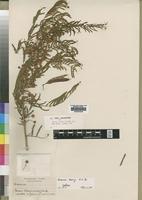
Syntype of Acacia davyi N.E.Br. [family LEGUMINOSAE]
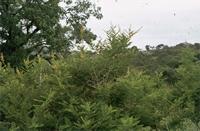
Acacia davyi N.E.Br.
Previous
Next

Name

Identification
Acacia davyi N.E.Br. [family FABACEAE ]
Related name
  • Acacia davyi

Flora

Entry for Acacia davyi [family FABACEAE]
Herbarium
South African National Biodiversity Institute, Compton Herbarium, Cape Town (SAM)
Collection
Flora of Southern Africa
Resource Type
Reference Sources
Entry From
Flora of South Africa, (2003) Author: Dr J.P. Roux
Names
Acacia davyi [family FABACEAE]
Information
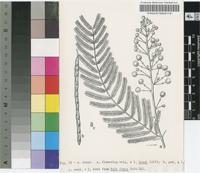
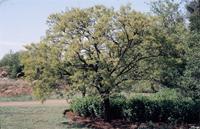
Shrub or small tree up to 5 m high. Bark yellow to yellowish-brown or brown, soft, corky, sometimes slightly papery, fissured; young branchlets creamy-white or yellowish to pale grey-brown or brown, glabrous to puberulous. Stipules spinescent, in pairs, 0,4-3 cm long, straight, slender, mostly ascending, glabrous or densely puberulous; other prickles absent. Leaves: petiole 0,3-0,9 cm long, glabrous to densely puberulous, adaxial gland often absent, when present usually just below the lowest pinna pair; rhachis (3,6)8-14(18) cm long, glabrous to densely puberulous, with a gland at the junction of the top 1-6 pinnae pairs; pinnae of well-developed leaves in 12-27 pairs (reduced leaves with as few as 8 pairs of pinnae sometimes also present); rhachillae 1,8-4,4(5,6) cm long; leaflets (17) 20-36(44) pairs per pinna, 1,9-6 X 0,6-1 mm, linear to linear-oblong, apex obtuse to subacute but not spinulose-mucronate, eglandular, margins glabrous or occasionally with few short cilia, usually glabrous below. Inflores­cences capitate, on axillary peduncles, fascicled, borne along shoots of the current season and often aggregated into ± elongate terminal "racemes". Flowers bright-yellow, sessile; peduncles 0,8-3(6) cm long, glabrous to densely puberulous; involucel 1/3-2/3-way up the peduncle. Calyx glabrous except for pubescence on the lobes, especially apically, or sparingly puberulous throughout, tube 0,9-1,4 mm long, lobes up to 0,4 mm long. Corolla glabrous, tube 1,4-1,9 mm long, lobes up to 0,6 mm long. Stamen-filaments free, up to 4 mm long; anthers with a deciduous apical gland. Ovary up to 1,75 mm long, glabrous. Pods pale to dark yellowish-brown or brown, (5)7-12(17) x 0,5-0,8 cm, linear, straight to slightly falcate, longitu­dinally dehiscent, not or somewhat con­stricted between the seeds, glabrous to sparingly puberulous, eglandular, flat, incon­spicuously venose, sometimes irregularly swollen and pustulate from insect attack. Seeds olive- to dark-brown, 6-7,5 x 3-5,5 mm, elliptic, compressed; areole 4-5 x 2,5-3,5 mm.
Habitat
A tendency of A. davyi is for a few flowers to develop in the involucel on the peduncle, sometimes giving the appearance of a smaller secondary capitu-lum below the main one.
Use
26. Acacia davyi N.E.Br, in Kew Bull. 1908 : 161 (1908); Glover in Ann. Bolus Herb. 1 : 150 (1915); Burtt Davy, Fl. Transv. 2 : 346 (1932); Henkel, Woody PI. Natal 227 (1934); Hutch., Botanist in S. Afr. 361 (1946); Von Breitenbach, Indig. Trees S. Afr. 2 : 306 (1965); Brenan in F.Z. 3,1 : 89 (1970); Ross, Acacia Spp. Natal 27, fig. 2/13 (1971); Fl. Natal 193 (1973); in Bothalia 11 : 127 (1973); Palmer & Pitman, Trees S. Afr. 2 : 803 (1973). Syntypes: Transvaal, Houtbosch (Wood-bush), Rehmann 6276 (BM!, K!, Z!); Burtt Davy 5132 (T.D.A. Herb. No. 1211) (PRE!); Soutpansberg, Junod sub T.D.A. Herb. No. 1323 (PRE!). Swaziland, near Manzini [Bremersdorp], Burtt Davy 3024 (BM!, FHO!).
Range
Found in the Transvaal, southern Mozambique, Swaziland and Natal. Occurs in grassland, woodland, thornveld, bushveld and scrub; often on rocky slopes. A. davyi is seldom dominant to the exclusion of all other Acacia species except very locally.

Related Materials

  • Terms and Conditions
  • Privacy Policy
  • Cookie Policy
  • Cookie Settings
  • Accessibility
  • Help
  • Contact Us
  • Facebook
  • Twitter
ITHAKA

JSTOR is part of ITHAKA, a not-for-profit organization helping the academic community use digital technologies to preserve the scholarly record and to advance research and teaching in sustainable ways.

©2000-2026 ITHAKA. All Rights Reserved. JSTOR®, the JSTOR logo, JPASS®, Aluka®, and ITHAKA® are registered trademarks of ITHAKA.

╳