JSTOR Global Plants Home
  • Home
  • Browse
  • About
  • Access
  • Account
    • Saved Items
    • Profile
  • Log in

Global Plants

Skip to Main Content
  • JSTOR Global Plants Home
  • Global Plants

    • Browse
    • About
    • Access
    • Account
      • Saved Items
      • Profile
Log in
  • Browse
  • About
  • Access
  • Account
    • Saved Items
    • Profile
Advanced Search

Compilation
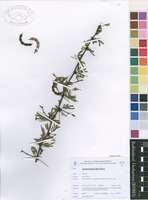
Acacia borleae

5 Images see all

Filed as Acacia borleae Burtt Davy [family MIMOSACEAE]
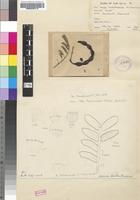
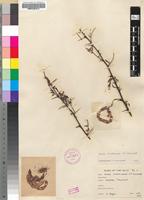
Isotype of Acacia barbertonensis Schweick. [family FABACEAE]
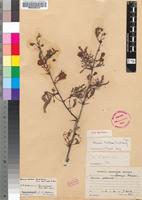
Holotype of Acacia borleae Burtt Davy [family FABACEAE]
Isotype of Acacia barbertonensis Schweick. [family FABACEAE]
Acacia borleae Burtt Davy
Previous
Next

Name

Identification
Acacia borleae Burtt Davy [family FABACEAE ]
Related name
  • Acacia borleae

Flora

Entry for Acacia borleae [family FABACEAE]
Herbarium
South African National Biodiversity Institute, Compton Herbarium, Cape Town (SAM)
Collection
Flora of Southern Africa
Resource Type
Reference Sources
Entry From
Flora of South Africa, (2003) Author: Dr J.P. Roux
Names
Acacia borleae [family FABACEAE]
Common names
A. sp., Henkel, Woody PI. Natal 229 (1934). A. barbertonensis Schweick. in Kew Bull. 1937 : 445 (1937); Gerstner in J. S. Afr. Bot. 4 : 57, fig. 2 (1938). Type: Transvaal, Barberton Distr., Komatipoort, Cotton Experimental Station, Barberton (K, holo.!; PRE, fragm.!).
Information
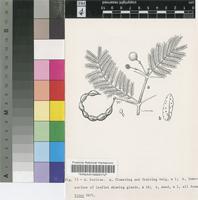
Many stemmed shrub with slender ascending branches or sometimes a slender tree, 1-5 m high. Bark dark reddish-brown to purplish-black or black, rough; young branchlets dark reddish-brown to blackish, flaking minutely, with numerous sessile glands, often glutinous, glabrous or sub-glabrous. Stipules spinescent, in pairs, 0,5-6,5 cm long, straight or slightly reflexed, slender, whitish, tips usually reddish-brown; other prickles absent. Leaves: petiole 0,5-1,8 cm long, adaxial gland often absent, sometimes a rather large sessile gland at or below the junction of the lowest pinna pair; rhachis (0) 2,5-4,7(6,8) cm long, glabrous or subglabrous, with a small sessile gland at the junction of the top 1-3 pinnae pairs, smaller scattered sessile glands present and sometimes numerous; pinnae (1)5-10(17) pairs; rhachillae 0,6-3,4 cm long, glabrous or subglabrous, glandular; leaflets (5)8-15 (18) pairs per pinna, 1,5-5 x 0,8-2,2 mm, linear-oblong, margins clearly crenulate-glandular, surface glandular-punctate, glab­rous, apex rounded to subacute or shortly spinulose-mucronate. Inflorescences capitate, on axillary peduncles, solitary or fascicled, forming terminal racemes. Flowers bright yellow, sessile; peduncles 1,6-3,4 cm long, glabrous or subglabrous, glandular; in-volucel at or above the middle of the peduncle. Calyx glabrous or subglabrous, tube 1,2-1,8 mm long, lobes up to 0,5 mm long. Corolla tubular, glabrous, tube 2-2,5 mm long, lobes up to 0,8 mm long, spreading slightly, often reflexed. Stamen-filaments free, up to 4,5 mm long; anthers with a deciduous apical gland. Ovary up to 1,4 mm long, shortly stipitate, glabrous. Pods dark brown to reddish-brown or blackish, 2,8-7,5(10) x 0,5-0,8 cm, slightly to strongly falcate, often curled into an almost complete circle, ± moniliform, irregularly constricted between the seeds, with numerous sessile pustular glands on the surface, glutinous, longitudinally dehiscent, glabrous or sub­glabrous. Seeds olive-brown, 4,5-6 x 3,5 — 5 mm, elliptic to subcircular, compressed; areole 2,5-4 X 2,5-3,5 mm.
Habitat
A. borleae is easily distinguished from all of the other species in our area by the numerous sessile glands on the surface and margins of the leaflets.
Use
25. Acacia borleae Burtt Davy in Kew Bull. 1922 : 325 (1922); Verdoorn in Bothalia 6 : 154, fig. 1 (1951); Codd, Trees & Shrubs Kruger Nat. Park 41, fig. 34a (1951); Von Breitenbach, Indig. Trees S. Afr. 2 : 287 (1965); Brenan in F.Z. 3,1 : 90, t.15/8 (1970); Ross, Acacia Spp. Natal 23, fig. 2/17 (1971); in Bothalia 10 : 351 (1971); Ross, Fl. Natal 192 (1973); Palmer & Pitman, Trees S. Afr. 2 : 789 (1973). Type: Mozambique, Lourenco Marques, Borle 271 (PRE, holo.!; FHO!).
Range
Occurs in south-eastern Rhodesia, the eastern Transvaal, southern Mozambique, Swaziland and Zululand. Found in mixed woodland and thornveld, usually in low lying areas on heavy soils or on rocky outcrops. Often gregarious and forming thickets.

Related Materials

  • Terms and Conditions
  • Privacy Policy
  • Cookie Policy
  • Cookie Settings
  • Accessibility
  • Help
  • Contact Us
  • Facebook
  • Twitter
ITHAKA

JSTOR is part of ITHAKA, a not-for-profit organization helping the academic community use digital technologies to preserve the scholarly record and to advance research and teaching in sustainable ways.

©2000-2026 ITHAKA. All Rights Reserved. JSTOR®, the JSTOR logo, JPASS®, Aluka®, and ITHAKA® are registered trademarks of ITHAKA.

╳