JSTOR Global Plants Home
  • Home
  • Browse
  • About
  • Access
  • Account
    • Saved Items
    • Profile
  • Log in

Global Plants

Skip to Main Content
  • JSTOR Global Plants Home
  • Global Plants

    • Browse
    • About
    • Access
    • Account
      • Saved Items
      • Profile
Log in
  • Browse
  • About
  • Access
  • Account
    • Saved Items
    • Profile
Advanced Search

Compilation
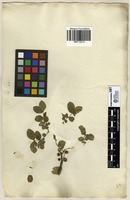
Zanthoxylum capense

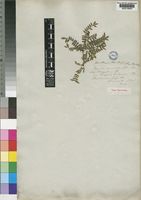
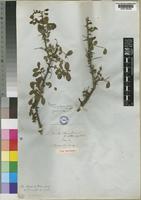
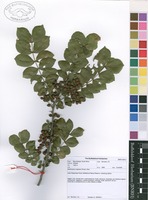
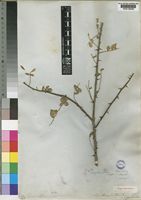
9 Images see all

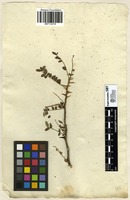
Filed as Elaphrium capense [family BURSERACEAE]
Filed as Zanthoxylum capense (Thunb.) Harv. [family RUTACEAE]
Zanthoxylum capense (Thunb.) Harv. [family RUTACEAE]
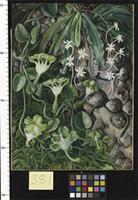
The Knobwood and Flowers of Natal
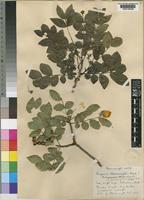
Type of Zanthoxylum thunbergii DC. var. multijuga [family RUTACEAE]
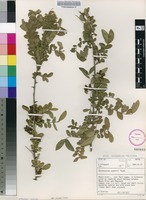
Type of Zanthoxylum thunbergii DC. var. obtusifolia Harv. [family RUTACEAE]
Filed as Zanthoxylum capense (Thunb.) Harv. [family RUTACEAE]
Type of Zanthoxylum thunbergii DC. var. obtusifolia Harv. [family RUTACEAE]
Filed as Elaphrium capense [family BURSERACEAE]
Previous
Next

Name

Identification
Zanthoxylum capense
Related name
  • Zanthoxylum capense

Flora

Entry for Fagara capensis Thunb. [family RUTACEAE]
Herbarium
Royal Botanic Gardens, Kew (K)
Collection
Flora Zambesiaca
Resource Type
Reference Sources
Entry From
FZ, Vol 2, Part 1, page 180, (1963) Author: F. A. Mendoça
Names
Fagara capensis Thunb. [family RUTACEAE], Prodr. Pl. Cap. 1: 28 (1794). — Verdoorn in Journ. of Bot. 57: 204 (1919) pro parte excl. ref. Sim sub syn. Xanthoxylon capense. — Engl. in Engl. & Prantl, Nat. Pflanzenfam. ed. 2, 19a: 223 (1931). — Steedman, Trees etc. S. Rhod.: 28 (1933). TAB. 30 fig. A. Type from the Cape.
Fagara armata Thunb. [family RUTACEAE], loc. cit. Type from the Cape.
Zanthoxylum capense Thunb. Harv. [family RUTACEAE], in Harv. & Sond., F.C. 1: 446 (1860) (“Xanthoxylon”). Type as for F. capensis.
Fagara multifoliolata Engl. [family RUTACEAE], Bot. Jahrb. 23: 149 (1896). Type from S. Africa (Cape Prov.).
Fagara magalismontana Engl. [family RUTACEAE], op. cit. 46: 408 (1911). — Burtt Davy, F.P.F.T. 2: 478 (1932). Type from the Transvaal.
Information
Tree up to 10 m. tall; trunk usually armed with aculeate corky bosses; young branches and inflorescences minutely pubescent or glabrous; stems and the rhachis of the leaves sometimes aculeate; aculei straight, greyish, up to 8 mm. long. Leaves 4–12 cm. long; rhachis together with the petiole 4–8 cm. long, deeply grooved above; leaflets sessile, opposite or alternate, (2) 3–8-jugate, becoming progressively larger from the basal pair upwards to the apical one; lamina 1·4 × 1–2·3 cm., elliptic to broadly elliptic or obovate, obtuse or rounded or rarely acute at the apex, margin slightly crenulate or serrulate with pellucid glands in the sinuses only, obtuse and usually with small callose auricles at the base, ± asymmetric, the terminal leaflet frequently atrophied or aborted; nerves 4–8 pairs. Inflorescences of terminal panicles, 2–6 cm. long; bracts 0·6 mm. long, ovate, ciliolate. Flowers 4-merous, subsessile or with pedicels up to 1·5 mm. long. Sepals 4, free, 0·5 mm. long, ovate, persistent on the fruit. Petals 4, imbricate, 2·7–3·1 × 1–1·3 mm., narrowly elliptic. Male flowers: stamens 4; vestigial ovary very small. Female flowers: staminodes 4, reduced to the aborted anthers, inserted at the base of a stout gynophore 0·3 mm. long; ovary glabrous, ovoid, conspicuously dotted with glands, 1-locular, 2-ovulate; style c. 0·8 mm. long; stigma discoid, black. Fruit 4–4·5 mm. in diam., subsessile or with a short stipe up to 2 mm. long, subglobose, gland-dotted. Seed black, shiny.
Habitat
Dry woodland or bush on sandy soils and in rocky places.
Range
In S. Africa from the Cape to the east and north, S. Rhodesia and southern Mozambique.
Distribution
Mozambique M Maputo, Bela Vista, female fl. 14.xi.1944, Mendonça 2853 (K; LISC; LM; SRGH).Zimbabwe S Victoria Distr., male fl. 1909, Monro 791 (BM; BOL; SRGH).Zimbabwe E Inyanga, 1740 m., st. 28.v.1954, Chase 5257 (BM; LISC; SRGH).Zimbabwe C Chilimanzi, fr. 24.i.1951, McGregor 10/51 (K; SRGH).Mozambique GI Massinga, Inhachengo, fr. 26.ii.1955, E.M. & W. 617 (BM; LISC; SRGH).Zimbabwe W Matopos, World’s View, fr. 13.iv.1955, E.M. & W. 1487 (BM; LISC; SRGH).
Notes
Knobwood.Fagara capensis Thunb. has been frequently and variously misinterpreted. In the Uppsala Herbarium there are four Thunberg specimens lettered ?, ?, ? and ? respectively, of which only specimen ?, with ripe fruit, is a Fagara and this must be considered to be the type of the species. The other three specimens are Clausena anisata. In the Lund Herbarium there are two Thunberg specimens, identified as F. capensis in his own handwriting, one with flower and the other with immature fruit; both are C. anisata. A third (sterile) specimen collected by Sparmann is also C. anisata. Many subsequent authors have neglected Thunberg’s name and created numerous new epithets, specific and varietal, which Verdoorn (loc. cit.) later reduced to synonymy or left in doubt (e.g. Fagara multifoliolata Engl.). The great variability found in juvenile shoots, suckers and coppiced specimens has also led to confusion. Sketches made by Exell of the types (now destroyed) of F. magalismontana and F. multifoliolata in the Berlin Herbarium, when compared with coppice shoots from our area, leave no doubt that they are both F. capensis.

Related Materials

  • Terms and Conditions
  • Privacy Policy
  • Cookie Policy
  • Cookie Settings
  • Accessibility
  • Help
  • Contact Us
  • Facebook
  • Twitter
ITHAKA

JSTOR is part of ITHAKA, a not-for-profit organization helping the academic community use digital technologies to preserve the scholarly record and to advance research and teaching in sustainable ways.

©2000-2026 ITHAKA. All Rights Reserved. JSTOR®, the JSTOR logo, JPASS®, Aluka®, and ITHAKA® are registered trademarks of ITHAKA.

╳