JSTOR Global Plants Home
  • Home
  • Browse
  • About
  • Access
  • Account
    • Saved Items
    • Profile
  • Log in

Global Plants

Skip to Main Content
  • JSTOR Global Plants Home
  • Global Plants

    • Browse
    • About
    • Access
    • Account
      • Saved Items
      • Profile
Log in
  • Browse
  • About
  • Access
  • Account
    • Saved Items
    • Profile
Advanced Search

Compilation
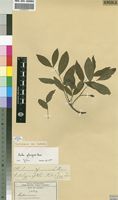
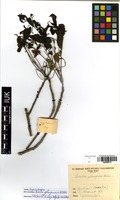
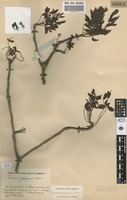
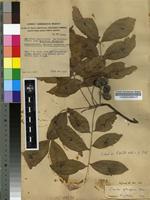
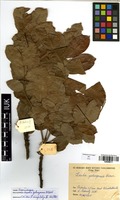
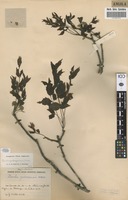
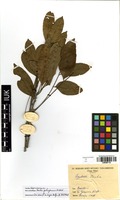
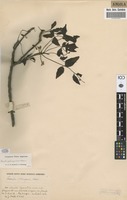
Zanha golungensis

24 Images see all

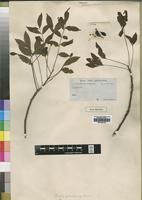
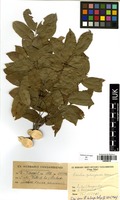
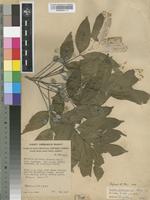
Filed as Zanha golungensis Hiern [family SAPINDACEAE]
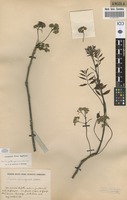
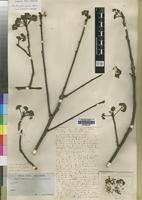
Filed as Zanha golungensis Hiern [family BURSERACEAE]
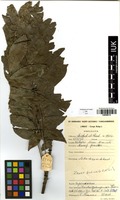
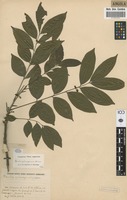
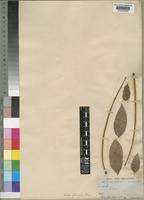
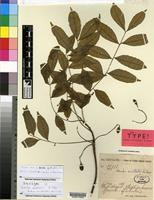
Type of Balsamea fraxinoides Hiern [family SAPINDACEAE]
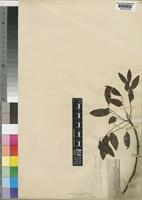
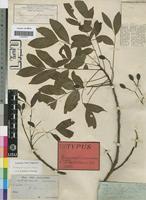
Zanha golungensis Hiern [family SAPINDACEAE]
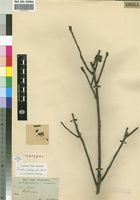
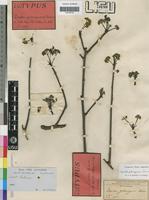
Isotype of Balsamea fraxinoides Hiern [family BURSERACEAE]
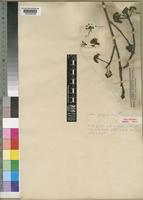
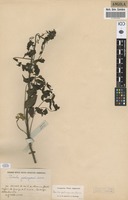
Filed as Zanha golungensis Hiern [family SAPINDACEAE]
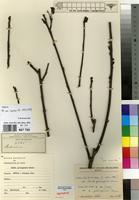
Filed as Zanha golungensis Hiern [family BURSERACEAE]
Filed as Zanha golungensis Hiern [family SAPINDACEAE]
Filed as Zanha golungensis Hiern [family BURSERACEAE]
Filed as Zanha golungensis Hiern [family SAPINDACEAE]
Filed as Zanha golungensis Hiern [family BURSERACEAE]
Filed as Zanha golungensis Hiern [family SAPINDACEAE]
Filed as Zanha golungensis Hiern [family BURSERACEAE]
Isotype of Zanha golungensis Hiern [family BURSERACEAE]
Type of Zanha golungensis Hiern [family SAPINDACEAE]
Filed as Zanha golungensis Hiern [family SAPINDACEAE]
Type of Zanha golungensis Hiern [family SAPINDACEAE]
Zanha golungensis Hiern [family SAPINDACEAE]
Isotype of Balsamea fraxinoides Hiern [family BURSERACEAE]
Syntype of Zanha vuilletii A.Chev. [family SAPINDACEAE]
Isotype of Zanha golungensis Hiern [family SAPINDACEAE]
Filed as Zanha golungensis Hiern [family BURSERACEAE]
Isotype of Zanha golungensis Hiern [family SAPINDACEAE]
Previous
Next

Name

Identification
Zanha golungensis Hiern [family SAPINDACEAE ] Zanha golungensis Hiern [family SAPINDACEAE ] (stored under name);
Related name
  • Zanha vuilletii
  • Unrecorded unrecorded
  • Zanha golungensis
  • Balsamea fraxinoides
Common name
  • a-musy σ-mθ̀ng = which the monkey sucks (FG&G) (GUINEA, BASARA), Burkill, H.M. 1985. The useful plants of west tropical Africa, Vol. 5
  • ko minkon = ‘monbin’ of the river backwaters (JB) (SENEGAL, MANDING-BAMBARA), Burkill, H.M. 1985. The useful plants of west tropical Africa, Vol. 5
  • ga-kỏl ďya-hθ́r = which the monkey swallows (FB&G) (SENEGAL, BEDIK), Burkill, H.M. 1985. The useful plants of west tropical Africa, Vol. 5
  • ko-minkon (RP; Aub.) kuom dia (GUINEA, MANDING-BAMBARA), Burkill, H.M. 1985. The useful plants of west tropical Africa, Vol. 5

Flora

Entry for ZANHA golungensis Hiern [family SAPINDACEAE]
Herbarium
Royal Botanic Gardens, Kew (K)
Collection
Flora of Tropical East Africa
Resource Type
Reference Sources
Entry From
Flora of Tropical East Africa, page 1, (1998) Author: DAVIES & B. VERDCOURT
Names
ZANHA golungensis Hiern [family SAPINDACEAE], Cat. Afr. Pl. Welw. 1: 128 (1896); Radlk. in E.P. IV, 165: 1421 (1933); T.T.C.L.: 561 (1949); I.T.U., ed. 2: 384 (1952); F.P.S. 2: 343 (1952); C.F.A. 2, 1: 92 (1954); F.W.T.A., ed. 2, 1: 725 (1958); Hauman in F.C.B. 9: 361 (1960); F.F.N.R.: 225 (1962); Haerdi in Acta Trop., suppl. 8: 125 (1964); Exell in F.Z. 2: 539, t. 115B (1966); Fouilloy & Hallé in Fl. Cameroun 16: 189 (1973) & in Fl. Gabon 23: 189 (1973); Hamilton, Field Guide Uganda For. Trees: 223 (1981); Troupin, Fl. Rwanda 2: 310, fig. 97/2 (1983); Vollesen in Fl. Ethiopia 3: 493, fig. 125.3 (1990); Beentje, K.T.S.L.: 424, fig. (1994). Type: Angola, Golungo Alto, Quibola, Welwitsch 4545 & 4546 (LISU, syn., K!, isosyn.)
Information
Tree 6–24 m. tall; bark grey-brown, smooth, flaking in irregular circular patches, covered in reddish warty lenticels and petiole-scars. Leaf-axis 15–25 cm. long, terete (winged when young), sparsely hairy, glabrescent; petiolules 0–2 mm. long; leaflets in 4–6 pairs, mostly elliptic, varying slightly towards ovate and elliptic-oblong, shortly and obtusely acuminate, 6–11(–17) cm. long, 2–4(–5.5) cm. wide (the lower scarcely shorter than the upper), entire or crenate, glabrous; lateral nerves in 12–16 pairs, rather regularly and closely spaced, looped within the margins. Male flowers olive green or yellowish, in dense cymose clusters 1–2.5 mm. long on stalks 2–10 mm. long at the ends of the peduncles, pedicels 0–2 mm. long; female flowers in a sessile cluster or short panicle, pedicels 1–3 mm. long, densely pubescent, lengthening in fruit.Sepals olive green, erect, ± 4.3 mm. long, united to ± half-way; disk flat, green and glandular when fresh, dark red in dried specimens. Stamens 4; filaments 2–7 mm. long; after anthesis the filaments drop off the receptacle leaving a star-shaped configuration of sepals. Ovary rudiment absent. The male inflorescence drops off as a single unit after flowering. Infructescence a lax thyrse; drupe pink, yellow or orange, olive-like, 1.4–2 cm. long, glabrous, with persistent sepals and style. Fig. 3/5–6.
Range
DISTR. U 1–4; K 4 ( fide EA), 7; T 2–4, 6, 8 Senegal to Ethiopia and south to Angola, Zambia, Malawi, Mozambique and Zimbabwe
Altitude range
300–1700 m.
Distribution
KENYA Meru District Lower Imenti Forest, 26–28 June 1974, R.B. & A.J. Faden 74/901BKENYA Kwale District Shimba Hills National Reserve, Makadara Forest, 13 Jan. 1972, R.B. & A.J. Faden 72/71!TANZANIA Mbulu District Lake Manyara National Park, Mto wa Ukindu, 22 Nov. 1963, Greenway & Kirrika 11068!TANZANIA Tanga District Mlinga peak, 2 Feb. 1939, Greenway 5855!TANZANIA Morogoro District Turiani, Nov. 1954, Semsei 1956!UGANDA Acholi District Paimol, Mar. 1935, Eggeling 1769!UGANDA Bunyoro District Budongo Forest, Feb. 1935, Eggeling 1631!UGANDA Teso District Serere, Feb. 1933, Chandler 1064!
Notes
The timber is said to be useful for furniture and building; it carves easily into small articles. Eggeling says that the fruit is edible and has an orange aril; this is apparently the fleshy mesocarp. It is eaten by chimpanzees. Other reports say that the seed is poisonous. The bark has been d on herbarium sheets as a remedy for chest complaints and also as a soap substitute.

Related Materials

  • Terms and Conditions
  • Privacy Policy
  • Cookie Policy
  • Cookie Settings
  • Accessibility
  • Help
  • Contact Us
  • Facebook
  • Twitter
ITHAKA

JSTOR is part of ITHAKA, a not-for-profit organization helping the academic community use digital technologies to preserve the scholarly record and to advance research and teaching in sustainable ways.

©2000-2026 ITHAKA. All Rights Reserved. JSTOR®, the JSTOR logo, JPASS®, Aluka®, and ITHAKA® are registered trademarks of ITHAKA.

╳