JSTOR Global Plants Home
  • Home
  • Browse
  • About
  • Access
  • Account
    • Saved Items
    • Profile
  • Log in

Global Plants

Skip to Main Content
  • JSTOR Global Plants Home
  • Global Plants

    • Browse
    • About
    • Access
    • Account
      • Saved Items
      • Profile
Log in
  • Browse
  • About
  • Access
  • Account
    • Saved Items
    • Profile
Advanced Search

Compilation
Yucca louisianensis

11 Images see all

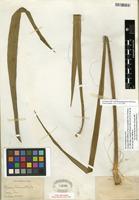
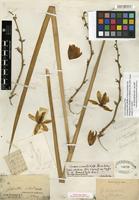
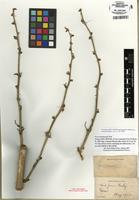
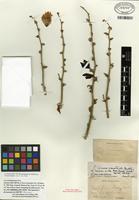
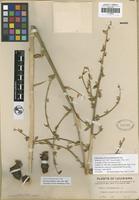
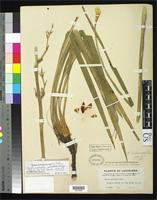
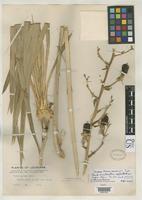
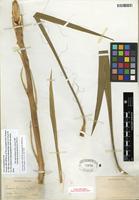
Syntype of Yucca louisianensis Trel. [family ASPARAGACEAE]
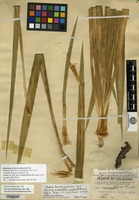
Isosyntype of Yucca louisianensis Trelease [family AGAVACEAE]
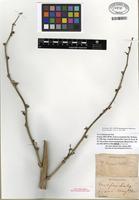
Syntype of Yucca louisianensis Trel. [family ASPARAGACEAE]
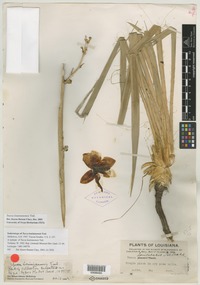
Isolectotype of Yucca louisianensis Trel. [family AGAVACEAE]
Lectotype of Yucca louisianensis Trel. [family ASPARAGACEAE]
Syntype of Yucca louisianensis Trel. [family ASPARAGACEAE]
Isolectotype of Yucca louisianensis Trel. [family LILIACEAE]
Isolectotype of Yucca louisianensis Trelease, W. 1902 [family LILIACEAE]
Isotype of Yucca louisianensis Trelease, W. 1902 [family LILIACEAE]
Syntype of Yucca louisianensis Trel. [family ASPARAGACEAE]
Previous
Next

Name

Identification
Yucca louisianensis Trel. [family ASPARAGACEAE ] (stored under name); Verified by K. H. Clary (TEX-LL),, Yucca tenuistyla Trel. [family ASPARAGACEAE ] Verified by lectotype - S. D. McKelvey (A),, Yucca arkansana Trel. [family ASPARAGACEAE ] Verified by Not on sheet, Yucca constricta Buckley [family ASPARAGACEAE ] Verified by S.d. McKelvey (A),, Yucca angustifolia Pursh [family ASPARAGACEAE ] Verified by Not on sheet, Yucca tenuistyla Trel. [family ASPARAGACEAE ]
Related name
  • Yucca constricta
  • Yucca tenuistyla
  • Yucca arkansana
  • Yucca louisianensis
  • Yucca angustifolia
Common name
  • beargrass, Flora of North America Vol. 26
  • Adam’s needle, Flora of North America Vol. 26

Flora

Entry for Yucca flaccida Haworth [family AGAVACEAE]
Herbarium
Flora of North America (FNA)
Collection
Flora of North America
Resource Type
Reference Sources
Entry From
Flora of North America, Vol 26,
Names
Yucca flaccida Haworth [family AGAVACEAE], Suppl. Pl. Succ., 34. 1819
Yucca concava Haworth [family AGAVACEAE]
Yucca filamentosa Linnaeus var. concava (Haworth) Baker [family AGAVACEAE]
Yucca filamentosa var. flaccida (Haworth) Engelmann [family AGAVACEAE]
Yucca filamentosa var. glaucescens (Haworth) Baker [family AGAVACEAE]
Yucca filamentosa var. puberula (Haworth) Baker [family AGAVACEAE]
Yucca filamentosa var. smalliana (Fernald) H. E. Ahles [family AGAVACEAE]
Yucca flaccida var. glaucescens (Haworth) Trelease [family AGAVACEAE]
Yucca flaccida var. major (Baker) Rehder [family AGAVACEAE]
Yucca freemanii Shinners [family AGAVACEAE]
Yucca glaucescens Haworth [family AGAVACEAE]
Yucca louisianensis Trelease [family AGAVACEAE]
Yucca orchioides Carrière var. major Baker [family AGAVACEAE]
Yucca puberula Haworth [family AGAVACEAE]
Yucca smalliana Fernald [family AGAVACEAE]
Treatment Author(s)
William J. Hess
R. Laurie Robbins
Information
Plants cespitose, forming small colonies, erect, acaulescent or rarely short-caulescent, 1–3 m; rosettes usually small, slowly dying after flowering. Stems simple, to 0.3 m. Leaf blade erect, proximal leaves becoming reflexed at middle in age, lanceolate, gradually tapering to apex, thin, widest near middle, 40–80 × 1–4(–5) cm, rigid or soft and limp, glabrous, margins entire, filiferous, apex spinose. Inflorescences paniculate, arising beyond rosettes, narrowly ovoid, 4–15 dm, mostly pubescent; bracts erect, proximal to 25 cm, distal 2–3 cm; peduncle scapelike, 0.5–2.8 m, 0.5–4 cm diam. Flowers pendent; tepals distinct, white, creamy white, or light greenish white, lanceolate to elliptic, 3–5 × 1–3 cm, mostly pubescent, apex obtuse; filaments 1.2–2.2 cm; pistil 1.5–3.8 cm; ovary pale green, 1.5 cm; style greenish white to white, papillate; stigmas lobed; pedicel 1.5–3 cm. Fruits erect, capsular, dehiscent, oblong, obpyriform, or conical, 3.5–4 × 1.5–2 cm, dehiscence septicidal. Seeds dull black, thin, 6–8 × 5–6 mm.
Phenology
mar-may (spring)
Distribution
USA Ala.USA Ark.USA Fla.USA Ga.USA Ill.USA Ind.USA Kans.USA La.USA Md.USA Mich.USA Miss.USA Mo.USA N.C.USA OhioUSA Okla.USA Pa.USA S.C.USA Tenn.USA Tex.USA Wis.Canada Ont.
Discussion
Perhaps Yucca flaccida should be considered a variety of Y. filamentosa. The morphological differences are minor. The former has thinner, narrower leaves, and smaller, narrower flowers 4–5 cm long, whereas Y. filamentosa has thick, rigid leaves and flowers 5–7 cm long. Yucca freemanii was described from plants growing in northeastern Texas and southwestern Arkansas. These plants were reported to be glabrous, but some plants that are otherwise attributable to Y. freemanii are mostly pubescent through the infloresecence, and overall they fall within the variation range of Y. flaccida. Yucca flaccida is cultivated in some of the northern states and Canada, where it sometimes has naturalized.
The results of DNA studies by K. H. Clary (1997) are incongruent with our treatment of Yucca flaccida, which warrants further research. It is the only dry-fruited species that groups with the fleshy-fruited ones in Clary’s consensus tree, where Y. flaccida and Y. filamentosa are quite distant. DNA variation indicates that Y. louisianensis is genetically distinct and more closely related to Y. filamentosa than to Y. flaccida.

Related Materials

  • Terms and Conditions
  • Privacy Policy
  • Cookie Policy
  • Cookie Settings
  • Accessibility
  • Help
  • Contact Us
  • Facebook
  • Twitter
ITHAKA

JSTOR is part of ITHAKA, a not-for-profit organization helping the academic community use digital technologies to preserve the scholarly record and to advance research and teaching in sustainable ways.

©2000-2026 ITHAKA. All Rights Reserved. JSTOR®, the JSTOR logo, JPASS®, Aluka®, and ITHAKA® are registered trademarks of ITHAKA.

╳