JSTOR Global Plants Home
  • Home
  • Browse
  • About
  • Access
  • Account
    • Saved Items
    • Profile
  • Log in

Global Plants

Skip to Main Content
  • JSTOR Global Plants Home
  • Global Plants

    • Browse
    • About
    • Access
    • Account
      • Saved Items
      • Profile
Log in
  • Browse
  • About
  • Access
  • Account
    • Saved Items
    • Profile
Advanced Search

Compilation
Xysmalobium holubii

5 Images see all

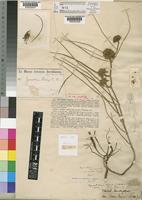
Type of Xysmalobium decipiens N.E.Br. [family ASCLEPIADACEAE]
Xysmalobium holubii Scott-Elliot [family ASCLEPIADACEAE]
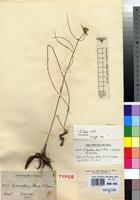
Type of Xysmalobium holubii Scott-Elliot [family ASCLEPIADACEAE]
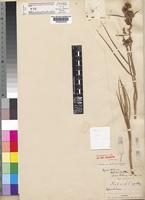
Isotype of Xysmalobium tenue S.Moore [family ASCLEPIADACEAE]
Isotype of Xysmalobium decipiens N.E.Br. [family ASCLEPIADACEAE]
Previous
Next

Name

Identification
Xysmalobium holubii Scott-Elliot [family ASCLEPIADACEAE ] (stored under name); Isotype of Xysmalobium decipiens N.E.Br. [family ASCLEPIADACEAE ]
Related name
  • Xysmalobium tenue
  • Xysmalobium decipiens
  • Xysmalobium holubii
  • Xysmalobium hylobyi
  • Saxymolbium holubii

Flora

Entry for XYSMALOBIUM decipiens N. E. Br. [family ASCLEPIADACEAE]
Herbarium
Royal Botanic Gardens, Kew (K)
Collection
Flora of Tropical Africa
Resource Type
Reference Sources
Entry From
Flora of Tropical Africa, Vol 4, Part 1, page 231, (1904) Author: (By N. E. Brown.)
Names
XYSMALOBIUM decipiens N. E. Br. [family ASCLEPIADACEAE], in Kew Bulletin, 1895, 250. —Hiern in Cat. Afr. Pl. Welw. i. 682.
Xysmalobium Holubii Scott-Elliot [family ASCLEPIADACEAE], in Journ. Bot. 1890, 365 partly (as to Welwitsch's plant and description of corona); K. Schum. in Engl. Jahrb. xvii. 120 in a note.
Xysmalobium Holubyi Schlechter [family ASCLEPIADACEAE], in Baum, Kunene-Samb. Exped. 340.
Information
Roots fleshy, narrowly fusiform, fasciculate. Stems about 1 ft. long, with two pubescent lines. Leaves 3 1/2–6 in. long, 1/2–1 lin. broad, linear, acute, narrowed into a short petiole, glabrous. Umbels lateral and terminal, pedunculate, bearing upwards of 20 small flowers; bracts 2 lin. long, linear, acute, glabrous; peduncles 5–7 lin. long, puberulous; pedicels 3–4 lin. long, tapering from the base, puberulous. Sepals 3/4 lin. long, lanceolate, acute, channelled, closely reflexed on the pedicel, glabrous. Corolla closely reflexed on the sepals, “whitish-lilac” (Welwitsch); lobes 1 3/4 lin. long, 1/2 lin. broad, oblong, acute, concave, glabrous. coronal-lobes minute, about 1/3 lin. long, and nearly as broad, roundish-ovate, very obtuse or subtruncate, slightly channelled, adnate, abruptly terminating in the hollows under the anthers, from which they have the appearance of protruding downwards, with their tips resting on the corolla; a small erect tooth between each pair of lobes and connecting them at their base. Staminal-column 1 1/4 lin. long; anther appendages broadly ovate or suborbicular, inflexed over the apex of the style. Follicles 5–6 in. long, 1/4 in. thick, narrowly fusiform, equally tapering into a long stipes and beak.
Distribution
Angola Lower Guinea Huilla; hilly places near Lopollo, Welwitsch, 4175! Mukenge, Pogge, 1108! and without precise locality, Pogge, 1109, 1140, Buchner, 607, and Mechow, 340 (ex Schumann).
Notes
Closely resembling X. Holubii and included under that species by Scott-Elliot. But the small coronal lobes are very much broader, of a different shape, and connected with each other by a small erect tooth, which is entirely wanting in X. Holubii; the cartilaginous wings of the anthers are also one-third shorter than in that species.

Related Materials

  • Terms and Conditions
  • Privacy Policy
  • Cookie Policy
  • Cookie Settings
  • Accessibility
  • Help
  • Contact Us
  • Facebook
  • Twitter
ITHAKA

JSTOR is part of ITHAKA, a not-for-profit organization helping the academic community use digital technologies to preserve the scholarly record and to advance research and teaching in sustainable ways.

©2000-2026 ITHAKA. All Rights Reserved. JSTOR®, the JSTOR logo, JPASS®, Aluka®, and ITHAKA® are registered trademarks of ITHAKA.

╳