JSTOR Global Plants Home
  • Home
  • Browse
  • About
  • Access
  • Account
    • Saved Items
    • Profile
  • Log in

Global Plants

Skip to Main Content
  • JSTOR Global Plants Home
  • Global Plants

    • Browse
    • About
    • Access
    • Account
      • Saved Items
      • Profile
Log in
  • Browse
  • About
  • Access
  • Account
    • Saved Items
    • Profile
Advanced Search

Compilation
Xysmalobium angolense

4 Images see all

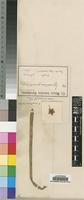
Type of Xysmalobium angolense Scott-Elliot [family ASCLEPIADACEAE]
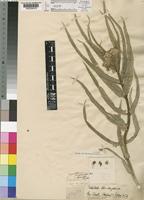
Type of Xysmalobium prismatostigma K.Schum. [family ASCLEPIADACEAE]
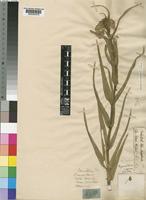
Type of Xysmalobium angolense Scott-Elliot [family ASCLEPIADACEAE]
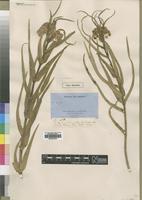
Type of Xysmalobium angolense N.E.Br. [family ASCLEPIADACEAE]
Previous
Next

Name

Identification
Xysmalobium angolense N.E.Br. [family ASCLEPIADACEAE ] Xysmalobium undulatum (L.) R.Br. [family ASCLEPIADACEAE ] (stored under name);
Related name
  • Xysmalobium prismatostigma
  • Xysmalobium angolense
  • Xysmalobium undulatum

Flora

Entry for XYSMALOBIUM angolense Scott-Elliot [family ASCLEPIADACEAE]
Herbarium
Royal Botanic Gardens, Kew (K)
Collection
Flora of Tropical Africa
Resource Type
Reference Sources
Entry From
Flora of Tropical Africa, Vol 4, Part 1, page 231, (1904) Author: (By N. E. Brown.)
Names
XYSMALOBIUM angolense Scott-Elliot [family ASCLEPIADACEAE], in Journ. Bot. 1890, 365. —K. Schum. in Engl. & Prantl, Pflanzenfam. iv. ii. 232; Hiern. in Cat. Afr. Pl. Welw. i. 682.
XYSMALOBIUM prismatostigma K. Schum. [family ASCLEPIADACEAE], in Engl. Jahrb. xvii. 120, and in Engl. & Prantl, Pflanzenfam. iv. ii. 232.
Information
Stem 1–2 ft. high, stout, erect, thinly pubescent with curved hairs. Leaves ascending or incurved-ascending; petiole 1–3 lin. long; blade 2 1/3–9 in. long, 1/4–1 in. broad at the base, gradually tapering from the truncate or subhastate base to an acuminate point, more or less scabrid on both sides; margins slightly thickened, not revolute, scabrid. Umbels pedunculate, several-flowered, lateral and terminal or somewhat clustered at the top of the stem; peduncles 1/6– 3/4 in. long, pubescent; pedicels 4–7 lin. long, pubescent; bracts 3–5 lin. long, linear-lanceolate, acuminate, pubescent. Sepals 3–3 1/2 lin. long, 1–1 1/2 lin. broad, erect, flat or with revolute margins at the base, lanceolate, acute, pubescent, “very pale yellow” (Welwitsch). Corolla-lobes 5 lin. long, 3 lin. broad, ovate-oblong, acute, concave, suberect, with recurved tips, densely bearded with white hairs on the apical part within, otherwise glabrous, “dull violet outside, whitish within” (Welwitsch). Coronal-lobes arising at the base of the staminal-column, 1 1/2–2 lin. long and the same in breadth, erect, fleshy, broadly ovate or subcordate-ovate, subobtuse, flattened, with recurved margins at the base, keeled on the face, “violet” (Welwitsch). Anthers erect, oblong, their appendages ovate, acute, erect, applied to the sides of the apical part of the style; this last is 1 1/4–1 1/2 lin. long, stout, very obtuse or slightly dilated at the top, produced beyond the anther appendages, “violet” (Welwitsch). Follicles 2–2 1/2 in. long, 6–7 1/2 lin. thick, lanceolate, acute, setose and pubescent.
Distribution
Angola Lower Guinea Huilla; in damp meadows near Humpata, and swampy places along streams near Huilla, Welwitsch, 4170! in the damp pastures of Catumba, towards Ohai, Welwitsch, 4171! Malange, Mechow, 329!

Related Materials

  • Terms and Conditions
  • Privacy Policy
  • Cookie Policy
  • Cookie Settings
  • Accessibility
  • Help
  • Contact Us
  • Facebook
  • Twitter
ITHAKA

JSTOR is part of ITHAKA, a not-for-profit organization helping the academic community use digital technologies to preserve the scholarly record and to advance research and teaching in sustainable ways.

©2000-2026 ITHAKA. All Rights Reserved. JSTOR®, the JSTOR logo, JPASS®, Aluka®, and ITHAKA® are registered trademarks of ITHAKA.

╳