JSTOR Global Plants Home
  • Home
  • Browse
  • About
  • Access
  • Account
    • Saved Items
    • Profile
  • Log in

Global Plants

Skip to Main Content
  • JSTOR Global Plants Home
  • Global Plants

    • Browse
    • About
    • Access
    • Account
      • Saved Items
      • Profile
Log in
  • Browse
  • About
  • Access
  • Account
    • Saved Items
    • Profile
Advanced Search

Compilation
Xyris vanderystii

8 Images see all

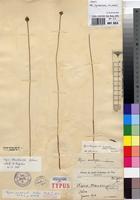
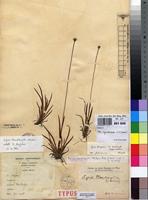
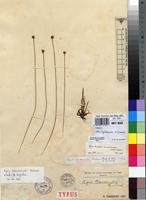
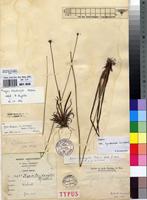
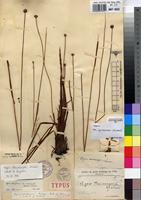
Syntype of Xyris vanderystii Malme [family XYRIDACEAE]
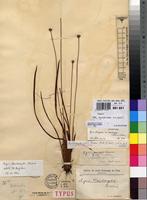
Lectotype of Xyris vanderystii Malme [family XYRIDACEAE]
Previous
Next

Name

Identification
Xyris vanderystii Malme [family XYRIDACEAE ] Xyris decipiens (Malme) Malme [family XYRIDACEAE ] (stored under name);
Related name
  • Xyris vanderystii
  • Xyris decipiens

Flora

Entry for XYRIS angularis N.E. Br. [family XYRIDACEAE]
Herbarium
Royal Botanic Gardens, Kew (K)
Collection
Flora of Tropical East Africa
Resource Type
Reference Sources
Entry From
Flora of Tropical East Africa, page 1, (1999) Author: J. M. Lock, M.A., Ph.D.
Names
XYRIS angularis N.E. Br. [family XYRIDACEAE], in F.T.A. 8: 22 (1901). Type: Nigeria, Nupe, Barter (K!, holo.)
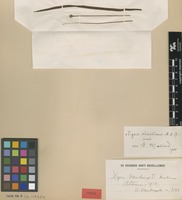
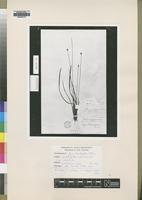
XYRIS vanderystii Malme [family XYRIDACEAE], in Arkiv Bot. 22A, 4: 3 (1928). Types: Zaïre, Kimbambi, Vanderyst 1476 & 14745 & Kalchaka, Vanderyst 2840 & Atene, Vanderyst 3144 & 3431bis & NDembo, Vanderyst (all BR!, syn.)
XYRIS decipiens (Malme) Malme var. vanderystii [family XYRIDACEAE], in Arkiv Bot. 24A, 5: 2 (1932)
XYRIS decipiens [family XYRIDACEAE], [sensu Hepper in F.W.T.A., ed. 2, 3: 55 (1967); J. Lewis in Fl. Cameroun 22: 45 (1981), non N.E. Br. in Fl. Cap. 7:3 (1897)]
Information
Perennial herb forming loose clumps. Leaves 8–15(–40) cm. long, 3–4 mm. wide; sheaths lightly furrowed, brown, glabrous, with narrow scarious margins; ligule acute, ± 1 mm. long; lamina linear, glabrous, smooth or minutely rugulose on one surface, dark- speckled when dry; apex acute, straight or slightly incurved, serrulate, sometimes with a group of small finger-like hairs at the extreme tip. Peduncles 20–50(–85) cm. long, 1–1.5 mm. in diameter, terete with 4–6 longitudinal ridges, glabrous; spike subspherical to broadly ellipsoid, up to 8 mm. long, 8 mm. in diameter, at maturity, reddish brown; the four outermost sterile bracts very broadly ovate, ± 2 mm. long and wide, apex rounded; other sterile bracts broadly ovate, 5 mm. long, 3.5 mm. wide, coriaceous, reddish brown with a very distinct grey central area, margins laciniate-ciliate, apex rounded, sometimes with a distinct tuft of arachnose hairs, later glabrous; fertile bracts similar but larger, 5 mm. long, 3.5 mm. wide. Lateral sepals arcuate, 4.5 mm. long, 1 mm. wide, keel ciliate-dentate, sometimes with an apical tuft of hairs; corolla yellow, tube ± 3 mm. long, lobes oblong, ± 3.5 mm. long, 1.5 mm. wide, dentate at the apex. Stamens ± 1 mm. long; anther 0.5 mm. long, lobes spreading below; staminodes small bunches of hairs. Ovary oblong, ± 2 mm. long, 0.5 mm.; style 4 mm. long, 3-branched in upper third; stigmas many- lobed. Seeds narrowly ellipsoid, ± 1 mm. long, 0.25 mm. in diameter, with numerous irregular longitudinal ridges or reticulations. Fig. 1/9.
Range
DISTR. U 4, T 8
Altitude range
950–1200 m.
Distribution
UGANDA Masaka District Makonzi–Kasala in Jubiya Forest, 12 Aug. 1971, Lye & Katende 6576! & NW. side of Lake Nabugabo, 9 Oct. 1953, Drummond & Hemsley 4687! & Bugabo, SW. of Lake Nabugabo, 1 Feb. 1969, Lye, Morrison & Lester 1829!TANZANIA Songea District 6.5 km. E. of Gumbiro, 25 Jan. 1956, Milne-Redhead & Taylor 8428!
Distribution (external)
; Nigeria
Cameroon
Zaïre
Burundi
Angola
Zambia
Notes
Hepper and Lewis regarded this as synonymous with X. decipiens. Material from West Africa named as X. decipiens has very much larger spikes, and the central pale area of the bracts has reticulate veining on each side of the prominent midrib. I believe that it is more satisfactory to keep the two taxa separate until a full revision is carried out. The elongated seeds of X. angularis are also distinctive. The Tanzanian specimen has hairier bracts than the Uganda material. Bract hairiness varies considerably with age; mature fruiting spikes may be almost glabrous and larger than when young, as in the type.

Related Materials

  • Terms and Conditions
  • Privacy Policy
  • Cookie Policy
  • Cookie Settings
  • Accessibility
  • Help
  • Contact Us
  • Facebook
  • Twitter
ITHAKA

JSTOR is part of ITHAKA, a not-for-profit organization helping the academic community use digital technologies to preserve the scholarly record and to advance research and teaching in sustainable ways.

©2000-2026 ITHAKA. All Rights Reserved. JSTOR®, the JSTOR logo, JPASS®, Aluka®, and ITHAKA® are registered trademarks of ITHAKA.

╳