JSTOR Global Plants Home
  • Home
  • Browse
  • About
  • Access
  • Account
    • Saved Items
    • Profile
  • Log in

Global Plants

Skip to Main Content
  • JSTOR Global Plants Home
  • Global Plants

    • Browse
    • About
    • Access
    • Account
      • Saved Items
      • Profile
Log in
  • Browse
  • About
  • Access
  • Account
    • Saved Items
    • Profile
Advanced Search

Compilation
Xylopia staudtii

8 Images see all

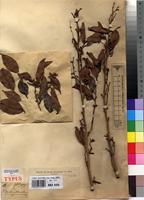
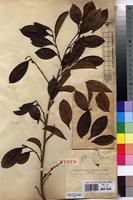
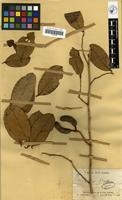
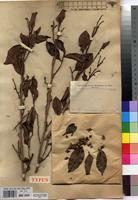
Type of Xylopia mayombensis De Wild. [family ANNONACEAE]
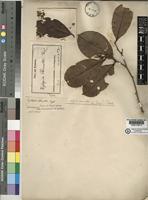
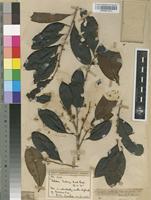
Xylopia staudtii Engl. & Diels [family ANNONACEAE]
Type of Xylopia mayombensis De Wild. [family ANNONACEAE]
Filed as Xylopia staudtii Engl. & Diels [family ANNONACEAE]
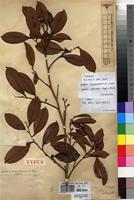
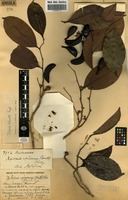
Type of Xylopia mayombensis De Wild. [family ANNONACEAE]
Previous
Next

Name

Identification
Xylopia mayombensis De Wild. [family ANNONACEAE ] Verified by Not on sheet, Xylopia staudtii Engl. & Diels [family ANNONACEAE ] (stored under name); Verified by Not on sheet,
Related name
  • Xylopia africana
  • Xylopia mayombensis
  • Xylopia staudtii
Common name
  • aduébê (Aub.) (IVORY COAST, KYAMA), Burkill, H.M. 1985. The useful plants of west tropical Africa, Vol. 1
  • duanan = four legs, i.e., the buttresses (auctt.) (GHANA, AKAN-WASA), Burkill, H.M. 1985. The useful plants of west tropical Africa, Vol. 1
  • bush pepper, Guinea pepper tree (Cooper & Record)., Burkill, H.M. 1985. The useful plants of west tropical Africa, Vol. 1
  • so-pueh (GK) (LIBERIA, DAN), Burkill, H.M. 1985. The useful plants of west tropical Africa, Vol. 1
  • drehn (C&R) (LIBERIA, KRU-BASA), Burkill, H.M. 1985. The useful plants of west tropical Africa, Vol. 1
  • efomu (FRI) (GHANA, ANYI), Burkill, H.M. 1985. The useful plants of west tropical Africa, Vol. 1
  • fonfi (A. Chev.) (IVORY COAST, AKYE), Burkill, H.M. 1985. The useful plants of west tropical Africa, Vol. 1
  • fondé (from the Abe name, Aubréville)., Burkill, H.M. 1985. The useful plants of west tropical Africa, Vol. 1
  • fondé (A. Chev.; Aub.) (IVORY COAST, ABE), Burkill, H.M. 1985. The useful plants of west tropical Africa, Vol. 1
  • duanan (DF) (GHANA, VULGAR), Burkill, H.M. 1985. The useful plants of west tropical Africa, Vol. 1
  • yengetoma (def.-tomei) (auctt.) (SIERRA LEONE, MENDE), Burkill, H.M. 1985. The useful plants of west tropical Africa, Vol. 1
  • efomu (Aub.) (IVORY COAST, ANYI), Burkill, H.M. 1985. The useful plants of west tropical Africa, Vol. 1
  • alari (auctt.) donga (CJT) (GHANA, NZEMA), Burkill, H.M. 1985. The useful plants of west tropical Africa, Vol. 1

Flora

Entry for XYLOPIA staudtii Engl & Diels [family ANNONACEAE]
Herbarium
Royal Botanic Gardens, Kew (K)
Collection
Flora of Tropical East Africa
Resource Type
Reference Sources
Entry From
Flora of Tropical East Africa, page 1, (1971) Author: B. Verdcourt
Names
XYLOPIA staudtii Engl & Diels [family ANNONACEAE], in N.B.G.B. 2: 298 (1899); Boutique in F.C.B. 2: 335 (1951); Keay, F.W.T.A., ed. 2, 1: 41 (1954); Keay, Onochie and Stanfield, Nigerian Trees: 37 (1960); Paiva in Mem. Soc. Brot. 19: 73 (1966); Le Thomas in Fl. Gabon 16, Annonacées: 164, t. 29 (1969). Type: Cameroun, Kumba [Johann-Albrechtshohe], Staudt 530 (B, holo., K, iso.!)
Information
Tree up to 45 m. tall, with shortly buttressed straight bole; stilt roots often present, reaching up to 1.8 m. above the ground; bark rough, ± fissured; young branchlets with adpressed ferruginous hairs or glabrescent, strongly longitudinally wrinkled, older branchlets glabrous, reddish-brown, wrinkled and lenticellate. Leaf-blades elliptic to obovate or slightly oblanceolate, 4–12 cm. long, (1.5–)2.5–6 cm. wide, shortly acuminate at the apex, cuneate at the base, coriaceous, glabrous and shining above, somewhat glaucous and sparsely adpressed pubescent beneath, the midrib often reddish or purplish beneath in life; venation closely reticulate, distinctly prominent on both surfaces; petiole thick, channelled, (5–)6–8 mm. long. Flowers solitary or in 2–6-flowered fascicles; pedicels 2–5 mm. long, adpressed pubescent or glabrous; bracteoles 2, cucullate, 1.5–2 mm. long, 2–3 mm. wide, adpressed pubescent outside; buds obtuse or acuminate at the apex. Sepals ovate-triangular, 2–2.5 mm. long, 2.5–3 mm. wide, joined at the base, acute, adpressed pubescent outside, glabrous inside. Petals yellowish-orange, thick; outer ovate-triangular, 6.5–10 mm. long, 4.5–6 mm. wide, concave at the base, densely silky outside with adpressed ferruginous pubescence, tomentose inside save at the base; inner smaller, ovate-lanceolate, 5.5–8 mm. long, 3–4.5 mm. wide, keeled, puberulous outside at the apex but glabrous beneath, tomentose inside. Stamens linear, 2–3 mm. long; connective-prolongation capitate, pilose. Carpels 6–9; ovary cylindric, 2.5–4.5 mm. long, densely hairy; style 1.5–3.5 mm. long, pubescent. Fruiting pedicel 0.6–1 cm. long; monocarps 3–5, black with red interior, cylindrical, 2–7 cm. long, 1.5–2.5 cm. wide, 1–4-seeded, somewhat constricted between the vertical seeds, glabrous; stipes 0.5–1.2 cm. long. Seeds blackish, oblong-ovoid, 1.8–2 cm. long, 0.8–1 cm. wide and thick, with an orange-yellow fibrous aril 3.5–4 mm. long, the individual fibres easily separating.
Range
DISTR. U2 Sierra Leone to Cameroun, also in Congo, Gabon and Angola (Cabinda)
Altitude range
1500–1800 m.
Distribution
UGANDA Kigezi District Impenetrable Forest, Apr. 1946, Butt 45!
Notes
The above cited specimen is the only one seen from the Flora area and it differs slightly from W. African material in having more acuminate buds and slightly more closely reticulate leaf-venation. It is unlikely that further material will demonstrate the need for varietal rank and in any case an almost identical specimen, but with rather less acuminate buds, has been seen from Rio Muni (Tessmann 644). However, the ecological factors of the Uganda locality and the altitude are very different from those prevailing in the W. African stations.

Related Materials

  • Terms and Conditions
  • Privacy Policy
  • Cookie Policy
  • Cookie Settings
  • Accessibility
  • Help
  • Contact Us
  • Facebook
  • Twitter
ITHAKA

JSTOR is part of ITHAKA, a not-for-profit organization helping the academic community use digital technologies to preserve the scholarly record and to advance research and teaching in sustainable ways.

©2000-2026 ITHAKA. All Rights Reserved. JSTOR®, the JSTOR logo, JPASS®, Aluka®, and ITHAKA® are registered trademarks of ITHAKA.

╳