JSTOR Global Plants Home
  • Home
  • Browse
  • About
  • Access
  • Account
    • Saved Items
    • Profile
  • Log in

Global Plants

Skip to Main Content
  • JSTOR Global Plants Home
  • Global Plants

    • Browse
    • About
    • Access
    • Account
      • Saved Items
      • Profile
Log in
  • Browse
  • About
  • Access
  • Account
    • Saved Items
    • Profile
Advanced Search

Compilation
Xylopia rubescens

25 Images see all

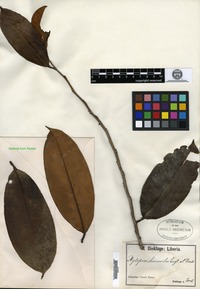
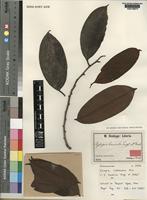
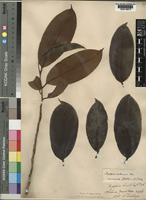
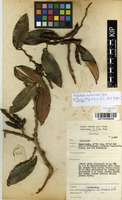
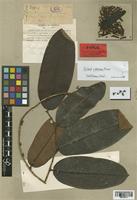
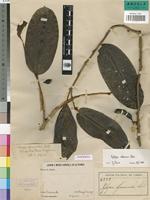
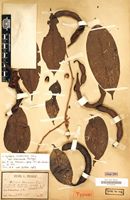
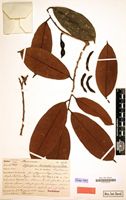
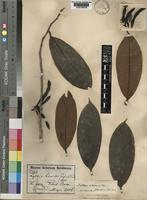
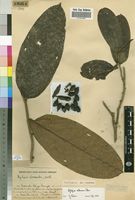
Isotype of Xylopia zenkeri Engl. & Diels [family ANNONACEAE]
Isotype of Xylopia humilis Engler & Diels [family ANNONACEAE]
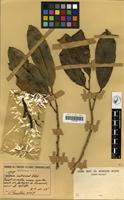
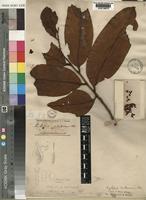
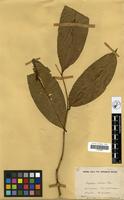
Xylopia rubescens Oliv. [family ANNONACEAE]
Xylopia zenkeri Engl. & Diels [family ANNONACEAE]
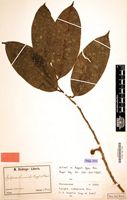
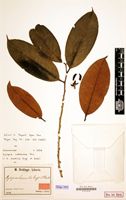
Type of Xylopia butayei De Wild. [family ANNONACEAE]
Filed as Xylopia rubescens Oliv. [family ANNONACEAE]
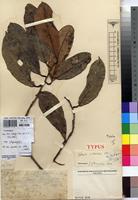
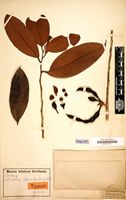
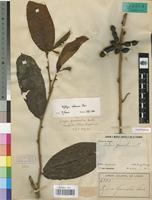
Type of Xylopia zenkeri Engl. & Diels [family ANNONACEAE]
Isotype of Xylopia zenkeri Engl.&Diels [family ANNONACEAE]
Xylopia zenkeri Engl. & Diels [family ANNONACEAE]
Xylopia rubescens Oliv. [family ANNONACEAE]
Filed as Xylopia rubescens Oliv. [family ANNONACEAE]
Xylopia batesii Engl. & Diels [family ANNONACEAE]
Isotype of Xylopia gossweileri Exell [family ANNONACEAE]
Isotype of Xylopia zenkeri Engl. & Diels [family ANNONACEAE]
Type of Xylopia klaineana Pierre [family ANNONACEAE]
Type of Xylopia rubescens Oliv. [family ANNONACEAE]
Type of Xylopia humilis Engl. & Diels [family ANNONACEAE]
Xylopia rubescens Oliv. [family ANNONACEAE]
Type of Xylopia humilis Engl. & Diels [family ANNONACEAE]
Filed as Xylopia rubescens Oliv. [family ANNONACEAE]
Type of Xylopia humilis Engl. & Diels [family ANNONACEAE]
Isotype of Xylopia gossweileri Exell [family ANNONACEAE]
Xylopia rubescens Oliv. [family ANNONACEAE]
Isotype of Xylopia gossweileri Exell [family ANNONACEAE]
Previous
Next

Name

Identification
Xylopia rubescens Oliver [family ANNONACEAE ] (stored under name); Verified by Not on Sheet, Isotype of Xylopia humilis Engler & Diels [family ANNONACEAE ] Verified by Engler & Diels, 1901
Related name
  • Xylopia humilis
  • Xylopia rubescens
  • Xylopia gossweileri
  • Xylopia klaineana
  • Xylopia batesii
  • Xylopia butayei
  • Xylopia zenkeri
Common name
  • ofún òkè (KO&S) (NIGERIA, YORUBA), Burkill, H.M. 1985. The useful plants of west tropical Africa, Vol. 1
  • úniẹ́n-ẹ̀zẹ̀ (KO&S) (NIGERIA, EDO), Burkill, H.M. 1985. The useful plants of west tropical Africa, Vol. 1
  • efomu (A. Chev.) (IVORY COAST, ANYI), Burkill, H.M. 1985. The useful plants of west tropical Africa, Vol. 1
  • fondé (IVORY COAST, ABE), Burkill, H.M. 1985. The useful plants of west tropical Africa, Vol. 1
  • átà rabọη˚ (KO&S) (NIGERIA, EFIK), Burkill, H.M. 1985. The useful plants of west tropical Africa, Vol. 1
  • dandu (Aub.) (IVORY COAST, KYAMA), Burkill, H.M. 1985. The useful plants of west tropical Africa, Vol. 1
  • fondé des marais (Aubréville)., Burkill, H.M. 1985. The useful plants of west tropical Africa, Vol. 1

Flora

Entry for XYLOPIA rubescens Oliv. [family ANNONACEAE]
Herbarium
Royal Botanic Gardens, Kew (K)
Collection
Flora of Tropical East Africa
Resource Type
Reference Sources
Entry From
Flora of Tropical East Africa, page 1, (1971) Author: B. Verdcourt
Names
XYLOPIA rubescens Oliv. [family ANNONACEAE], F.T.A. 1: 30 (1868); Engl. & Diels in E.M. 6: 60 (1901); Boutique in F.C.B. 2: 322 (1951); I.T.U., ed. 2: 23 (1952); Keay, F.W.T.A., ed. 2,1: 41 (1954); Robson in F.Z. 1:134, t. 14/B (1960);F.F.N.R.: 54 (1962); Paiva in Mem. Soc. Brot. 19: 72 (1966); Le Thomas in Fl. Gabon 16, Annonacées: 159, t. 28/1–9 (1969). Type: Nigeria, Old Calabar, W. C. Thomson (K, holo.!)
Information
Tall tree 4.5–27(–30) m. tall, with smooth pale grey or grey-brown bark and numerous stilt roots; young shoots finely adpressed ferruginous pubescent, but very soon glabrous, older shoots with longitudinally rugose grey-brown bark. Leaf-blades oblong to elliptic, oblanceolate or ovate-lanceolate, (7–)9–21.5 cm. long, (2.2–)4–8.5 cm. wide, obtuse to ± abruptly acuminate at the apex, rounded to cuneate and slightly decurrent at the base, thinly to thickly coriaceous, glabrous and drying bluish- or dull green above, finely adpressed pubescent or glabrescent and drying a distinct orange-brown colour beneath (but grey in life); venation finely reticulate and often prominent on both surfaces or obscure above; petiole 0.5–1.8 cm. long, glabrescent or finely pubescent. Flowers solitary or in 2–5-flowered fascicles; pedicels 4–6 mm. long, adpressed ferruginous pubescent; bracteoles 2–5, oblong, 2 mm. long. Sepals ovate-triangular, 2–4 mm. long, 2–3 mm. wide, acute to apiculate, adpressed pubescent outside, glabrous and often crimson inside. Petals very unequal; outer orange-yellow or greenish-yellow, mostly crimson at the base within, narrowly linear-lanceolate, but widened and concave at the base, (2–)2.6–3.7 cm. long, 3–4 mm. wide, 3-angled above, silky ferruginous pubescent outside, puberulous within save at base; inner crimson, rhomboid to oblanceolate or elliptic, 5–8 mm. long, 2.5–3.5 mm. wide, apiculate, keeled, concave, silky pubescent above outside, otherwise glabrous. Stamens linear, ± 2 mm. long; connective-prolongation obliquely capitate, papillose. Carpels 8–11; ovary cylindrical, ± 1.5–2 mm. long, adpressed pubescent with simple or 2-branched hairs, 9–10-ovuled; style linear, 2–3.5 mm. long, papillate. Fruiting pedicels 1–1.5 cm. long; monocarps 1–11, green, ± cylindrical, 2–7 cm. long, 0.8–1.2 cm. wide, curved, apiculate, 1–8-seeded, ± constricted between the seeds, glabrescent, finely rugose; stipes 0.5–1 cm. long. Seeds reddish-brown, globose to cylindric, 0.7–1.2 cm. long, 5–9 mm. wide and thick, vertical; aril 2–4 mm. long, made up of many filaments.
Range
DISTR. U1; T4 widespread in tropical Africa from Liberia to the Sudan and south to Angola and Zambia
Altitude range
1200–1350 m. (probably lower in Uganda)
Distribution
TANGANYIKA Ufipa District Kasanga area, Hopper !UGANDA W. Nile District W. Madi, Amua R., May 1948, Eggeling 5775 !
Notes
Synonymy not concerning the Flora area is given by Robson.

Related Materials

  • Terms and Conditions
  • Privacy Policy
  • Cookie Policy
  • Cookie Settings
  • Accessibility
  • Help
  • Contact Us
  • Facebook
  • Twitter
ITHAKA

JSTOR is part of ITHAKA, a not-for-profit organization helping the academic community use digital technologies to preserve the scholarly record and to advance research and teaching in sustainable ways.

©2000-2026 ITHAKA. All Rights Reserved. JSTOR®, the JSTOR logo, JPASS®, Aluka®, and ITHAKA® are registered trademarks of ITHAKA.

╳