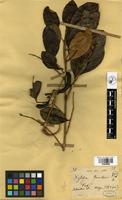
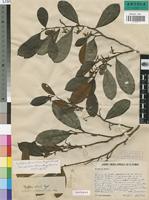
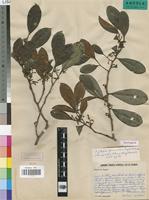
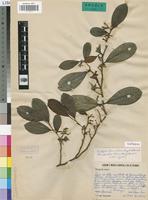
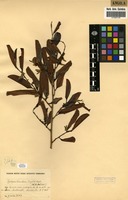
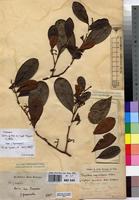
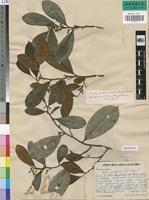
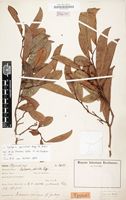
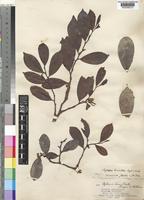
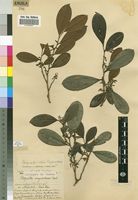
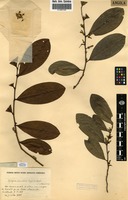
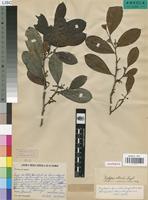
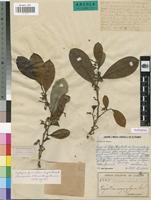
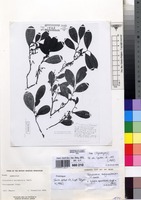
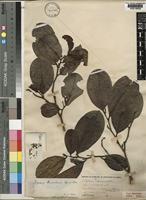
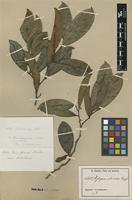
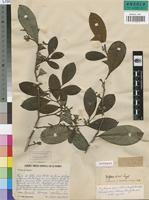
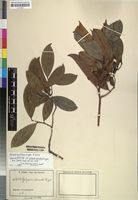
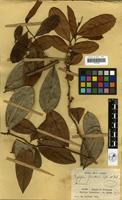
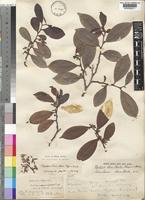
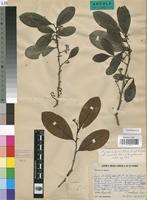
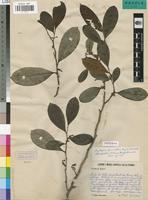
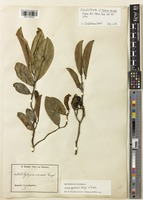
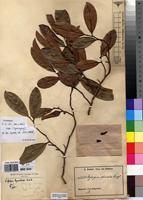
Entry for Xylopia quintasii Engl. & Diels [family ANNONACEAE]
Entry From
Burkill, H.M. 1985. The useful plants of west tropical Africa, Vol 1
Uses
leaf bark Medicines: generally healing bark root Medicines: oral treatments fruit Medicines: pulmonary troubles root Medicines: skin, mucosae root Medicines: laxatives, etc. fruit Medicines: menstrual cycle fruit Medicines: abortifacients, ecbolics fruit Medicines: venereal diseases root Medicines: tumours, cancers bark Phytochemistry: aromatic substances wood Products: building materials Products: fibre Products: carpentry and related applications wood Products: farming, forestry, hunting and fishing apparatus wood Products: household, domestic and personal items
Description
A slender tree to 30 m with a clean straight bole, of wet evergreen or deciduous lowland forest, from Sierra Leone to S Nigeria, and into Gabon and Zaïre.The wood is yellowish to brown, heavy and hard, scented (7) or with a fetid odour (4) when fresh. It is reasonably durable against termites (10). People use it for house-posts (3–7, 10), and for timbers when large (5). Its examination for suitability for transmission poles in Sierra Leone has been recommended (9). The grain of the wood is straight and it finishes well. It is harder and finer-textured than the wood of other Xylopia species. Its resilience and toughness make it suitable in small sizes for purposes requiring elasticity with strength, such as for tool-handles, pestles, spear-shafts, canoe-paddles, etc. (6, 7). In Gabon it is used to make bows and cross-bows (11).The bark is fragrant (10). In the Ivory Coast it is used in the treatment of broncho-pneumonic affections and for febrile pains (2). In Liberia, the inner bark is beaten and rubbed on the hands to reduce knot-like swellings, and scrapings of the inner bark soaked in water make a mouthwash for pyorrhoea (6) and powdered bark is dusted on ulcers in Nigeria (1).The bark strips easily and the inner bark yields a fibre which is used for cordage.The powdered root mixed with salt is considered a cure for constipation in Nigeria, and the powdered root alone is used in a dressing for sores and for rubbing on gums in cases of pyorrhoea, and in local treatment of cancer (1).A decoction of leaves and roots is used in Nigeria as a general tonic and in the making of agbo, while the fruit is eaten to assist in childbirth, and is taken for mucous discharges such as bronchitis and gonorrhoea. The fruit is used as a stimulant and in treatment of menorrhagia (1). In Ghana the smoke-dried fruit is said to have medicinal use (8).
References
References:1. Ainslie, 1937: sp. no. 361. 2. Bouquet & Debray, 1974: 19. 3. Burtt-Davy & Hoyle, 1937: 8. 4. Cooper 222, K. 5. Cooper 337, K. 6. Cooper & Record, 1931: 18 with timber characters. 7. Dalziel, 1937. 8. Irvine, 1961: 25. 9. Savill & Fox, 1967: 44. 10. Taylor, 1960: 89. 11. Walker & Sillans, 1961: 73.