JSTOR Global Plants Home
  • Home
  • Browse
  • About
  • Access
  • Account
    • Saved Items
    • Profile
  • Log in

Global Plants

Skip to Main Content
  • JSTOR Global Plants Home
  • Global Plants

    • Browse
    • About
    • Access
    • Account
      • Saved Items
      • Profile
Log in
  • Browse
  • About
  • Access
  • Account
    • Saved Items
    • Profile
Advanced Search

Compilation
Xanthisma coloradoense

8 Images see all

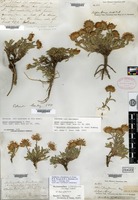
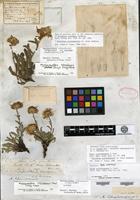
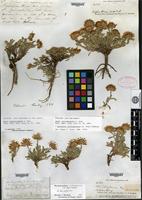
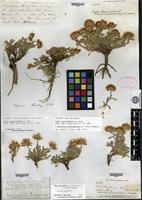
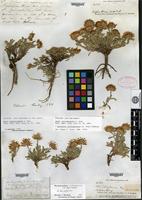
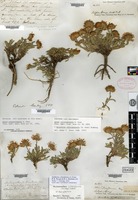
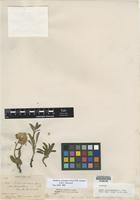
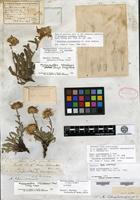
Syntype of Aster coloradoensis A. Gray [family ASTERACEAE]
Previous
Next

Name

Identification
Xanthisma coloradoense (A. Gray) D. R. Morgan & R. L. Hartman [family ASTERACEAE ] (stored under name); Verified by Not on Sheet, Aster coloradoensis A. Gray [family ASTERACEAE ] Verified by A. Gray, 1876 Machaeranthera coloradoensis (A. Gray) Osterhout [family ASTERACEAE ] Verified by Not on Sheet,
Related name
  • Aster coloradoensis
  • Xanthisma coloradoense
  • Machaeranthera coloradoensis

Flora

Entry for Xanthisma coloradoense (A. Gray) D. R. Morgan & R. L. Hartman [family COMPOSITAE]
Herbarium
Flora of North America (FNA)
Collection
Flora of North America
Resource Type
Reference Sources
Entry From
Flora of North America, Vol 20,
Names
Xanthisma coloradoense (A. Gray) D. R. Morgan & R. L. Hartman [family COMPOSITAE], Sida, 20: 1403. 2003
Aster coloradoensis A. Gray [family COMPOSITAE], Proc. Amer. Acad. Arts, 11: 76. 1876
Haplopappus coloradoensis (A. Gray) R. L. Hartman ex Dorn [family COMPOSITAE]
Machaeranthera coloradoensis (A. Gray) Osterhout [family COMPOSITAE]
Machaeranthera coloradoensis var. brandegeei (Rydberg) T. J. Watson ex R. L. Hartman [family COMPOSITAE]
Xylorhiza brandegeei Rydberg [family COMPOSITAE]
Treatment Author(s)
Ronald L. Hartman
Information
Perennials, 2.5–14 cm; caudices branched; taproots 3–13+ cm. Stems 8–30+, simple, moderately stout to stout, not wiry, villous to pilose. Leaves: basal persistent (similar to cauline); cauline only a few pairs clustered with basal, absent distally, blades narrowly to broadly oblanceolate or spatulate, 10–80 × 3–10 mm, margins evenly to irregularly serrate or serrulate, teeth 3–14 per side, each tipped with white bristle 0.5–2 mm, faces sparsely to moderately hairy. Heads 1. Peduncles moderately to densely white-puberulent, eglandular; ebracteate. Involucres depressed-hemispheric, 5–8 × 10–25 mm. Phyllaries in 3–4 series, broadly linear to lanceolate, 2.5–13 mm, apices acute to acuminate, tipped by white seta, faces moderately puberulent. Ray florets 20–35; corollas pink to purple, tubes 2–3.5 mm, laminae 9.3–15 × 2.2–4.3 mm. Disc florets 50–150+; 4.5–6.5 mm. Cypselae narrowly obovoid to oblong, 1.7–3 mm, weakly 10–20-nerved or -ribbed, moderately to densely covered with whitish to tawny hairs; pappi whitish to tawny, 3.5–6 mm, a few abaxial bristles to 1/3 of longest. 2n = 8, 16.
Phenology
jun-aug (summer)
Altitude range
2100–3700 m;
Distribution
USA Colo.USA Wyo.
Discussion
Xanthisma coloradoense is mostly alpine, but sometimes present in foothills or on plains, scattered through the southern Rocky Mountains of Colorado and southern Wyoming.
Xanthisma coloradoense and X. grindelioides var. grindelioides are known to hybridize in Carbon County, Wyoming, one of the few places where the two are sympatric. Several hybrid swarms have been detected in the vicinity of Wheatland Reservoir number 2.
Two varieties of Xanthisma coloradoense were recognized by R. L. Hartman (1976, 1990). They were distinguished by size, shape, and serration of leaves, size of flowering heads, and ray corolla length. With the number of additional collections amassed, these distinctions no longer hold and the varieties are not recognized.

Related Materials

  • Terms and Conditions
  • Privacy Policy
  • Cookie Policy
  • Cookie Settings
  • Accessibility
  • Help
  • Contact Us
  • Facebook
  • Twitter
ITHAKA

JSTOR is part of ITHAKA, a not-for-profit organization helping the academic community use digital technologies to preserve the scholarly record and to advance research and teaching in sustainable ways.

©2000-2026 ITHAKA. All Rights Reserved. JSTOR®, the JSTOR logo, JPASS®, Aluka®, and ITHAKA® are registered trademarks of ITHAKA.

╳