JSTOR Global Plants Home
  • Home
  • Browse
  • About
  • Access
  • Account
    • Saved Items
    • Profile
  • Log in

Global Plants

Skip to Main Content
  • JSTOR Global Plants Home
  • Global Plants

    • Browse
    • About
    • Access
    • Account
      • Saved Items
      • Profile
Log in
  • Browse
  • About
  • Access
  • Account
    • Saved Items
    • Profile
Advanced Search

Compilation
Woodsia oregana

8 Images see all

Woodsia oregana D.C. Eaton [family WOODSIACEAE]
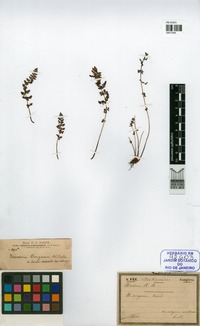
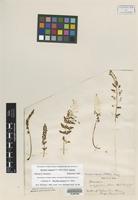
Isotype of Woodsia oregana D.C.Eaton [family WOODSIACEAE]
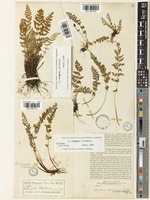
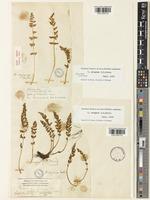
Holotype of Woodsia oregana fo. glandulosa T.M.C. Taylor [family WOODSIACEAE]
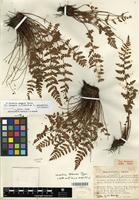
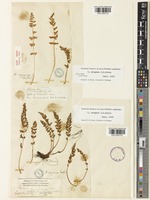
Lectotype of Woodsia oregana D.C. Eaton [family WOODSIACEAE]
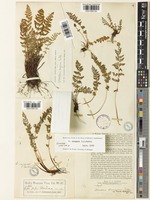
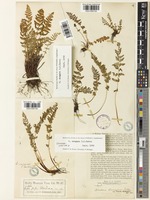
Woodsia oregana D.C.Eaton [family WOODSIACEAE]
Isotype of Woodsia oregana D.C.Eaton [family WOODSIACEAE]
Previous
Next

Name

Identification
Woodsia oregana Not on sheet [family WOODSIACEAE ] (stored under name); Verified by Donald F.M. Brown,, Woodsia maxonii R.M. Tryon [family WOODSIACEAE ] Verified by Not on sheet, Woodsia oregana Not on sheet [family WOODSIACEAE ] Verified by Not on sheet, Woodsia maxonii R.M. Tryon [family WOODSIACEAE ] Verified by Not on sheet,
Related name
  • Woodsia hyperborea
  • Woodsia maxonii
  • Woodsia oregana
Common name
  • Oregon cliff fern, Flora of North America Vol. 2
  • woodsie des rochers, Flora of North America Vol. 2
  • woodsie de l'oregon, Flora of North America Vol. 2
  • Mountain cliff fern, Flora of North America Vol. 2

Flora

Entry for Woodsia oregana D. C. Eaton [family WOODSIACEAE]
Herbarium
Flora of North America (FNA)
Collection
Flora of North America
Resource Type
Reference Sources
Entry From
Flora of North America, Vol 2,
Names
Woodsia oregana D. C. Eaton [family WOODSIACEAE], Canad. Naturalist & Quart. J. Sci., n. s. 2: 90. 1865
Treatment Author(s)
Michael D. Windham
Information
Stems compact, erect to ascending, with few to many persistent petiole bases of unequal lengths; scales often uniformly brown but at least some bicolored with dark central stripe and pale brown margins, narrowly lanceolate. Leaves 4--25 × 1--4 cm. Petiole reddish brown to dark purple proximally when mature, not articulate above base, somewhat pliable and resistant to shattering. Blade linear-lanceolate to narrowly ovate, pinnate-pinnatifid or 2-pinnate proximally, sparsely to moderately glandular, never viscid; glandular hairs with thin stalks and slightly expanded tips; rachis with scattered glandular hairs and occasional hairlike scales. Pinnae ovate-deltate to elliptic, longer than wide, abruptly tapered to a rounded or broadly acute apex; largest pinnae with 3--9 pairs of pinnules; abaxial and adaxial surfaces glabrescent to moderately glandular, lacking nonglandular hairs or scales. Pinnules dentate, often shallowly lobed; margins nonlustrous, thin, with occasional glands, lacking cilia, rarely with 1--2-celled translucent projections. Vein tips slightly (if at all) enlarged, barely visible adaxially. Indusia of narrow, usually filamentous segments, these uniseriate for most of length, composed of ± isodiametric cells, concealed by or slightly surpassing mature sporangia. Spores averaging 39--50 µm.
Distribution
only in the flora.
Discussion
The variability and promiscuity of Woodsia oregana have been major sources of taxonomic difficulties in Woodsia , and more work will be necessary before relationships in this complex are fully resolved. As defined here, W . oregana comprises two subspecies that are chromosomally and biochemically distinct. In addition, the two taxa are nearly allopatric, with the diploid (subsp. oregana ) confined to the Pacific Northwest and the tetraploid (subsp. cathcartiana ) extending from the southwestern United States to eastern Canada. Isozyme studies indicate that subsp. cathcartiana is not an autotetraploid derived from known diploid populations of subsp. oregana , as was hypothesized by D. F. M. Brown (1964), and it may be more appropriate to recognize these taxa as distinct species. The morphologic features that distinguish these subspecies are very subtle, however, and they are associated primarily with differences in chromosome number. Until further systematic analyses are undertaken, these cytotypes should be maintained as subspecies of W . oregana .

Related Materials

  • Terms and Conditions
  • Privacy Policy
  • Cookie Policy
  • Cookie Settings
  • Accessibility
  • Help
  • Contact Us
  • Facebook
  • Twitter
ITHAKA

JSTOR is part of ITHAKA, a not-for-profit organization helping the academic community use digital technologies to preserve the scholarly record and to advance research and teaching in sustainable ways.

©2000-2026 ITHAKA. All Rights Reserved. JSTOR®, the JSTOR logo, JPASS®, Aluka®, and ITHAKA® are registered trademarks of ITHAKA.

╳