JSTOR Global Plants Home
  • Home
  • Browse
  • About
  • Access
  • Account
    • Saved Items
    • Profile
  • Log in

Global Plants

Skip to Main Content
  • JSTOR Global Plants Home
  • Global Plants

    • Browse
    • About
    • Access
    • Account
      • Saved Items
      • Profile
Log in
  • Browse
  • About
  • Access
  • Account
    • Saved Items
    • Profile
Advanced Search

Compilation
Widdringtonia cupressoides

10 Images see all

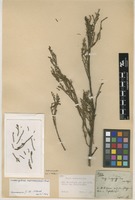
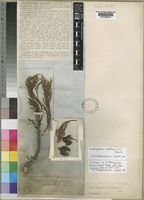
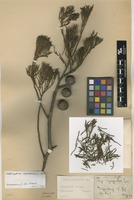
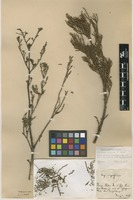
Filed as Widdringtonia nodiflora (L.) Powrie [family CUPRESSACEAE]
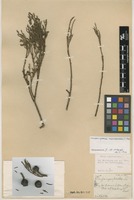
Type of Pachylepis commersonii Brogniart [family CUPRESSACEAE]
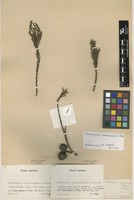
Filed as Widdringtonia nodiflora (L.) Powrie [family CUPRESSACEAE]
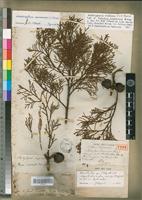
Holotype of Widdringtonia dracomontana Stapf. [family CUPRESSACEAE]
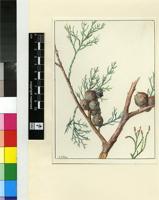
Widdringtonia cupressoides (L.) Endl.
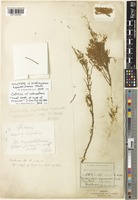
Filed as Widdringtonia nodiflora (L.) Powrie [family CUPRESSACEAE]
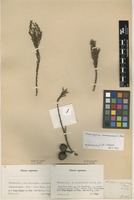
Holotype of Widdringtonia equisetiformis Mast. [family CUPRESSACEAE]
Filed as Widdringtonia nodiflora (L.) Powrie [family CUPRESSACEAE]
Previous
Next

Name

Identification
Widdringtonia cupressoides (L.) Endl. [family CUPRESSACEAE ]
Related name
  • Widdringtonia cupressoides

Flora

Entry for WIDDRINGTONIA cupressoides Endl. [family CUPRESSACEAE]
Herbarium
Royal Botanic Gardens, Kew (K)
Collection
Flora Capensis
Resource Type
Reference Sources
Entry From
Flora Capensis, Vol 5, Part 2 (Supplement), page 14, (1933) Author: (By O. STAPF.)
Names
WIDDRINGTONIA cupressoides Endl. [family CUPRESSACEAE], Cat. Hort. Vindob. i. 209, and Syn. Conif. 33;—Lindl. & Gord. in Journ. Hort. Soc. V. 203; Knight, Syn. Conif. 13; Pappe, Silv. Cap. 31; Carr. Trait. Conif. ed. i. 64; ed. ii. 518; Gord. Pinet. ed. i. 333; ed. ii. 417; Schlechtend. in Linnaea, xxxiii. 361, t. i. fig. 1; Henk. & Hochst. Syn. Nadelhölz. 293; Sperk in Mém. Acad. Sc. St. Petersb. Ser. 7, XIII. no. 6, t. 5, fig. 132–135; Parlat. in DC. Prodr. XVI. ii. 443; Sim, For. Fl. Cape Col. 337, and Native Timb. S. Afr. 131, t. 27; Bolus & Wolley Dod, Fl. Cape Penins. (in Trans. S. Afr. Phil. Soc. XIV. 320) 1903; Mast. in Journ. Linn. Soc. xxviii. 270; Saxton in Bot. Gaz. xlviii. 161–178, fig. 2, t. xi; Marloth, Fl. S. Afr. i. 101, fig. 67, a.
Cupressus juniperoides Linn. [family CUPRESSACEAE], Sp. Pl. ed. ii, 1422; Ait. Hort. Kew. ed. i, iii. 373; Harvey, Gen. S. Afr. Pl. ed. i. 311.
Cupressus africana Herm. & Oldenland ex Mill. [family CUPRESSACEAE], Gard. Dict. ed. viii; Hook, f. in Lond. Journ. Bot. iv. 141.
Thuja cupressoides Linn. [family CUPRESSACEAE], Mant. i. 125; Mant. ii. 518; Thunb. Prodr. 110; Fl. Cap. ed. Schult. 500; Ait. Hort. Kew, ed. ii. v. 322; Willd. Sp. Pl. v. 510; Loudon, Arb. Brit. iv. 2460, fig. 2316; Harvey, Gen. S. Afr. Pl. ed. i. 311.
Thuja sp. n.? Barrow [family CUPRESSACEAE], Travels S. Afr. i. 298.
Juniperus capensis Lam. [family CUPRESSACEAE], Encycl. ii. 626.
Schubertia capensis Spreng. [family ASCLEPIADACEAE], Syst. iii. 890.
Pachylepis cupressoides Brogn. [family ], in Ann. Sc. Nat. 1 re sér. xxx. 190; Spach, Hist. Nat. Veg. xi. 346; Krauss in Flora, xxvii. 272; xxviii. 89.
Callitris cupressoides Schrad. [family CUPRESSACEAE], in Drège, Zwei Pflanzengeogr. Doc. 79, 115, 126, 170; Pappe, Fl. Cap. Med. Prodr. ed. i. 26; ed. ii. 37; Engl. Notizbl. Bot. Gart. Berlin, App. xi. 28, and Pflanzenw. Afr. ii. 88; Marloth, Kapland, 116, 196, 199; Bolus & Wolley-Dod in Trans. S. Afr. Phil. Soc. xiv. 320; Dallimore & Jackson, Handb. Conif. 540.
Cupressus aethiopica coronata … Breyne [family CUPRESSACEAE], Prodr. Fasc. Rar. Pl. 39; ed. 2, p. 59.
Cupressus nana compressis Taxi longioribus foliis Afric. Pluk. [family CUPRESSACEAE], Almag. Mant. 61.
Cupressus africana lini folio Burmann [family CUPRESSACEAE], Cat. Pl. Afr. Herm. 8.
Juniperus foliis frutex Afr. Pluk. [family CUPRESSACEAE], Phyt. t. 197, fig. 5; Almag. 202.
Information
a rather compact shrub with fastigiate branches, 6–12 ft. high, rarely a tree with a trunk up to 1 ft. in diam. (according to Fourcade), in cultivation, according to Carrière, up to almost 50 ft. high with strictly erect branches; ultimate ramification of the adult plant almost cylindric, the barren twigs slender, up to 1/2 lin. in diam.; leaves of the juvenile state needle-shape, spreading, up to 10 lin. by 3/4 lin., glaucous below or quite green (cultivated specimens); of adult state decussate, squamiform, those of the older branches with an ovate acute usually appressed blade, the free portion about 1 lin. long, those of the ultimate divisions tightly appressed (so that the contour of the branchlet is approximately a straight line or in the upper part more or less wavy), ovate-oblong to rhombic-oblong, 2/3– 3/4 lin. long, subacute at both ends, but less so at the lower, free and adnate portions about equally long, sometimes obscurely keeled on the rounded back; male strobiles oblong to ovoid, about 1 lin. long, ebracteate and subsessile in the cup formed by the subtending foliage leaves; scales in about 6 pairs, peltate, rhombic, subacuminate, delicately scarious except the frequently subcoriaceous acumen, the subhyaline margins minutely denticulate; pollen-sacs 4, protruding between the scales, female strobiles in slender loose spikes, 1/2 to over 1 in. long and terminating with a vegetative bud; strobiles at the time of pollination up to 1 1/2 lin. across, exceeding the subtending squamiform broad-ovate acute bract; scales ovate, acute or minutely apiculate, stout with a large hump on the face, this and the base of the back bluish-pruinose, otherwise greenish-brown; ovules 6–7 with each scale, bottle-shaped with 2 distinct equal wings; cones 1–4 in a spike, rather close, globose, up to 1 in. in diam., blackish-brown, somewhat pruinose and resinous; valves smooth, rarely slightly and irregularly tubercled with a short often blunt point (the morphological apex) some distance below the top; seeds up to 20 or more, somewhat compressed, lanceolate to ovate-lanceolate in outline, 3 1/2–5 lin. long, broadly winged upwards, with the wings obovoid, emarginate, often very oblique, and 5 to over 6 lin. long, black with a silky lustre or the wings dark brown. null
Distribution
CAPE PROVINCE Cape Div.; Table Mountain plateau, Wilms, 3636! between Rondebosch and Wynberg, Burchell, 771! Orange Kloof, Gamble, 22013! Constantia, Thunberg, Krause, and without precise locality, Kiggelaer! Masson! Harvey, 419, Thom, 163! O. Kuntze! Worcester Div.; Dutoits Kloof, 1000–2000 ft., Drège. Caledon Div.; Caledon, Smith! Genadendal, 2000–3000 ft., Drège. Swellendam, Wallich, Drège. Riversdale Div.; Paardeberg, Muir 5338! George Div.; Cradock Berg, near George, Burchell, 5979! Mund (Ecklon & Zeyher as Thesium, 52 partly)! Knysna Div.; Outeniqua Mountains, Krauss! near Goukamma Rivers, Burchell, 5588! Humansdorp Div.; Fynbosch Hoek, Kotze, For. Dept. Herb. 3007! 3008! Witte Els Bosch, 900–1000 ft., Fourcade, 2293! Kromme River, Drège! Storms River, Hutchins! Uitenhage Div.; Van Staadensberg Range, Burchell, 4688! Albany Div.; Grahamstown, Thom (?) 108! King Williamstown Div.; Mountains, according to Sim.
Notes
W. natalensis, Endl. Syn. Con. 34, which was very imperfectly described from a specimen said to have been sent by Gueinzius and Krauss from “Port Natal,” is very likely W. cupressoides. Neither collected in the Drakensberg Mts., which were then (1839–1843) botanically quite unknown. On the other hand, both visited the area of W. cupressoides before they went to Natal. Although the originals of Linnaeus' Cupressus juniperoides —two seedling plants—are lost, it is practically certain that they belonged to the same species as his Thuja cupressoides, described by him four years later. The same applies to Miller's Cupressus africana and Lamarck's Juniperus capensis and the various new combinations which rest on them. This has already been suggested by Schlechtendal, l.c., and, apart from other considerations, it is evident since the Cedarberg Mountains, the home of Widdringtonia juniperoides, Endl., were not known before the beginning of the 19th century, and certainly were not explored botanically until 1829. W. cupressoides is the Cape Cypress, Berg Cypress, or Sapree-hout of the Cape Colonists. W. Commersonii, Endl. Syn. Conif. 34 (Syn. Thuia quadrangularis, Vent. in Nouv. Duham. iii. 16; Pachylepis Commersonii, Brogn. in Ann. Sc. Nat. 1 re sér. xxx. 190), described from a specimen cultivated at Reduit in Mauritius about 1800 is possibly, as already suggested by Carrière, W. cupressoides.

Related Materials

  • Terms and Conditions
  • Privacy Policy
  • Cookie Policy
  • Cookie Settings
  • Accessibility
  • Help
  • Contact Us
  • Facebook
  • Twitter
ITHAKA

JSTOR is part of ITHAKA, a not-for-profit organization helping the academic community use digital technologies to preserve the scholarly record and to advance research and teaching in sustainable ways.

©2000-2026 ITHAKA. All Rights Reserved. JSTOR®, the JSTOR logo, JPASS®, Aluka®, and ITHAKA® are registered trademarks of ITHAKA.

╳