JSTOR Global Plants Home
  • Home
  • Browse
  • About
  • Access
  • Account
    • Saved Items
    • Profile
  • Log in

Global Plants

Skip to Main Content
  • JSTOR Global Plants Home
  • Global Plants

    • Browse
    • About
    • Access
    • Account
      • Saved Items
      • Profile
Log in
  • Browse
  • About
  • Access
  • Account
    • Saved Items
    • Profile
Advanced Search

Compilation
Welwitschia bainesii

3 Images see all

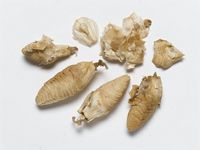
Welwitschia bainesii (Hook.f.) Carrière; cones and scales
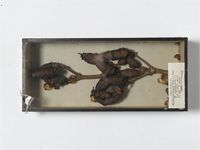
Welwitschia bainesii (Hook.f.) Carrière; cones on stem
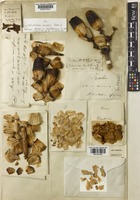
Welwitschia bainesii (Hook.f.) Carrière [family WELWITSCHIACEAE]
Previous
Next

Name

Identification
Welwitschia bainesii (Hook.f.) Carrière [family WELWITSCHIACEAE ]
Related name
  • Welwitschia bainesii

Flora

Entry for WELWITSCHIA Bainesii Carr. [family ]
Herbarium
Royal Botanic Gardens, Kew (K)
Collection
Flora Capensis
Resource Type
Reference Sources
Entry From
Flora Capensis, Vol 5, Part 2 (Supplement), page 1, (1933) Author: (By H. H. W. PEARSON.)
Names
WELWITSCHIA Bainesii Carr. [family ], Conif. ed. ii. 783 (1867);—Marloth, Fl. S. Afr. i. 107, fig. 68 a and b.
Tumboa Bainesii Hook. f. [family ], in Gard. Chron. 1861, 1008; Naudin Rev. Hort. 1862, 186; Rendle in Cat. Afr. Pl. Welw. ii. 257 (1899); Engl. Pflanzenw. Afr. ii. 90–93, fig. 85 (1908).
Tumboa strobilifera Welw. [family ], in Gard. Chron. 1862, 71.
Welwitschia mirabilis Hook. f. [family ], in Gard. Chron. 1862, 71, in Trans. Linn. Soc. xxiv. 1. tt. 1–14 (1863), and in Bot. Mag. tt. 5368, 5369 (1863); McNab in Trans. Linn. Soc. xxviii. t. 40 (1873); Monteiro, Angola and River Congo, ii. t. 15 (1875); Schimper, Pflanzen-Geogr. 662, 664 (1898); Warburg, Kimena-Sambesi Exped. frontisp., p. 6 (1903); Karsten & Schenck, Veg.-Bild. i. t. 25 (1903); Pearson in Kew Bull. 1907, 347, pl. 2, figs. 3–5; L. Schultze, Namaland & Kalahari, t. 3 (1907); M. G. Sykes in Trans. Linn. Soc. Bot. ser. ii. vii. 327, t. 34–5 (anat.); Velenovsky, Vergl. Morphol. Pfl. iii. 775 (1910); iv. Suppl. t. 1 (1913); Coulter & Chamberlain Morph. Gymnosp. 365, 366, 374, 399 (1910); Church in Phil. Trans. (B) ccv. (1914), 115, with figs.; Pearson in Prain Fl. Trop. Afr. vi. ii. 333 (1917).
Information
plant body (hypocotyl) woody, covered by thick corrugated cork, sometimes fused with other individuals, when injured exuding a copious gummy secretion congealing in alcohol, broadly obconic or turbinate, concave on the top, more or less circular or elliptic in horizontal section, rising 1/4–1 ft. above the ground, 1–3 ft. in diam. at the top; epicotyl reduced to 2 leaf-bearing grooves and floriferous cushions forming a raised rim around the top of the hypocotyl interrupted at the longer diameter, and a depressed and early arrested stem apex, at length buried beneath two coalescent corky expansions overlying the concave summit of the hypocotyl and developed from the buds in the axils of the cotyledons; taproot greatly elongated, unbranched in the upper part, at length very slender, branched and brittle; leaves 2, rarely 3, each inserted in an epicotylar leaf-groove extending round half the raised rim of the hypocotyl, oblong, entire, usually in old plants torn into few or many strap-like segments from apex to base, thick, leathery, with the main nerves parallel and distinct, growing at the base as long as the plant lives, dying at the apex, up to 4 yards long; spikes arranged in compound dichasial cymes (rarely solitary) arising annually from pits in the floriferous cushions situated immediately above, not seldom immediately beneath, each leaf; male spike bearing 40–70 axillary flowers in 4 rows; bracts connate, lowest pair or 2 pairs barren; flowers concealed by the bracts until the exsertion of the anthers; female spike bearing 40–60 flowers in 4 rows; lowest 6–10 pairs of bracts increasing in size from below upwards, barren, the lowest 2 or 3 pairs connate. Except the micropylar tube, the naked seed completely concealed by the bract at maturity. null
Distribution
SOUTH-WEST AFRICA Namib region from north of Sandfisch Bay (23 1/2° S.) to the northern boundary, and continued along the low coastal belt of Angola to south of Mossamedes (15 1/2° S.).
Notes
This weird type of plant may not be so rare as has generally been supposed. According to an account in the Diamond Fields Advertiser, Kimberley, for April 28th, 1932, Welwitschia occurs in great quantity in the Kakoa-veld in North-West Damaraland; the writer there states that he observed “an area of not less than 2,500 square miles where the gravelly surface of the ground, up hill and down dale, is covered with the plant, in some places in such profusion that it was impossible to find an opening through which to pilot the car, and we were forced to back out and make wide detours; some plants stretched to a diameter of 16 ft.” (See also Journ. Bot. Soc. S. Afr., pt. xviii, 4, 1932.) Mr. Worsdell informs us that the plant is fairly common (“many hundreds”) in the dried-up bed of a stream and on small granite hillocks about a mile to the south of Old Welwitsch Railway Station; the crown of the stem of the largest specimen was nearly 6 ft. in diameter.

Related Materials

  • Terms and Conditions
  • Privacy Policy
  • Cookie Policy
  • Cookie Settings
  • Accessibility
  • Help
  • Contact Us
  • Facebook
  • Twitter
ITHAKA

JSTOR is part of ITHAKA, a not-for-profit organization helping the academic community use digital technologies to preserve the scholarly record and to advance research and teaching in sustainable ways.

©2000-2026 ITHAKA. All Rights Reserved. JSTOR®, the JSTOR logo, JPASS®, Aluka®, and ITHAKA® are registered trademarks of ITHAKA.

╳