JSTOR Global Plants Home
  • Home
  • Browse
  • About
  • Access
  • Account
    • Saved Items
    • Profile
  • Log in

Global Plants

Skip to Main Content
  • JSTOR Global Plants Home
  • Global Plants

    • Browse
    • About
    • Access
    • Account
      • Saved Items
      • Profile
Log in
  • Browse
  • About
  • Access
  • Account
    • Saved Items
    • Profile
Advanced Search

Compilation
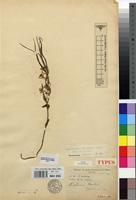
Walleria nutans

5 Images see all

Walleria nutans J.Kirk
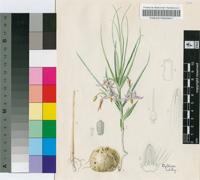
Holotype of Walleria muricata N.E.Br. [family TECOPHILAEACEAE]
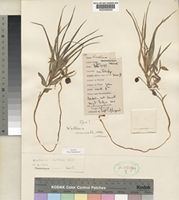
Syntype of Walleria nutans Kirk [family TECOPHILAEACEAE]
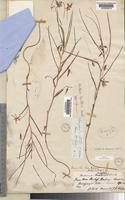
Syntype of Walleria nutans J.Kirk [family TECOPHILAEACEAE]
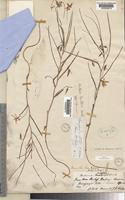
Type of Walleria hockii De Wild. [family TECOPHILAEACEAE]
Previous
Next

Name

Identification
Walleria nutans J.Kirk [family TECOPHILAEACEAE ]
Related name
  • Walleria nutans

Flora

Entry for WALLERIA nutans Kirk [family TECOPHILAEACEAE]
Herbarium
Royal Botanic Gardens, Kew (K)
Collection
Flora Capensis
Resource Type
Reference Sources
Entry From
Flora Capensis, page 253, (1897) Author: (By J. G. BAKER).
Names
WALLERIA nutans Kirk [family TECOPHILAEACEAE], in Trans. Linn. Soc. xxiv. 497, t. 52, fig. 1
WALLERIA Mackenzii Baker var. nutans [family TECOPHILAEACEAE], in Journ. Linn. Soc. xvii. 499.
Information
stem slender, 1/2–1 1/2 ft. long, decumbent at the base; leaves of the lower half of the stem small, rudimentary, of the upper half linear, sessile, alternate, ascending, 3–4 in. long; pedicels ascending, 1–2 in. long, cernuous at the apex, furnished with 1–2 linear foliaceous bracts; perianth with a greenish campanulate tube 1/6 in. long; segments lanceolate, acute, patent, 1/2 in. long, laxly 5–7-nerved; anthers more than half as long as the perianth-segments. null
Distribution
KALAHARI REGION Transvaal; Houtbosch, Rehmann, 5811!

Related Materials

  • Terms and Conditions
  • Privacy Policy
  • Cookie Policy
  • Cookie Settings
  • Accessibility
  • Help
  • Contact Us
  • Facebook
  • Twitter
ITHAKA

JSTOR is part of ITHAKA, a not-for-profit organization helping the academic community use digital technologies to preserve the scholarly record and to advance research and teaching in sustainable ways.

©2000-2026 ITHAKA. All Rights Reserved. JSTOR®, the JSTOR logo, JPASS®, Aluka®, and ITHAKA® are registered trademarks of ITHAKA.

╳