

Compilation
Wahlenbergia bojeri
2 Images see all
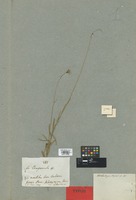
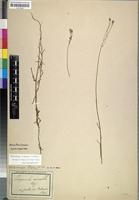
Name
Identification
Wahlenbergia bojeri A.DC. [family CAMPANULACEAE ] Verified by Not on sheet, Wahlenbergia undulata (L.f.) A.DC. [family CAMPANULACEAE ] (stored under name); Verified by Not on sheet,
Related name
- Wahlenbergia bojeri
- Wahlenbergia undulata
Flora
Entry for Wahlenbergia undulata L.f. A.DC. [family CAMPANULACEAE]
Herbarium
Royal Botanic Gardens, Kew (K)
Collection
Flora Zambesiaca
Resource Type
Reference Sources
Entry From
FZ, Vol 7, Part 1, page 87, (1983) Author: M. Thulin
Names
Wahlenbergia oatesii Rolfe [family CAMPANULACEAE], in Oates, Matabeleland and the Victoria Falls, ed. 2, app. 5: 402 (1889). Type: Zimbabwe, Matabeleland, Oates 4/78 (K, holotype).
Wahlenbergia cyanea Engl. & Gilg [family CAMPANULACEAE], inWarb., Kunene–Samb.–Exped. Baum: 395(1903). Type from Angola.
Wahlenbergia caledonica var. cyanea Engl. & Gilg von Brehmer [family CAMPANULACEAE], in Engl., tom. cit.: 105 (1915). Type as above.
Wahlenbergia engleri von Brehmer [family CAMPANULACEAE], in Engl., loc. cit. Syntypes: Zimbabwe, Umtali, Engler 3167 (B†); Salisbury at Norton, Engler 3026 (B†).
Wahlenbergia dinteri von Brehmer [family CAMPANULACEAE], in Engl., tom. cit.: 106 (1915). — Markgrafin Engl., Bot. Jahrb. 75: 215 (1950). — Roessler in Prodr. Fl. SW. Afr.136: 8 (1966). Syntypes from S. Africa and Namibia.
Wahlenbergia scoparia von Brehmer [family CAMPANULACEAE], in Engl., tom. cit.: 108 (1915). Syntypes from S. Africa and Namibia.
Wahlenbergia undulata L.f. A.DC. [family CAMPANULACEAE], Monogr. Camp.: 148(1830). — Sonder in Harv. & Sond., F.C. 3: 579 (1865). — von Brehmer in Engl., Bot. Jahrb. 53: 122 (1915). — Thulin in Symb. Bot. Ups. 21, 1: 76, fig. 6A & B, 9A, 11A & B, 14A, N, U, 15B (1975); in F.T.E.A., Campanulaceae: 8, fig. 2A, N, U (1976); in Fl. Madag. 187. Campanulaceae: 5, t. 1 fig. 1–6 (1978). Type from S. Africa (Cape Prov.).
Campanula undulata L.f. [family CAMPANULACEAE], Suppl. Pl.: 142 (1781). Type as above.
Wahlenbergia bojeri A.DC. [family CAMPANULACEAE], in DC., Prodr. 7: 435 (1839). Type from Madagascar.
Wahlenbergia caledonica Sonder [family CAMPANULACEAE], in Harv. & Sond., loc. cit. — von Brehmer in Engl., loc. cit. — Brenan in Mem. N.Y. Bot. Gard. 8:492 (1954). — Binns, H.C.L.M.: 25 (1969). Type from S. Africa (Orange Free State).
Information
Perennial or annual erect herb, 20–90 cm. tall. Sterns few to many, ± hirsute towards the base or glabrous. Leaves 10–70 x 1·5–10 mm., alternate, scattered or somewhat crowded towards the base, sessile, lanceolate to linear, acute to subacute with cuneate to truncate base, ± hirsute or glabrous; margin incrassate, ± undulate–crenate; midvein protruding beneath, lateral veins faint. Inflorescence lax; pedicels up to 10–25 mm. long, glabrous; bracts ± ciliate to dentate or glabrous and entire. Hypanthium obconical to hemispherical, ± 10–nerved, glabrous. Calyx–lobes 1–5–6 mm. long, ± ciliate to dentate or glabrous and entire. Corolla (5) 8–16 mm. long, campanulate, blue, white, yellow or various intermediate colours, deeply 5–lobed, puberulous inside near the base, glabrous outside; corolla–tube 1·5–5 mm. long. Stamens with filament–bases broadly dilated to almost cross–shaped, ciliate; anthers ± 2·5–5 mm. long. Ovary 3–locular, subinferior; style somewhat shorter than corolla, hairy or glabrous below; lobes 3 with 3 glands present between their bases. Capsule 3–12 mm. long, 3–locular, ± 10–nerved; valves 3, 1–3 mm. long. Seeds 0–35–0–55 mm. long, ± elliptic in outline, ± compressed; testa reticulate.
Habitat
In various types of grassland, often in rocky or seasonally moist places, also on roadsides, cultivated or waste ground.
Distribution
Mozambique M Inhaca I., to 200 m., xi.1962, Mogg 30117 (K–PRE; SRGH).Mozambique GI Gaza, Xai–Xai, 10.xii.1940, Torre 2308 (LISC).Malawi S Zomba Plateau, 1450 m., 5.vi.1946, Brass 16260 (BR; K; MO; PRE; SRGH).Zimbabwe S Belingwe East Reserve, 7.vii.1953, Wild4l24 (K; LISC; MO; PRE; SRGH).Zimbabwe E Melsetter, near Bridal Veil Falls, 17.v.1962, Noel 2438 (EA; K; LISC; M; MO; PRE; SRGH).Zimbabwe C Salisbury Distr., between Avondale West and Mabelreign, 16.x.1955, Drummond 4908 (K; LISC; PRE; SRGH).Zimbabwe W Shangani Distr., Gwampa Forest Reserve, ii.1955. Goldsmith 80/55 (K; PRE; SRGH).Zambia S Choma, 1300 m., 22.xii.1958, Robinson 2952 (BR; EA; K; LISC; M; PRE; SRGH).Mozambique MS Chimanimani Mts., Musapa Gap, 6.x.1950, Munch 334 (K; LISC; SRGH).Malawi N Nyika Plateau, Nyamkowa, 2030 m., 23.ii.1978, Pawek 13855 (K).Zimbabwe N Mazoe, Iron Mask Hill, 1500 m., vi.1915, Eyles 613 (BM; K; SRGH).Zambia B Mongu, 6.i.1966, Robinson 6775 (BR; EA; K; LISC; M MO; SRGH).Botswana SE Farm Springfield, 3 km. S. ofLobatsi, 17.i.1960, Leach & Noel 138 (SRGH).Caprivi Strip 11 km. S. of Katima Muliloon road to Ngoma, 900 m., 22.xii.1958, Killick & Leistner 3023 (SRGH).
Distribution (external)
Tanzania
Angola
Namibia
S. Africa
Madagascar
Notes
W. undulata, over its wide geographical and habitat range, shows much variation particularly in flower size and colour, shape of leaves and fruits, and in pubescence. Usually it is perennial but apparently annual forms occur in the coastal regions of Mozambique. Various local forms may sometimes be distinguished. For example Miller 2167 and 2168 from the Western Prov. of Zimbabwe represent two forms with blue and yellow flowers respectively and with different leaf shape, which according to Afiller grow together without intergradation. However, when the total material is considered all of these forms merge ± imperceptibly into each other which makes almost impossible any clear subdivision of the species. The perhaps most distinctive form within the F.Z. area occurs in Barotseland and adjacent parts of the Southern Prov. of Zambia and the Caprivi Strip, This is entirely glabrous with long, linear leaves and seems to prefer wetter habitats than what is normal for this species. It comes close to the type of W. cyanea from southern Angola which however is pubescent at the base.