JSTOR Global Plants Home
  • Home
  • Browse
  • About
  • Access
  • Account
    • Saved Items
    • Profile
  • Log in

Global Plants

Skip to Main Content
  • JSTOR Global Plants Home
  • Global Plants

    • Browse
    • About
    • Access
    • Account
      • Saved Items
      • Profile
Log in
  • Browse
  • About
  • Access
  • Account
    • Saved Items
    • Profile
Advanced Search

Compilation
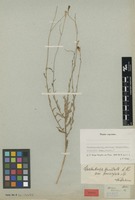
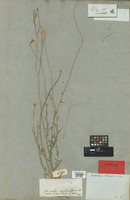
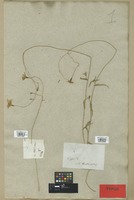
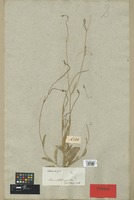
Wahlenbergia bilocularis

5 Images see all

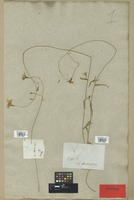
Syntype of Wahlenbergia bilocularis A.DC. [family CAMPANULACEAE]
Filed as Wahlenbergia bilocularis A. DC. [family CAMPANULACEAE]
Syntype of Wahlenbergia bilocularis A. DC. [family CAMPANULACEAE]
Filed as Wahlenbergia bilocularis A. DC. [family CAMPANULACEAE]
Previous
Next

Name

Identification
Wahlenbergia bilocularis A.DC. [family CAMPANULACEAE ] (stored under name); Verified by [Not on sheet], Wahlenbergia denudata A.DC. [family CAMPANULACEAE ] Verified by Brehmer, W.G.B.A. von,
Related name
  • Wahlenbergia denudata
  • Wahlenbergia bilocularis

Flora

Entry for WAHLENBERGIA undulata A. DC. [family ]
Herbarium
Royal Botanic Gardens, Kew (K)
Collection
Flora Capensis
Resource Type
Reference Sources
Entry From
Flora Capensis, Vol 3, page 530, (1894) Author: (By W. SONDER).
Names
WAHLENBERGIA undulata A. DC. [family ], Monog. p. 148
Campanula undulata Linn. fil. [family CAMPANULACEAE], ! Suppl. p. 142. Thunb. Prod. p. 39, fl. Cap. p. 173. E. & Z. 2373.
Wahlenbergia Cham. [family ], ! in Linnæa 8, p. 194.
WAHLENBERGIA Chamissoniana G. Don [family ], Gen. Syst. 3, p. 740. DC. Prod. p. 439.
WAHLENBERGIA bilocularis A. DC. [family ], ! Prod. p. 439. Zeyh. 1068, 3137. Drege, 4003, 6280, 6281.
Information
stem ascendent or erect, branched, hairy at the base, naked and glabrous at the apex; leaves sessile or somewhat clasping, alternate, rarely opposite, ovato-oblong or ovato-lanceolate, coarsely crenated or toothed, sinuated and undulated, marginate; peduncles elongated, few flowered, rarely repetito-dichotomous; calyx glabrous; tube obconical; lobes ovate, acute, or acuminate, ciliolate; corolla large, 5-fid, infundibuliform, 3–4 times longer than the calyx; capsule obconical, 2 or 3-celled, striate. A rigid annual, well known from all the other species by the undulate, crenated, coriaceous, margined leaves. Stem 1/2–1 feet high, subangulate by the decurrent leaves; much leafy from the base, and generally clothed with white spreading hairs; branches as long, or often much longer than the stem, naked or leafy at the base, terminated by the quite naked, simple, or near the apex, 2–3-times forked, peduncles, each of which bears 2–5 pedicellate flowers. Leaves spreading, about 1 inch long, 3–4 lines wide, larger or smaller in different specimens, hairy, especially in the young, not flowering branches, but sometimes quite glabrous; upper ones gradually smaller and narrower, those at the base of the peduncles 3–1 line long, entire. Pedicels in flower short, in fruit 1/2–1 inch long, glabrous as the peduncles and flowers. Calyx variable in size, 1–3 lines long; lobes mostly broad, acute, shorter than tube, but sometimes as long or a little longer, acuminate. Corolla blue, 1/2–1 inch in diameter, with acute lobes. Style with two glands below the stigma. Capsule 4–6 lines long, 10-nerved, crowned by the erect short calycine lobes. Valves 2 or 3 in the same peduncle. Seeds oblong or ovoid. It varies also, but rarely with 1 flowered, much elongate peduncles, and flattish, but always distinctly undulate leaves.
Distribution
SOUTH AFRICA Zwartland, near Bergriver, Thunb. Tulbagh, Zeyh. District of George, Dr. Pappe, Mundt. Albany, E. & Z., Drege, H. Hutton. Uitenhage, E. & Z. Orange Free State, district of Albert. T. Cooper, Caffraria, Krebs. Drege, to Port Natal, Dr. Grant, Williamson, Plant, Gueinzius. Gerrard, 871. Sanderson, 102, 380, 458. Sept.-Jan. (Herb. Thunb., Holm., Hk., Dr. Berol. Sd.)

Related Materials

  • Terms and Conditions
  • Privacy Policy
  • Cookie Policy
  • Cookie Settings
  • Accessibility
  • Help
  • Contact Us
  • Facebook
  • Twitter
ITHAKA

JSTOR is part of ITHAKA, a not-for-profit organization helping the academic community use digital technologies to preserve the scholarly record and to advance research and teaching in sustainable ways.

©2000-2026 ITHAKA. All Rights Reserved. JSTOR®, the JSTOR logo, JPASS®, Aluka®, and ITHAKA® are registered trademarks of ITHAKA.

╳