JSTOR Global Plants Home
  • Home
  • Browse
  • About
  • Access
  • Account
    • Saved Items
    • Profile
  • Log in

Global Plants

Skip to Main Content
  • JSTOR Global Plants Home
  • Global Plants

    • Browse
    • About
    • Access
    • Account
      • Saved Items
      • Profile
Log in
  • Browse
  • About
  • Access
  • Account
    • Saved Items
    • Profile
Advanced Search

Compilation
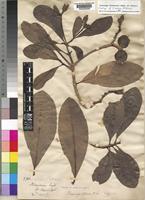
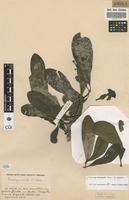
Voacanga obtusa

6 Images see all

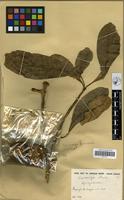
Filed as Voacanga obtusa K.Schum. [family APOCYNACEAE]
Lectotype of Voacanga obtusa K.Schum. [family APOCYNACEAE]
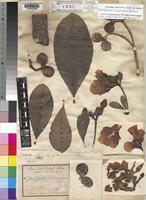
Isotype of Voacanga obtusa K.Schum. [family APOCYNACEAE]
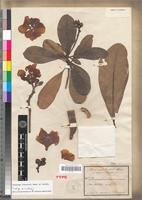
Isolectotype of Voacanga obtusa K.Schum. [family APOCYNACEAE]
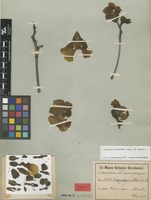
Isotype of Voacanga obtusa K.Schum. [family APOCYNACEAE]
Filed as Voacanga thouarsii Roem. & Schult. [family APOCYNACEAE]
Previous
Next

Name

Identification
Voacanga obtusa K.Schum. [family APOCYNACEAE ] (stored under name); Verified by Not on sheet, 1946
Related name
  • Voacanga thouarsii
  • Voacanga obtusa
  • Orchipeda unrecorded
Common name
  • ninyge-εxunyi (NWT) (SIERRA LEONE, SUSU), Burkill, H.M. 1985. The useful plants of west tropical Africa, Vol. 1
  • je-ray-krehn (C&R) (LIBERIA, KRU-BASA), Burkill, H.M. 1985. The useful plants of west tropical Africa, Vol. 1
  • Coast) landa édi (Aub.) (IVORY COAST, FULA-FULFULDE (Ivory), Burkill, H.M. 1985. The useful plants of west tropical Africa, Vol. 1
  • kuto (JMD; DAP) kuto-jambo the leaves (JMD) (THE GAMBIA, MANDING-MANDINKA), Burkill, H.M. 1985. The useful plants of west tropical Africa, Vol. 1
  • к̉òк̉íyár bìriì = Strychnos of the monkey (auctt.) (NIGERIA, HAUSA), Burkill, H.M. 1985. The useful plants of west tropical Africa, Vol. 1
  • knubwobwoyi (JMD) (NIGERIA, GWARI), Burkill, H.M. 1985. The useful plants of west tropical Africa, Vol. 1
  • gboni (auctt.) (SIERRA LEONE, MENDE), Burkill, H.M. 1985. The useful plants of west tropical Africa, Vol. 1
  • bu lukun = tasty sap (DF) (THE GAMBIA, DIOLA (Fogny)), Burkill, H.M. 1985. The useful plants of west tropical Africa, Vol. 1
  • bu lukuñ (JB) (SENEGAL, DIOLA), Burkill, H.M. 1985. The useful plants of west tropical Africa, Vol. 1

Flora

Entry for VOACANGA obtusa K. Schum. [family APOCYNACEAE]
Herbarium
Royal Botanic Gardens, Kew (K)
Collection
Flora of Tropical Africa
Resource Type
Reference Sources
Entry From
Flora of Tropical Africa, Vol 4, Part 1, page 24, (1904) Author: (By Otto Stapf.)
Names
VOACANGA obtusa K. Schum. [family APOCYNACEAE], in Engl. & Prantl, Pflanzenfam. iv. ii. 149. —K. Schum. in Durand & De Wild. in Bull. Soc. Bot. Belg. xxxvii. 122. De Wild. Éudes Fl. Bas et Moyen Congo, i. 69.(V. obtusata by error) De Wild.;in Bull. Herb. Boiss. 2 sér., i. 34. K. Schum. in Engl. Jahrb. xxiii. 226; Scheffler in Notizbl. Königl. Bot. Gart. Berlin, iii. 161.
VOACANGA Thouarsii Hiern [family APOCYNACEAE], in Cat. Afr. Pl. Welw. i. 669, not of Roem. & Schultes.
Information
A tall glabrous tree; branches stout, pallid, or the youngest blackish when dry. Leaves crowded towards the tips of the branches, obovate to oblong, obtuse to subacute, subcuneate towards the base, 4–9 in. long, 1 1/2–3 1/2 in. broad, dark green, shining when fresh, subcoriaceous, dull when dry; secondary nerves subhorizontal or rather oblique, almost straight, slender; petiole 4–9 lin. long. Inflorescences usually geminate from the branch-forks, shortly racemiform or umbelliform, few-flowered; peduncle stout, 4–5 in. long; rhachis stout, gradually lengthening up to 2 in. as the lower flowers fall; bracts ovate, concave, up to 5 lin. long, caducous; pedicels stout, finally up to 6 lin. long. Calyx wide-tubular, about 7–8 lin. long, early circumscissile at the base, with very numerous glands within; lobes rotundate, about 2 lin. long. Corolla white (or pale yellow?), sweet-scented, fleshy; tube subcylindric, not or scarcely exserted from the calyx, slightly constricted, 7–9 lin. long, twisted from the base upwards, quite glabrous; limb ovoid in bud, 8 lin. long; lobes somewhat asymmetric, broadly subobcordate, narrow at the base, about 1 in. long, up to almost 1 1/2 in. broad, sinus shallow. Anthers inserted close to the mouth of the corolla, exserted for half their length, slightly over 3 lin. long. Disc cupular, obscurely lobed, exceeding the ovary and adnate to it only at the base, persistent. Style up to 8 lin. long; stigma shortly cylindric, grooved, with a frill at the base. Berries globose, over 2 in. in diam., smooth; pericarp very thick, fleshy. Seeds about 4 lin. long, enveloped in a thick pulpy coat; testa almost smooth externally, slightly intruding into the albumen.
Distribution
Angola Lower Guinea Ambaca; along streams between Ngombe and Puri-Cacarambola, Welwitsch, 5977!Congo Lower Guinea Kisantu, Gillet, 203.Uganda Nile Land Kampala, Scott-Elliot, 7506!Congo South Central Lunda; Kibanga, De Beerst. Niamniam, by the Mbrwole River, Schweinfurth, 3741!French Guinea Upper Guinea Laya, by a stream, Scott-Elliot, 4481!Cameroons Upper Guinea Yaunde, 2600 ft., Zenker & Staudt, 130!
Notes
Schumann also refers to V. obtusa a plant collected by Goetze in the Kinga Mountains, South-western German East-Africa, at an altitude of 7000 ft. According to the collector it is a tree 45–60 ft. high with fruits as large as a head. This species comes extremely near to V. Thouarsii, from which it seems to differ mainly in the less obtuse leaves, slightly larger calyces, and comparatively short Corolla-tubes. The description of the flowers is drawn up from Schweinfurth's and Welwitsch's, that of the fruit and seeds from Scott-Elliot's Laya specimen. The Cameroons plant has very narrow leaves (4–6 in. by 1–1 3/4 in.) and (according to the collectors) pale sulphur-yellow flowers, whilst Schweinfurth describes the corollas as white and Welwitsch as whitish. A very similar species occurs in Natal: V. Dregei, E. Meyer. Much more material with good flowers, fruits and seeds is required before it can be definitely decided whether V. obtusa should be treated as a species distinct from V. Thouarsii. At the same time it is also possible that the above description covers more than one species. Scheffler (l.c.) gives a description of a tree found in the Usambara forests, which he names V. obtusa. It is a tall tree with a slender stem, slender erect branches, and scanty foliage. The flowers are sulphur-yellow, waxy, and in size and shape very similar to those of Tabernæmontana Holstii. The wood is hard, yellowish-white, the bark smooth, dark grey, and the fruits dark green, mottled with yellowish-white. This tree sheds its foliage completely by the end of October and beginning of November. The new leaves appear early in December.

Related Materials

  • Terms and Conditions
  • Privacy Policy
  • Cookie Policy
  • Cookie Settings
  • Accessibility
  • Help
  • Contact Us
  • Facebook
  • Twitter
ITHAKA

JSTOR is part of ITHAKA, a not-for-profit organization helping the academic community use digital technologies to preserve the scholarly record and to advance research and teaching in sustainable ways.

©2000-2026 ITHAKA. All Rights Reserved. JSTOR®, the JSTOR logo, JPASS®, Aluka®, and ITHAKA® are registered trademarks of ITHAKA.

╳