JSTOR Global Plants Home
  • Home
  • Browse
  • About
  • Access
  • Account
    • Saved Items
    • Profile
  • Log in

Global Plants

Skip to Main Content
  • JSTOR Global Plants Home
  • Global Plants

    • Browse
    • About
    • Access
    • Account
      • Saved Items
      • Profile
Log in
  • Browse
  • About
  • Access
  • Account
    • Saved Items
    • Profile
Advanced Search

Compilation
Vitellariopsis cuneata

8 Images see all

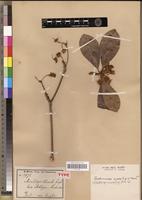
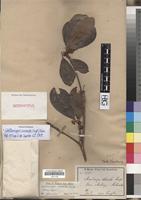
Type of Mimusops cuneata Engl. [family SAPOTACEAE]
Original material of Mimusops cuneata Engl. [family SAPOTACEAE]
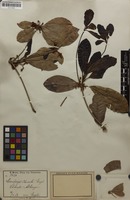
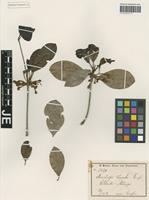
Isosyntype of Mimusops cuneata Engl. [family SAPOTACEAE]
Syntype of Mimusops cuneata Engl. [family SAPOTACEAE]
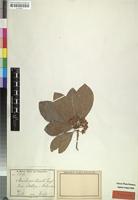
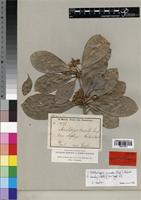
Isosyntype of Mimusops cuneata Engl. [family SAPOTACEAE]
Type? of Mimusops cuneata Engl. [family SAPOTACEAE]
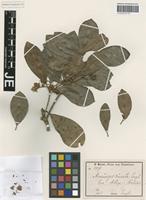
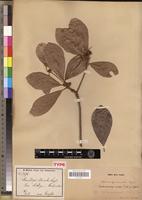
Type of Mimusops cuneata Engl. [family SAPOTACEAE]
Isosyntype of Mimusops cuneata Engl. [family SAPOTACEAE]
Previous
Next

Name

Identification
Vitellariopsis cuneata (Engl.) Aubrév. [family SAPOTACEAE ] (stored under name); Verified by Data not digitized, Mimusops cuneata Engl. [family SAPOTACEAE ] Verified by Data not digitized,
Related name
  • Vitellariopsis cuneata
  • Mimusops cuneata

Flora

Entry for VITELLARIOPSIS cuneata (Engl.) Aubrév. [family SAPOTACEAE]
Herbarium
Royal Botanic Gardens, Kew (K)
Collection
Flora of Tropical East Africa
Resource Type
Reference Sources
Entry From
Flora of Tropical East Africa, page 1, (1968) Author: J. H. Hemsley
Names
VITELLARIOPSIS cuneata (Engl.) Aubrév. [family SAPOTACEAE], in Adansonia 3: 42 (1963). Types: Tanganyika, W. Usambara Mts., Mashewa, Holst 8809 (B, syn. †) & Kwa Mshusa, Holst 8976 (B, syn. †, HBG, K, isosyn. !)
Mimusops cuneata Engl. [family SAPOTACEAE], P.O.A. C: 307 (1895) & E.M. 8: 70, t. 23/C (1904); T.T.C.L.: 565 (1949)
Austromimusops cuneata (Engl.) Meeuse [family SAPOTACEAE], in Bothalia 7: 355 (1960)
Information
Shrub up to 6 m. high with repeated subapical branching; branchlets with pale brownish-grey bark. Petioles 0.5–2 cm. long, practically glabrous. Leaf-lamina obovate-elliptic to ± obovate, (5-)7–11 cm. long, (2.5-)3–5 cm. wide, ± obtuse, cuneate, slightly puberulous along midrib beneath, especially when young; nervation inconspicuous on upper surface, primary lateral nerves ascending and finely raised on lower surface. Flowers clustered in axils of ± terminal leaf-rosettes; pedicels up to 2–5 cm. long, with ± floccose ferrugineous pubescence. Calyx with dense floccose ferrugineous pubescence; outer sepals ± lanceolate, up to 8 mm. long; inner sepals with greyish-brown indumentum. Corolla yellow; segments up to 7 mm. long; tube ±1.5 mm. long. Filaments up to 2.5 mm. long; staminodes ± ovate, up to 3.5 mm. long, densely woolly externally, ± connivent. Ovary densely pilose; style up to 7 mm. long. Fruits unknown.
Range
DISTR. T3 not known elsewhere
Altitude range
400–1100 m.
Distribution
TANGANYIKA Lushoto District W. Usambara Mts., Lutindi, July 1893 (fl. buds), Holst 3420!
Notes
There seems little doubt that this species is rightly referred to Vitellariopsis, with which the arrangement and venation of the leaves and the flowers entirely agree, but the fruits and seeds are still unknown. The plant should be searched for in the drier margins of the NE. side of the W. Usambara Mts. and also on the escarpment below Lutindi at the SW. corner of the same massif. The species seems to be closely related to V. marginata (N. E. Br.) Aubrév. from Mozambique to the Cape Province of South Africa. Drummond & Hemsley 4203, mentioned under V. kirkii, also approaches V. cuneata in flower characters, but the persistent stipules and leaf-shape are more like V. kirkii.

Related Materials

  • Terms and Conditions
  • Privacy Policy
  • Cookie Policy
  • Cookie Settings
  • Accessibility
  • Help
  • Contact Us
  • Facebook
  • Twitter
ITHAKA

JSTOR is part of ITHAKA, a not-for-profit organization helping the academic community use digital technologies to preserve the scholarly record and to advance research and teaching in sustainable ways.

©2000-2026 ITHAKA. All Rights Reserved. JSTOR®, the JSTOR logo, JPASS®, Aluka®, and ITHAKA® are registered trademarks of ITHAKA.

╳