

Compilation
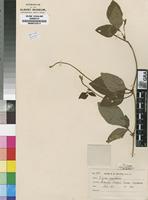
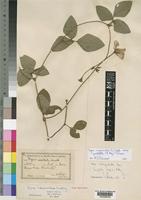
Vigna rhomboidea
2 Images see all
Name
Identification
Isotype of Vigna rhomboidea Burtt Davy [family FABACEAE ] Verified by Not on sheet, Vigna unguiculata (L.) Walp. [family FABACEAE ] (stored under name); Verified by Not on sheet,
Related name
- Vigna rhomboidea
- Vigna vexillata
- Vigna unguiculata
Flora
Entry for Vigna unguiculata subsp. stenophylla Harv. Maréchal, Mascherpa & Stainier [family LEGUMINOSAE]
Herbarium
Royal Botanic Gardens, Kew (K)
Collection
Flora Zambesiaca
Resource Type
Reference Sources
Entry From
FZ, Vol 3, Part 5, (2001) Author: B. Mackinder, R. Pasquet, R. Polhill and B. Verdcourt
Names
Vigna unguiculata subsp. stenophylla Harv. Maréchal, Mascherpa & Stainier [family LEGUMINOSAE], in Taxon 27: 200 (1978). —Pienaar in S. African J. Bot. 58: 425 (1992). —Pasquet in Bull. Jard. Bot. Belg. 62: 167 (1993). Types from South Africa.
Scytalis hispida E. Mey. [family LEGUMINOSAE], Comment. Pl. Afr. Austr.: 146 (1836). Type from South Africa (Eastern Cape Province).
Scytalis protracta E. Mey. [family LEGUMINOSAE], Comment. Pl. Afr. Austr.: 146 (1836). Type from South Africa (Eastern Cape Province).
Vigna hispida E. Mey. Walp. [family LEGUMINOSAE], in Linnaea 13: 534 (1839). —Dietrich, Syn. Pl. 4: 1197 (1847). —Harvey in F.C. 2: 242 (1862).
Vigna triloba Walp. [family LEGUMINOSAE], in Linnaea 13: 534 (1839) nom. illegit. —Harvey in F.C. 2: 241 (1862). —Baker in F.T.A. 2: 204 (1871). —Taubert in Engler, Pflanzenw. Ost-Afrikas C: 223 (1895). —Eyles in Trans. Roy. Soc. South Africa 5: 384 (1916). —E.G. Baker, Legum. Trop. Africa: 407 (1929). —Burtt Davy, Fl. Pl. Ferns Transvaal, part 2: 421 (1932). Based on Dolichos trilobus sensu Thunb. non L.
Vigna triloba var. stenophylla Harv. [family LEGUMINOSAE], in F.C. 2: 241 (1862).
Vigna stenophylla Harv. Burtt Davy [family LEGUMINOSAE], Fl. Pl. Ferns Transvaal, part 2: xxxv, 420 (1932) non Harms.
Vigna rhomboidea Burtt Davy [family LEGUMINOSAE], Fl. Pl. Ferns Transvaal, part 2: xxxiv, 421 (1932). Type from South Africa (Mpumalanga).
Vigna unguiculata var. protracta E. Mey. Verdc. [family LEGUMINOSAE], in Kew Bull. 24: 546 (1970). —J.H. Ross, Fl. Natal: 208 (1973). —Maréchal, Mascherpa & Stainier in Boissiera 28: 195 (1978). —Mithen in Kirkia 14: 101 (1993) pro parte.
Vigna angustifoliolata Verdc. [family LEGUMINOSAE], in Kew Bull. 24: 547 (1970). Type as for subsp. stenophylla.
Vigna huillensis [family LEGUMINOSAE], sensu A. Schreiber in Merxmüller, Prodr. Fl. SW. Afrika, fam. 60: 122 (1970) non Welw. ex Baker.
Vigna unguiculata subsp. protracta E. Mey. B.J. Pienaar [family LEGUMINOSAE], in S. African J. Bot. 58: 420 (1992) pro parte.
Vigna unguiculata var. huillensis [family LEGUMINOSAE], sensu Pienaar in S. African J. Bot. 58: 420 (1992) non V. huillensis Welw. ex Baker.
Vigna unguiculata var. kgalagadiensis Mithen [family LEGUMINOSAE], in Kirkia 14: 105 (1993). Type: Botswana, 55 km west of Dutlwe, Mithen 528 (SRGH, holotype; GAB; K; PRE).
Information
Perennial, with a woody rootstock. Stem scabrous or pubescent. Leaflets lobed. Peduncle 1–2 mm wide; rhachis 0.5–3 cm long, 3–10-noded, internodes 1–5 mm long. Flower strongly aromatic, 16–21 mm long. Calyx lobes 3–5 mm long. Keel without a beak, twisted towards the left (while looking at the keel from the standard). Ovary 9–14-ovuled. Pod scabrous within the Flora Zambesiaca area (can be pubescent in South Africa).
Habitat
Mainly on Kalahari Sand in the Flora area, often associated with Terminalia sericea
Range
in South Africa from Northern Province to the eastern coastal area of Eastern Cape Province. No specimens have been seen from Angola although the taxon would be expected to occur there.
Altitude range
800–1500 m.
1500
800
Distribution
Mozambique M Montes das Namaacha, fl. 13.i.1948, Torre 7131 (LISC).Botswana SE 19 km west of Molepolole, 16.iii.1988, Mithen 509 (GAB; K; PRE; SRGH).Botswana SW Kalagadi Distr., 24 km from Muitloaphuduhudu Pan in an eastern direction, 20.iii.1988, Mithen 546 (PRE).Mozambique MS Chimoio (Vila Pery), fl. 19.ix.1945, Simão 517 (LISC).Zambia B Sesheke, fl. iv.1910, Macaulay 99 (K).Zimbabwe W Hwange Distr., Hwange (Wankie) National Park, Makololo 1 Pan, 80 km southeast of Main Camp, fl. 11.xii.1986, Rushworth 1343 (K; LISC; P).Botswana N Ngamiland Distr., Mboma, fl. & fr. 11.ii.1983, P.A. Smith 4015 (SRGH).Caprivi Strip Linyanti area, 914 m, fl. & fr. 28.xii.1958, Killick & Leistner 3158 (BM; K; PRE; SRGH).
Distribution (external)
Namibia
Notes
One could consider three groups within this subspecies, with intermediate specimens between them in the areas where their distributions overlap. The first group would include stout specimens from dry areas of Namibia, Botswana and western parts of the former Transvaal, in which the plants are scabrous or poorly pubescent with scabrous pods. The second group would include specimens from eastern parts of the former Transvaal and Cape Province of South Africa in which the plants are stout and pubescent often with pubescent pods. The third group would include specimens from the Transvaal in which the plants are more slender and possess linear leaflets and scabrous pods. In addition to the above a further 5 subspecies are recognised, all occurring to the north of the Flora Zambesiaca area.