JSTOR Global Plants Home
  • Home
  • Browse
  • About
  • Access
  • Account
    • Saved Items
    • Profile
  • Log in

Global Plants

Skip to Main Content
  • JSTOR Global Plants Home
  • Global Plants

    • Browse
    • About
    • Access
    • Account
      • Saved Items
      • Profile
Log in
  • Browse
  • About
  • Access
  • Account
    • Saved Items
    • Profile
Advanced Search

Compilation
Veronica petitiana

6 Images see all

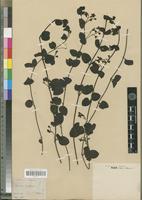
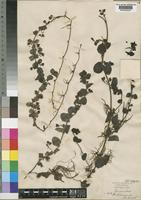
Type of Veronica petitiana A. Rich. [family SCROPHULARIACEAE]
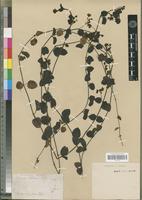
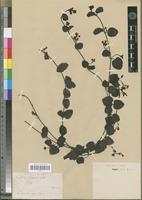
Veronica petitiana A.Rich. [family SCROPHULARIACEAE]
Veronica abyssinica Fresen. [family SCROPHULARIACEAE]
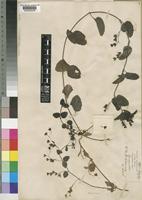
Veronica petitiana A.Rich. [family SCROPHULARIACEAE]
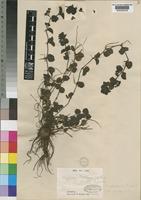
Type of Veronica petitiana A. Rich. [family SCROPHULARIACEAE]
Previous
Next

Name

Identification
Veronica petitiana A.Rich. [family SCROPHULARIACEAE ] Veronica abyssinica Fresen. [family SCROPHULARIACEAE ] (stored under name);
Related name
  • Veronica petitiana
  • Veronica abyssinica

Flora

Entry for VERONICA abyssinica Fresen. [family SCROPHULARIACEAE]
Herbarium
Royal Botanic Gardens, Kew (K)
Collection
Flora of Tropical Africa
Resource Type
Reference Sources
Entry From
Flora of Tropical Africa, Vol IV, Part 2, page 264, (1905) Author: (By W. Botting Hemsley and S. A. Skan).
Names
VERONICA abyssinica Fresen. [family SCROPHULARIACEAE], in Bot. Zeit. 1844, 356. —A. Rich. Tent. Fl. Abyss. ii. 127; Benth. in DC. Prodr. x. 490; Engl. Hochgebirgsfl. Trop. Afr. 379; Engl. Pfl. Ost-Afr. C. 358; Engl. in Ann. Istit. Bot. Roma, vii. 26.
VERONICA petitiana A. Rich. [family SCROPHULARIACEAE], Tent. Fl. Abyss. ii. 127.
VERONICA africana Hook. f. [family SCROPHULARIACEAE], in Journ. Linn. Soc. vii. 208.
VERONICA montana Avetta [family SCROPHULARIACEAE], in Ann. Istit. Bot. Roma, vi. 59, not of Linn. f.
Information
A prostrate herb diffusely branched from the base, sometimes rooting at the nodes, more or less pilose (often bifariously on the branches); branches usually 9–12 in. long, herbaceous or sometimes becoming almost woody, hollow. Leaves petiolate, ovate, elliptic-ovate or rarely suborbicular, 1/2–1 1/4 in. long, 1/2– 3/4 in. broad (rarely 1 1/2–2 in. long, 1–1 1/4 in. broad), obtuse or subacute, rounded, slightly cordate, truncate or somewhat cuneate at the base, crenate-serrate (often coarsely) or crenate, more or less pilose on both sides or sometimes almost glabrous; petiole usually about 3 (rarely up to 6) lin. long. Racemes 1–2 1/2 in. long, often 2- (sometimes up to 5-) flowered; bracts linear-oblong, 1 3/4–3 lin. long, obtuse; pedicels 2–4 lin. long. Calyx 2–2 1/2 lin. long in flower, 3–3 1/2 lin. long in fruit; segments oblong, elliptic-oblong or spathulate-elliptic, obtuse, ciliate and sometimes pilose inside and outside. Corolla 3–3 1/2 lin. long, cobalt-blue (pinky-white, Johnston). Style 1–1 1/2 lin. long. Capsule obovate, compressed, pilose or rarely glabrous, 1/2– 2/3 lin. shorter than the calyx.
Distribution
Cameroons Upper Guinea Cameroon Mountain, 7000 ft., Mann, 1263! 1997! 7000–9000 ft., Johnston, 15!Abyssinia Nile Land Tigre; Wojerat, Petit; Samen, Rüppell; Begemeder: Reb Valley, 7500 ft., Debra Tabor, and Jan-Meda, 9100 ft. Schimper, 1154! Shoa; Quartin-Dillon; Ankober, Roth, 467! Antoto, Ragazzi; and without precise locality, Schimper, 462!German East Africa Mozamb. Dist. Kilimanjaro, 4900–8900 ft., Volkens, 732! 1336!Somaliland Nile Land between Harar and Addis-Albeba, Wellby! between Biddume and Alghe, Riva, 1248.Uganda Nile Land various localities between Nandi and Mau Plateau, 6000–9000 ft., Whyte! Mau; Masai River, 6000 ft., Scott-Elliot, 6795! Johnston! Ruwenzori; Kasamaga (? Kasagama), 5300 ft., Scott-Elliot, 7600!
Notes
We have followed Engler in uniting V. petitiana and V. africana with V. abyssinica. Though this seems the best course, it should be d that some slight differences can be detected between the material from the Cameroons (V. africana) and that from Eastern Africa. In the former the petioles are usually longer, the leaves have smaller teeth, the flowers are said by Johnston to be pinky-white, and the style is shorter. Moreover, two of the Abyssinian specimens (Schimper, 1154) named V. petitiana at Kew, differ from the rest of the East African material in having shorter petioles, suborbicular crenate leaves, and broader calyx-segments. These hardly agree with Richard's description of V. petitiana. An examination of the types of V. abyssinica and V. petitiana, which are not accessible to us, might suggest that the plant from the Cameroons and the doubtful Abyssinian one should constitute two varieties of V. abyssinica .

Related Materials

  • Terms and Conditions
  • Privacy Policy
  • Cookie Policy
  • Cookie Settings
  • Accessibility
  • Help
  • Contact Us
  • Facebook
  • Twitter
ITHAKA

JSTOR is part of ITHAKA, a not-for-profit organization helping the academic community use digital technologies to preserve the scholarly record and to advance research and teaching in sustainable ways.

©2000-2026 ITHAKA. All Rights Reserved. JSTOR®, the JSTOR logo, JPASS®, Aluka®, and ITHAKA® are registered trademarks of ITHAKA.

╳