JSTOR Global Plants Home
  • Home
  • Browse
  • About
  • Access
  • Account
    • Saved Items
    • Profile
  • Log in

Global Plants

Skip to Main Content
  • JSTOR Global Plants Home
  • Global Plants

    • Browse
    • About
    • Access
    • Account
      • Saved Items
      • Profile
Log in
  • Browse
  • About
  • Access
  • Account
    • Saved Items
    • Profile
Advanced Search

Compilation
Veronica persica

9 Images see all

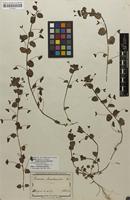
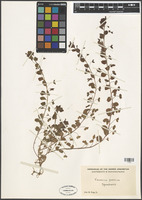
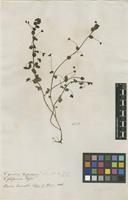
Veronica persica Poir. [family PLANTAGINACEAE]
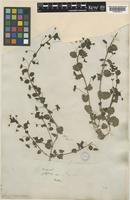
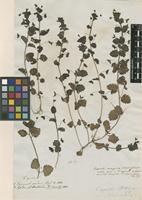
Original material of Veronica buxbaumii Ten. [family SCROPHULARIACEAE]
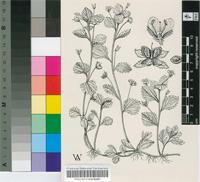
Veronica persica Poir.
Original material of Veronica buxbaumii Ten. [family SCROPHULARIACEAE]
Veronica persica Poir. [family PLANTAGINACEAE]
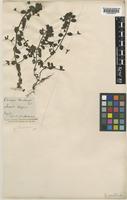
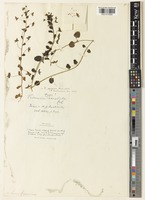
Filed as Veronica agrestis L. [family PLANTAGINACEAE]
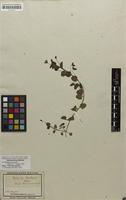
Type of Veronica areolata Colenso [family PLANTAGINACEAE]
Filed as Veronica filiformis Sm. [family PLANTAGINACEAE]
Previous
Next

Name

Identification
Veronica persica Poir. [family SCROPHULARIACEAE ]
Related name
  • Veronica persica

Flora

Entry for VERONICA Tournefortii K. C. Gmelin [family SCROPHULARIACEAE]
Herbarium
Royal Botanic Gardens, Kew (K)
Collection
Flora Capensis
Resource Type
Reference Sources
Entry From
Flora Capensis, Vol 4, page 121, (1904) Author: By W. P. HIERN, F.R.S.
Names
VERONICA Tournefortii K. C. Gmelin [family SCROPHULARIACEAE], Fl. Bad. i. 39, not of Vill.
VERONICA persica Desfont. [family SCROPHULARIACEAE], Tabl. Ecole Bot. Paris, 50, name only; Poir. Encycl. viii. 542.
VERONICA Buxbaumii Tenore [family SCROPHULARIACEAE], Fl. Napol. i. 7, t. 1; Benth. in DC. Prodr. x. 487.
Information
a weak herb, apparently annual; stems or branches prostrate and often rooting below, ascending above, moderately leafy, pubescent and minutely glandular, pubescence whitish, not evenly distributed all round the stems and branches; leaves opposite (except those at the rooting nodes and the floral ones), rotund-ovate, obtuse, abruptly narrowed, subtruncate, subcordate or even subreniform at the petiolate base, thinly herbaceous, minutely glandular and sparingly pubescent on both faces, feebly 5-nerved and few-veined, rather deeply cuneate-serrate, 3/8– 1/2 in. long, 1/3– 1/2 in. broad; petioles mostly 1/12– 1/4 in. long, pubescent; lower internodes exceeding the leaves, the upper shorter; peduncles rather slender, densely pubescent, 5/8–1 in. long, suberect in flower, spreading in fruit, alternate, solitary in the upper axils; flowering calyx about 1/6 in. long, deeply 4-lobed, rather widely spreading, densely pubescent about the base; segments oval-ovate, obtuse, ciliolate, puberulous, somewhat unequal, 1/8– 1/6 in. long by 1/15– 1/10 in. broad in flower, 1/5– 1/4 in. long by 1/10– 1/8 in. broad in fruit, feebly 3-nerved; corolla about 3/8 in. in diam., veined, rotate, 3 of the segments oval-rotund, the fourth oval; fruit about 1/6 in. long, compressed, 1/4 in. broad, broadly notched at the apex, veined, ciliolate. null
Range
A weed, widely distributed over Europe and the East.
Distribution
CENTRAL REGION Middelburg Div.; Conway Farm, 3600 ft., Gilfillan in Herb. Galpin, 5572!COAST REGION Cape Div.; in cultivated fields near Rosebank, below 100 ft., Bolus, 4774!
Notes
The above description is taken from the specimens collected near Rosebank.

Related Materials

  • Terms and Conditions
  • Privacy Policy
  • Cookie Policy
  • Cookie Settings
  • Accessibility
  • Help
  • Contact Us
  • Facebook
  • Twitter
ITHAKA

JSTOR is part of ITHAKA, a not-for-profit organization helping the academic community use digital technologies to preserve the scholarly record and to advance research and teaching in sustainable ways.

©2000-2026 ITHAKA. All Rights Reserved. JSTOR®, the JSTOR logo, JPASS®, Aluka®, and ITHAKA® are registered trademarks of ITHAKA.

╳