JSTOR Global Plants Home
  • Home
  • Browse
  • About
  • Access
  • Account
    • Saved Items
    • Profile
  • Log in

Global Plants

Skip to Main Content
  • JSTOR Global Plants Home
  • Global Plants

    • Browse
    • About
    • Access
    • Account
      • Saved Items
      • Profile
Log in
  • Browse
  • About
  • Access
  • Account
    • Saved Items
    • Profile
Advanced Search

Compilation
Vernonia wollastonii

5 Images see all

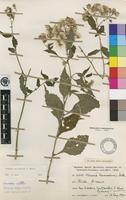
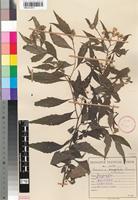
Type of Vernonia transvaalensis Hutch. [family ASTERACEAE]
Filed as Vernonia wollastonii S.Moore [family ASTERACEAE]
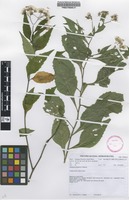
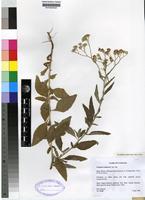
Holotype of Vernonia umbratica Oberm. [family ASTERACEAE]
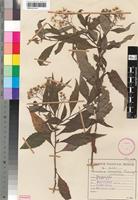
Isotype of Vernonia wollastonii Sch. Bip [family COMPOSITAE]
Holotype of Vernonia umbratica Oberm. [family ASTERACEAE]
Previous
Next

Name

Identification
Isotype of Vernonia wollastonii Sch. Bip [family COMPOSITAE ] (stored under name);
Related name
  • Vernonia wollastonii
  • Vernonia transvaalensis
  • Vernonia umbratica

Flora

Entry for Vernonia wollastonii S. Moore [family COMPOSITAE]
Herbarium
Royal Botanic Gardens, Kew (K)
Collection
Flora of Tropical East Africa
Resource Type
Reference Sources
Entry From
Flora of Tropical East Africa, Part 1, page 1, (2000) Author: H. J. Beentje, M.Sc., Ph.D., F.L.S.
Names
Vernonia wollastonii S. Moore [family COMPOSITAE], in J.L.S. 38: 257 (1908), as wollastoni; C. Jeffrey in K.B. 43: 224 (1988); G.V. Pope in F.Z. 6: 80, t. 14a (1992); K.T.S.L.: 569 (1994); U.K.W.F. ed. 2: 202 (1994); Kalanda & Lisowski in Fragm. Flor. Geobot. 40 (2): 647 (1995). Type: Uganda, Toro District, Ruwenzori, Wollaston (BM!, holo.)
Vernonia gracilipes S. Moore [family COMPOSITAE], in J.L.S. 40: 105 (1911). Syntypes: Zimbabwe, Chimanimani Mts, Swynnerton 1830 (BM!, Syn.), 1830a (BM!, K!, Syn.), & Mt Pene, Swynnerton 6126, 6127 (both BM!, Syn.)
Vernonia heterocarpa Chiov. [family COMPOSITAE], in Nuov. Giorn. Bot. Ital. n. s. 36: 365 (1929). Type: Ethiopia, Arussi, Abruzzi 36 (TO, holo.)
Information
 Woody herb or weak shrub, trailing, scrambling or scandent, 0.6-3.6 m high; stems arching, pubescent with mostly short T-shaped hairs. Leaves petiolate or rarely sessile with petioloid base, dark green or deep glossy green, ovate or (narrowly) lanceolate, 2-13 cm long, 1-4 cm wide, base rounded to cuneate, margins sinuate-denticulate, apex attenuate-acuminate, apiculate, thinly scattered pubescent and ± glabrescent above, thinly finely pubescent especially on veins beneath, densely glandular with sessile glands; petiole 0.3-2.5 cm long. Capitula in spreading terminal divaricate corymbiform cymes; stalks of individual capitula shortly ascending-pubescent, sometimes also with longer spreading hairs; involucre ovoid-cylindrical, 4-6.5 mm long, 3-3.8 mm in diameter at flowering time; phyllaries 2-3-seriate, green and sometimes purple-tipped, slightly spreading, lanceolate or less often elliptic, 1-6 mm long, acute to attenuate, ascending-pubescent, glandular. Florets 14-20 per capitulum; corolla white, pale mauve, lilac, mauve or purple, 5-8 mm long, lobes 1.5-2.8 mm long, with fine silky hairs below the apex. Achenes cylindric, 1.5-2.7 mm long, terete or subterete, shortly ascending-pubescent and glandular; outer pappus of narrow lanceolate scales, 0.2-1.2 mm long, inner pappus white, 3-6 mm long. Fig. 38/4 (involucre), p. 168.
Range
Distr.U 2, 3; K 3, 5; T 3, 4, 6, 7
Altitude range
900-2700 m
Distribution
KENYA N Kavirondo District Yala Forest Reserve, Jan. 1982, Gilbert 6891! & Kakamega Forest, Jan. 1981, Gilbert 6864!KENYA Kericho District SW Mau, Sambret Catchment, Jan. 1961, Kerfoot 752!TANZANIA Lushoto District Shume Forest, Issa Mohamed 3!TANZANIA Mpanda District Mahali Mts, Kasieha, Sep. 1958, Newbould & Jefford 2654!TANZANIA Morogoro District Uluguru Mts, Morogoro Valley, July 1972, Mabberley 1217!UGANDA Ankole District Buhwelu, June 1987, Rwaburindore 2447!UGANDA Kigezi District Kachwekano Farm, May 1949, Purseglove 2880!UGANDA Toro District 1915, Snowden 258!
Distribution (external)
; Rwanda
Sudan
Ethiopia
Zambia
Malawi
Mozambique
Zimbabwe
South Africa
Notes
From T 3 and T 6 there are collections with the phyllaries wider and more hairy than usual; this material is in other respects similar to other collections.

Related Materials

  • Terms and Conditions
  • Privacy Policy
  • Cookie Policy
  • Cookie Settings
  • Accessibility
  • Help
  • Contact Us
  • Facebook
  • Twitter
ITHAKA

JSTOR is part of ITHAKA, a not-for-profit organization helping the academic community use digital technologies to preserve the scholarly record and to advance research and teaching in sustainable ways.

©2000-2026 ITHAKA. All Rights Reserved. JSTOR®, the JSTOR logo, JPASS®, Aluka®, and ITHAKA® are registered trademarks of ITHAKA.

╳