JSTOR Global Plants Home
  • Home
  • Browse
  • About
  • Access
  • Account
    • Saved Items
    • Profile
  • Log in

Global Plants

Skip to Main Content
  • JSTOR Global Plants Home
  • Global Plants

    • Browse
    • About
    • Access
    • Account
      • Saved Items
      • Profile
Log in
  • Browse
  • About
  • Access
  • Account
    • Saved Items
    • Profile
Advanced Search

Compilation
Vernonia verdickii

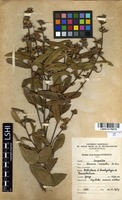
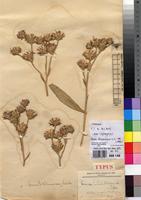
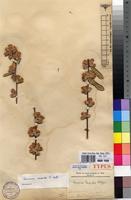
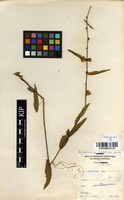
4 Images see all

Filed as Vernonia verdickii De Wild. [family ASTERACEAE]
Type of Vernonia verdickii O.Hoffm. & Muschl. [family ASTERACEAE]
Type of Vernonia verdickii O.Hoffm. [family ASTERACEAE]
Filed as Vernonia verdickii O.Hoffm. [family ASTERACEAE]
Previous
Next

Name

Identification
Vernonia verdickii O.Hoffm. & Muschl. [family ASTERACEAE ] Verified by Not on sheet, Vernonia dewildemaniana Muschl. [family ASTERACEAE ] (stored under name); Verified by Not on sheet,
Related name
  • Vernonia dewildemaniana
  • Vernonia verdickii

Flora

Entry for Vernonia dewildemaniana Muschl. [family COMPOSITAE]
Herbarium
Royal Botanic Gardens, Kew (K)
Collection
Flora Zambesiaca
Resource Type
Reference Sources
Entry From
FZ, Vol 6, Part 1, (1992) Author: G. V. Pope
Names
Vernonia dewildemaniana Muschl. [family COMPOSITAE], in Fedde, Repert. 9: 384 (1911). Type from Zaire.
Vernonia verdickii O. Hoffm. & Muschl. [family COMPOSITAE], in Engl. Bot. Jahrb. 46: 93 (1911) non O. Hoffm. (1902). Type as above.
Vernonia entohylea Wild [family COMPOSITAE], in Kirkia 11: 12, fig. 7; 102 (1978). Type: Zambia, Mwinilunga, Drummond 8363 (BR; K; LISC; SRGH, holotype).
Information
A robust erect perennial herb to c. 85 cm. tall from a woody rootstock, often flowering before, or with the young leaves. Stems annual scapiform, usually solitary, simple below the much branched synflorescence, with large leaves arising at or near the base and a few much smaller leaves on the stem above these, obscurely few-ribbed, densely brownish-tomentose. Leaves sessile; basal leaves ascending, up to c. 30 x 8 cm., oblanceolate to elliptic-oblanceolate, apex subacute to obtuse or rounded, gradually tapering in the lower half to a very narrowly winged midrib before widening to a ± stem-clasping base, margins serrate-dentate to subentire, upper surface thinly puberulous or glabrescent, lower surface pubescent to glabrescent and glandular-punctate, midrib large prominent and ± tomentose beneath; upper cauline leaves c. 10 x 2 cm., narrowly oblong-elliptic, decreasing in size upwards. Capitula numerous, in terminal clusters in a paniculate arrangement up to c. 25 cm. across, synflorescence branches up to c. 25 cm. long, tomentose, capitula stalks 0.1–7 cm. long. Involucres 10–20 x 12–20 mm., obconic-campanulate, spreading. Phyllaries ± loosely arranged, c. 4-seriate, extending briefly onto the capitulum stalk, longitudinally ribbed, tomentose where exposed, purple-tipped; outer phyllaries from c. 2 mm. long and subulate; middle phyllaries ovate-elliptic and ± recurved acuminate-attenuate at the apex; inner phyllaries narrower, up to c. 14 mm. long, elliptic-linear, tapering to a finely pointed, ± curved, 1–5 mm. long dp. Receptacle shallowly alveolate. Corollas purple, 7–11 mm. long, narrowly cylindric, widening slightly above, lobes with few to many sericeous hairs c. 1 mm. long. Achenes pale-brown or stramineous, 3–4 mm. long, narrowly subcylindric-turbinate, somewhat 4–5-angular, sparsely glandular puberulous; outer pappus short, consisting of few 1 -2 mm. long linear scales or paleaceous setae, inner pappus of whitish or sordid, barbellate to subplumose bristles 6–9 mm. long.
Habitat
In dry deciduous miombo or Uapaca-Protea woodland.
Distribution
Zambia W Mwinilunga Distr. near Zambezi River, above rapids, c. 9 km. NE. of Kalene Hill Mission, 16.vi.1963, Drummond 8363 (BR; K; LISC; SRGH).Zambia N Mbala Distr., Kalambo Falls, c. 1200 m., 22.vii.1960, Richards 12901 (K).
Distribution (external)
Zaire

Related Materials

  • Terms and Conditions
  • Privacy Policy
  • Cookie Policy
  • Cookie Settings
  • Accessibility
  • Help
  • Contact Us
  • Facebook
  • Twitter
ITHAKA

JSTOR is part of ITHAKA, a not-for-profit organization helping the academic community use digital technologies to preserve the scholarly record and to advance research and teaching in sustainable ways.

©2000-2026 ITHAKA. All Rights Reserved. JSTOR®, the JSTOR logo, JPASS®, Aluka®, and ITHAKA® are registered trademarks of ITHAKA.

╳