JSTOR Global Plants Home
  • Home
  • Browse
  • About
  • Access
  • Account
    • Saved Items
    • Profile
  • Log in

Global Plants

Skip to Main Content
  • JSTOR Global Plants Home
  • Global Plants

    • Browse
    • About
    • Access
    • Account
      • Saved Items
      • Profile
Log in
  • Browse
  • About
  • Access
  • Account
    • Saved Items
    • Profile
Advanced Search

Compilation
Vernonia chlorolepis

8 Images see all

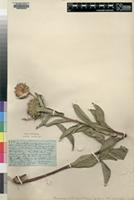
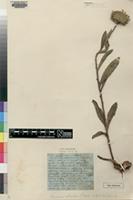
Syntype of Vernonia chlorolepis S.Moore [family ASTERACEAE]
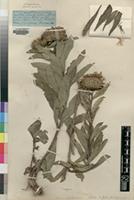
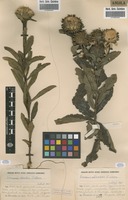
Filed as Vernonia chlorolepis S.Moore [family ASTERACEAE]
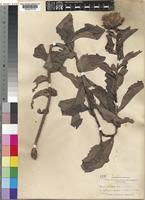
Syntype of Vernonia chlorolepis S.Moore [family ASTERACEAE]
Filed as Vernonia chlorolepis S.Moore [family ASTERACEAE]
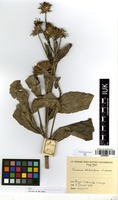
Vernonia verrucosa Klatt [family COMPOSITAE]
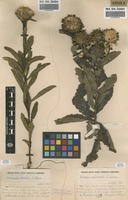
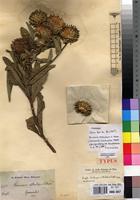
Type of Vernonia chlorolepis S.Moore [family ASTERACEAE]
Previous
Next

Name

Identification
Vernonia chlorolepis S.Moore [family ASTERACEAE ] Vernonia verrucata Klatt [family ASTERACEAE ] (stored under name);
Related name
  • Vernonia verrucosa
  • Vernonia verrucata
  • Vernonia chlorolepis

Flora

Entry for Vernonia verrucata Klatt [family COMPOSITAE]
Herbarium
Royal Botanic Gardens, Kew (K)
Collection
Flora Zambesiaca
Resource Type
Reference Sources
Entry From
FZ, Vol 6, Part 1, (1992) Author: G. V. Pope
Names
Vernonia verrucata Klatt [family COMPOSITAE], in Ann. K.K. Naturhist. Hofmus. Wien, 7: 99 (1892). —O. Hoffm. in Bol. Soc. Brot10: 172 (1893). —Mendonça, Contrib. Conhec. Fl. Angol., 1 Compositae: 24 (1943). —Wild in Kirkia 11: 99 (1978). TAB.16 fig. C. Type from Angola.
Vernonia chlorolepis S. Moore [family COMPOSITAE], in Journ. Bot. 52: 92 (1914). —Mendonça, Contrib. Conhec. Fl. Angol., 1 Compositae: 23 (1943). Syntypes from Angola.
Information
A stiff erect, sparingly branched, perennial herb up to c. 75 cm. tall, from a woody rootstock. Stems annual, usually purple, simple below, uniformly leafy, glabrous or pilose-scabrid; hairs becoming brittle with bases persisting as rigid points; branches up to c. 22 cm. long, leafy. Lower leaves with petioles up to c. 5 mm. long; leaves 5–15 x 1.2–4.5 cm., oblanceolate-elliptic to narrowly elliptic, apices obtuse ± apiculate, bases cuneate, margins coarsely serrate to subentire, ± coriaceous, glabrous, or more usually with white hispid hairs on both surfaces becoming scabrous, nerves ± prominent beneath. Capitula terminal, solitary, or up to c. 4 subcorymbiformly cymose; capitula stalks arising in upper leaf axils, bracteate, glabrous or scabrous; bracts 1-several, up to c. 10(15) mm. long, linear. Involucre 15–30 x 25–50 mm., broadly campanulate to hemispheric. Phyllaries numerous, many-seriate, appendaged, all ± similar but progressively longer towards the inside, 10–25 x 2.5(3) mm., stramineous and linear-oblong below the appendage, coriaceous, glabrous sometimes hispidulous, margins with fine comb-like teeth; appendages green, thinly coriaceous with slightly prominent nerves, ± equalling the phyllary base in length and usually exceeding it in width. Receptacle minutely fimbriate-alveolate. Corolla 17–22 mm. long, the lower two-thirds narrowly cylindric, slightly widened and deeply lobed at the apex, limb cornflower-blue. Achenes pale-brown when mature, up to c. 10 mm. long, subcylindric to subfusiform, c. 10-ribbed, glabrous with dark-brown gland spots; outer pappus of narrow scale-like setae up to c. 3 mm. long; inner pappus of brown or purple-tinged, 14–15(18) mm. long, ± flattened setae, bristled on margins.
Habitat
Brachystegia woodland, often on dry rocky hillsides.
Distribution
Zambia W Mwinilunga, between Ikelenge and Kalene, c. 1625 m., 15.v.1986, Philcox, Pope & Chisumpa 10305 (BR; K; MO; NDO; SRGH).
Distribution (external)
Angola

Related Materials

  • Terms and Conditions
  • Privacy Policy
  • Cookie Policy
  • Cookie Settings
  • Accessibility
  • Help
  • Contact Us
  • Facebook
  • Twitter
ITHAKA

JSTOR is part of ITHAKA, a not-for-profit organization helping the academic community use digital technologies to preserve the scholarly record and to advance research and teaching in sustainable ways.

©2000-2026 ITHAKA. All Rights Reserved. JSTOR®, the JSTOR logo, JPASS®, Aluka®, and ITHAKA® are registered trademarks of ITHAKA.

╳