JSTOR Global Plants Home
  • Home
  • Browse
  • About
  • Access
  • Account
    • Saved Items
    • Profile
  • Log in

Global Plants

Skip to Main Content
  • JSTOR Global Plants Home
  • Global Plants

    • Browse
    • About
    • Access
    • Account
      • Saved Items
      • Profile
Log in
  • Browse
  • About
  • Access
  • Account
    • Saved Items
    • Profile
Advanced Search

Compilation
Vernonia catumbensis

4 Images see all

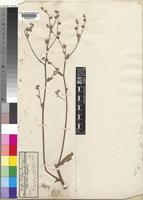
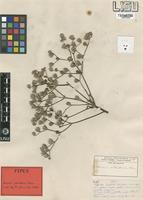
Type of Vernonia catumbensis Hiern [family COMPOSITAE]
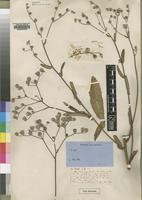
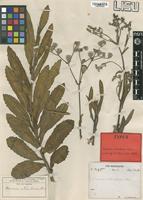
Type of Vernonia catumbensis Hiern [family ASTERACEAE]
Previous
Next

Name

Identification
Vernonia catumbensis Hiern [family ASTERACEAE ] (stored under name);
Related name
  • Vernonia catumbensis

Flora

Entry for Vernonia catumbensis Hiern [family COMPOSITAE]
Herbarium
Royal Botanic Gardens, Kew (K)
Collection
Flora Zambesiaca
Resource Type
Reference Sources
Entry From
FZ, Vol 6, Part 1, (1992) Author: G. V. Pope
Names
Vernonia catumbensis Hiern [family COMPOSITAE], Cat. Afr. Pl. Welw. 1, 3: 524 (1898). —O. Hoffm. in Warb., Kunene-Samb. Exped. Baum: 405 (1903). —Mendonça, Contrib. Conhec. Fl. Angol., 1Compositae: 17 (1943). Type from Angola.
Vernonia richardiana [family COMPOSITAE], sensu Wild in Kirkia 11: 86 (1978).
Information
An erect slender perennial herb 0.8–2 m. tall; tuberous-rooted from a small woody rootcrown; tubers up to 5 x 1.5 cm., fusiform. Stems 1-several, becoming woody below, divaricately branched above, leafy, subterete, puberulous with white curly hairs, especially on the branches, glabrescent below; branches purplish. Leaves very shortly petiolate, up to c. 17 x 5.5 cm., largest on lower stem, decreasing in size up the stem, oblanceolate; apex rounded-obtuse on lower cauline leaves, becoming acute in upper leaves; tapering below to a narrow, abruptly rounded or truncate base ending in a 1–2 mm. long glabrescent petiole; margin entire towards the leaf base, becoming repand-denticulate to serrate-dentate in the upper part, the teeth callose-tipped; lamina thinly subcoriaceous, glabrescent on the upper surface, somewhat paler and puberulous on the lower surface, sometimes glabrescent. Capitula numerous, sessile or subsessile, scorpioidly cymose, the capitula secund on laxly subumbellate branches. Involucres 8–10 mm. long and 8–10 mm. wide, obconic to campanulate-obconic. Phyllaries many-seriate, appressed imbricate, increasing uniformly in length to the inside, ± coriaceous with hyaline margins and purple tips, thinly woolly outside and densely ciliate on the margins; the outer phyllaries broadly ovate, the inner oblong-lanceolate, mucronulate. Florets c. 18 per capitulum; corollas purple or whitish-mauve, up to c. 12 mm. long, narrowly tubular, slightly widened above the middle, glabrous. Achenes up to c. 3.5 mm. long, subcylindric, tapering slightly below, densely strigose; outer pappus of c. 2 mm. long bristles; inner of copious barbellate setae up to c. 9 mm. long.
Habitat
Miombo woodland.
Distribution
Zambia W Solwezi, 13.v.1969, Mutimushi 3132 (K; NDO; SRGH).
Distribution (external)
Angola
Notes
Vernonia theophrastifolia Schweinf. [Vernonia richardiana (O. Kuntze) Pichi Sermolli] may be distinguished from V. catumbensis by its smaller more numerous capitula and by its phyllaries which are glabrous or glabrescent and never woolly. The leaves are also distinctive being auriculate or hastate at the base in the former and merely narrowing to an abruptly rounded or truncate base in the latter.

Related Materials

  • Terms and Conditions
  • Privacy Policy
  • Cookie Policy
  • Cookie Settings
  • Accessibility
  • Help
  • Contact Us
  • Facebook
  • Twitter
ITHAKA

JSTOR is part of ITHAKA, a not-for-profit organization helping the academic community use digital technologies to preserve the scholarly record and to advance research and teaching in sustainable ways.

©2000-2026 ITHAKA. All Rights Reserved. JSTOR®, the JSTOR logo, JPASS®, Aluka®, and ITHAKA® are registered trademarks of ITHAKA.

╳